Asian American-owned businesses overcoming challenge of pandemic
The start of a post-pandemic phase and a gradual economic recovery would allow them to start taking off again.
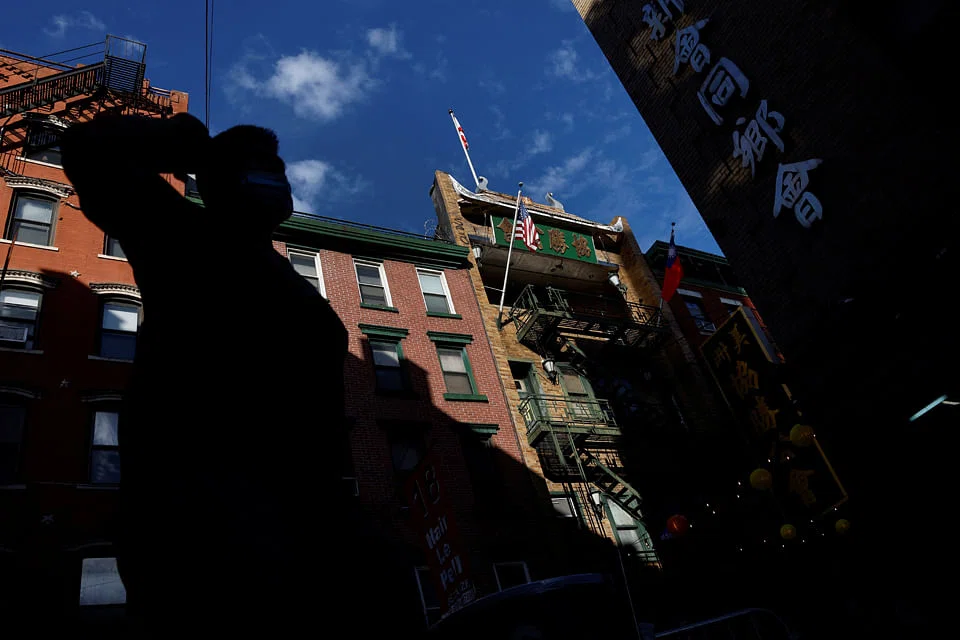
ASIAN American-owned businesses make up 10 per cent of all small businesses in the United States. They generate US$700 billion in annual GDP and employ around 3.5 million people.
They have also become the cornerstone of American business. They are a powerful economic force, from Silicon Valley and Wall Street to restaurants, groceries, salons, laundries in the neighbourhoods of large cities across the country and to many of the mom and pop stores in small-town America.
Moreover, Asian-American small businesses have been the fastest growing segment and key driver of economic growth in cities like New York, San Francisco and Chicago - until, that is, the devastating Covid-19 pandemic attacked America.
Asian-American small companies were represented in some of the business sectors as well as the geographical areas that have been the hardest hit by the pandemic, like the metropolitan areas of New York, New Jersey and California.
Pandemic-related lockdowns and restrictions on indoor gatherings were particularly hard on the restaurants, stores, nail salons and other service industries in which many Asian-owned firms are concentrated. These businesses have experienced financial losses, closures and staff reductions. And because of language barriers and a dearth of banking relationships many of them have struggled to access local, state or federal local aid.
According to a report released by the New York Federal Reserve, small firms owned by Asian Americans fared worse than those owned by Black Americans and Hispanic Americans - despite going into the pandemic in a stronger economic position.
Some 90 per cent of small Asian American firms lost revenue last year, greater than the figure for Black, Hispanic and white-owned businesses.
Businesses owned by Asian Americans took a steep hit early on in the crisis. By the end of March 2020, sales for Asian-American businesses were down by more than 60 per cent from a year earlier, greater than the roughly 50 per cent drop faced by other small businesses, according to research from the JPMorgan Chase Institute.
The number of active Asian American business owners fell by 26 per cent in 2020, according to a study done by the National Bureau of Economic Research, higher than the overall national decline of 22 per cent. An estimated 233,000 Asian-American small businesses closed at the same time, a decline of close to 30 per cent compared to a decline of close to 15 per cent among white small businesses.
According to a survey conducted during the first 4 months of 2021 by the Asian Business Association of Los Angeles, nearly one-third of Asian American-owned businesses in southern California reported that their operating capacity - the measure of the maximum amount of activity a business could conduct under realistic operating conditions - has decreased by more than half; the comparable figure was just over 20 per cent for all California businesses.
At the same time, while three-quarters of all California businesses received pay cheque protection aid, the survey found that less than two-thirds of local Asian American-owned businesses received such benefits.
In San Francisco, 75 per cent of storefronts in the zip code where Chinatown is located, an area that relies heavily on tourism, were non-operational at some point in 2020, and now have an uphill road to recovery.
And New York City's once thriving Asian American small businesses were devastated by the pandemic crisis, with over half of business owners reporting losses of close to 80 per cent in revenue in 2020.
Twofold blow
The pandemic has brought a twofold blow to Asian-American small business owners. The economic downturn converged with a wave of hate crimes that have been driven by racial discrimination. Tying the virus to Chinese identity, a misguided scapegoat rhetoric about the pandemic, made for more severe consequences by the overrepresentation of ethnically Asian workers in service-facing industries.
In addition to the fatal March 16, 2021 shootings at Atlanta-areas spas that left 6 Asian-American women dead, Asian-American small businesses around the country have experienced a spate of hate and violence. That has of course added to the economic crisis they have been grappling with since the beginning of the pandemic.
A third of the 3,800 hate crimes incidents against Asian-Americans reported by Stop AAPI Hate in April last year have targeted Asian-American businesses.
Asian-American small businesses have been vandalised multiple times, with rocks thrown into windows and doors broken into. These incidents created an atmosphere of fear under which business owners had to operate - that is, if they had survived the economic downturn.
This reality may explain in part why the recovery from the pandemic has been slower for Asian American-owned businesses.
In addition, these businesses have suffered from a lack of government and financial support. They have faced difficulties obtaining Paycheck Protection Programme (PPP) loans - because many of them do not have existing relationships with mainstream financial institutions. Language barriers continue to impede many Asian American business owners from participating in various relief programmes.
The disruption in supply chains, which like the wave of hate crimes was another consequence of the effects of the pandemic, has emerged as another serious problem for Asian American businesses in the retail sector that are dependent on imported supplies.
Delays in the shipping industry and shortages in truck drivers and warehouse workers, are having a major impact on these businesses' access to labour and on the costs of goods and transportation. Indeed, supplies that small businesses rely on are becoming harder to find, especially since owners cannot always order in bulk or in advance like larger companies.
Asian American small businesses, like grocery stores and restaurants, are looking to their communities to find short-term solutions for the most essential items they need. Having more flexibility due to their size, these businesses have been able to stay in contact with their customers about possible disruptions and delays in their products and services.
Notwithstanding these supply chain problems and the recent re-surge of the virus through the Delta and Omicron variants, the start of a post-pandemic phase and a gradual economic recovery would allow Asian-American businesses to start taking off again.
Moving online
Indeed, Asian American small businesses have quickly adapted to the new realities of working remotely and taking advantage of the new opportunities provided by online shopping. For example, grocery stores and restaurants owned by Asian Americans have joined delivery services that allow customers to order online.
It took these business owners and their staff some time to get fully set up on the online platforms where they displayed photographs of their Asian offerings. But some of them report now that they are doing even better than they did before the pandemic.
And according to the Pew Research organisation, Asian Americans are more likely than those of other racial or ethnic groups to say that they were able to do their work remotely, reflecting the presence of many Asian-Americans in the technical services sector, including as originators of new startups. Indeed, a new generation of young Asian American entrepreneurs operating in the IT sector is emerging. According to Rough Draft Ventures, a venture team supporting university entrepreneurs, 20 of the roughly 50 companies it has backed included at least one Asian American founder.
While 40 per cent of the workforce in Alphabet is Asian American - at Facebook, Asian-American employees slightly outnumber white ones - some of them face obstacles as they try to reach top leadership positions in these and other corporations.
They therefore prefer to start their own businesses, and have been among the founders of successful startups, including women "millennipreneurs". These young entrepreneurs suggest that as the American economy move beyond the pandemic and the human and commercial calamities, businesses owned by Asian Americans would continue to lead the way into the economic renaissance of the country.