

BBB recovery keeps central banks in play
There is a good chance that this economic expansion could become one of the longest since we can track a global cycle.
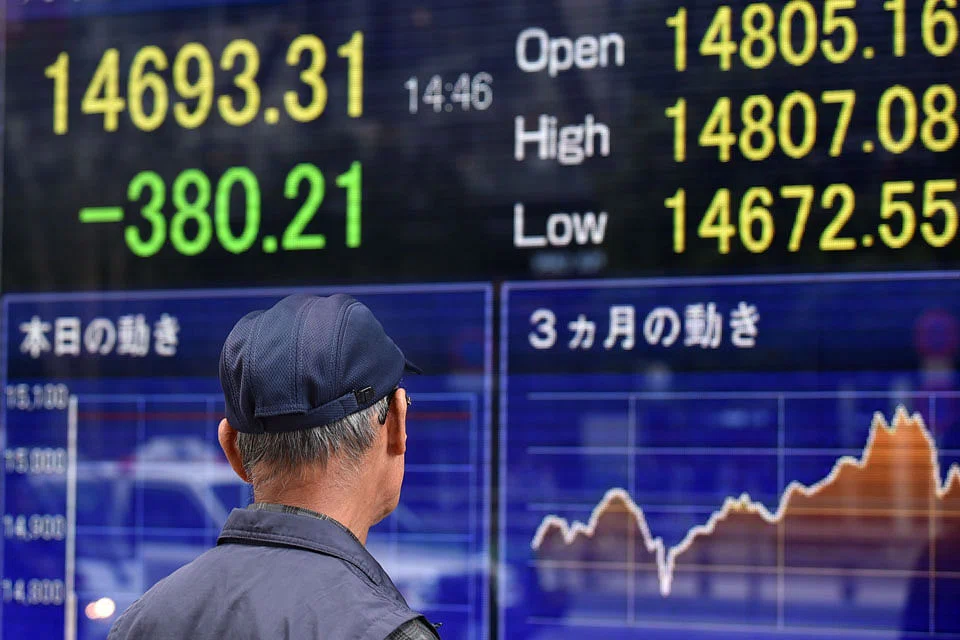
THE global economy is now in the sixth year of a bumpy, below-par and brittle (BBB) recovery from the Great Recession. With inflation running below target in most major economies, and central banks thus continuing to provide ample accommodation, this expansion may well become one of the longest on record. The combination of super-low interest rates and a slower but longer economic expansion suggests that equity markets should continue to grind higher.
Global growth has accelerated in the second half of this year after digesting several shocks in the first half, including the US deep freeze, China's slowdown, the consumption tax hike in Japan, the onset of the Russia/Ukraine conflict, and accelerated bank deleveraging in Europe ahead of the bank stress test. The global economy looks set to maintain this higher second-half growth pace of around 3.5 per cent in 2015.
However, the economic expansion is likely to remain bumpy, below-par and brittle, for two reasons. First, in the developed market countries, we are witnessing a two-speed economy. In the fast lane, the US and the UK are pacing ahead at 2.5-3.0 per cent. Meanwhile, in the slow lane, GDP growth is likely stuck at around 1.0 per cent in the euro area and Japan for 2014-15.
Second, many emerging market economies continue to struggle with their transition from broken old to sustainable new growth models. This is particularly true in commodity-heavy economies such as Brazil and Russia, which are both expected to fall into recession. By contrast, we expect China's economic growth to stabilise at around 7 per cent next year, and we look for a reform- driven acceleration of economic momentum in India.
Yet, the uneven and unsynchronised nature of global growth is not entirely bad news. In fact, there is a good chance that this economic expansion could become one of the longest since we can track a global cycle.
A common global cyclical pattern only emerged starting in the 1970s, reflecting increasing global linkages through trade and capital flows, and also the advent of common oil price shocks in the Seventies and early Eighties.
Global expansions since the mid-Seventies have lasted between four and eight years, and a little more than six years on average. The current global expansion is already in its sixth year, but it could easily become the longest one on record, for three reasons.
First, the global economy is still digging itself out of the deep hole created by the Great Recession, which created a lot of slack in labour and product markets.
Second, the global cycle is out of sync. With different countries at different stages of their respective business cycles, the risk of a joint overheating (which usually ends an expansion) is very low.
Third, monetary policy is very supportive and likely to remain so for a very long time as inflation looks set to remain subdued.
In fact, inflation is currently running below central banks' targets in the United States, the eurozone, China, Japan, the United Kingdom and quite a few other countries. Inflation is the dog that didn't bark in this expansion. "Lowflation" can be explained by both domestic and global factors.
The main domestic reason for low inflation pressures is the absence of wage pressures. The Great Recession, which pushed unemployment higher across the advanced economies, is casting a long shadow and still seems to be depressing wage demands despite a size- able decline in unemployment rates in recent years.
Moreover, falling oil prices have pushed headline inflation lower around the globe in recent months and seem to have lowered inflation expectations too.
Where does this leave central banks? Faced with bumpy, below-par and brittle growth, and with inflation running below their respective targets, most monetary policymakers worry more about deflation risks than inflation risks. As a consequence, many central banks are likely to keep the foot on the accelerator in the foreseeable future.
The recent additional easing steps by the Bank of Japan and the European Central Bank's declared focus on increasing the size of its balance sheet suggest that both want to export their domestic deflationary pressures to the rest of the world via a weaker exchange rate. To the extent that other currencies such as the US dollar - and, along with it, the Chinese RMB - appreciate, this will induce American and Chinese policymakers to either keep rates low for longer (the US case) or insert further stimulus (the China case).
As in the past several years, individual central banks' attempts to export deflation will lead to a disproportionately easier overall global policy stance as other central bank will try to retaliate. These feedback loops have ensured that global interest rates have remained low and global liquidity has remained ample, thus supporting the uneven economic recovery and boosting asset prices. An early end of these policies is not in sight. In fact, we expect the US Federal Reserve to keep rates on hold throughout next year, and thus considerably longer than markets currently price in.
The writer is Morgan Stanley's chief global economist. He is in town this week for Morgan Stanley's 13th Annual Asia Pacific Summit from Nov 12 to 14
TRENDING NOW

Can a first-time homebuyer couple earning S$18,000 a month afford a new EC unit?

He built the Vingroup empire. Now South-east Asia’s richest man is handing some key roles to his sons

Asia needs new energy security architecture

Chagee, Mixue and Luckin won the market. Sustaining their edge is the harder part

