

Bear markets have on average lasted less than a year, so position now for an eventual recovery
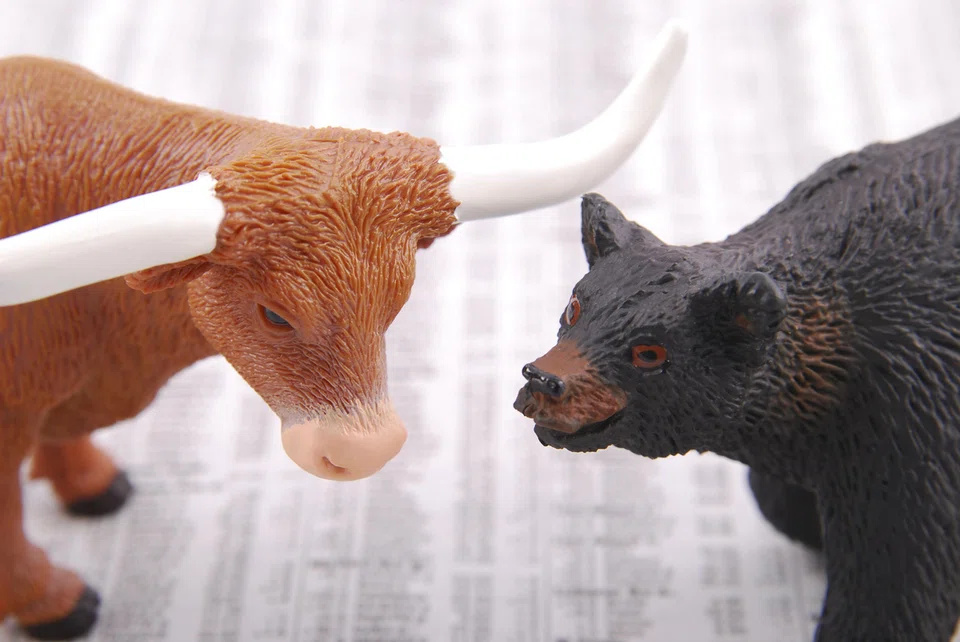
WITH global stocks in a bear market, fearful headlines from Singapore to San Francisco warn of worse to come. More downside may well remain — bad news won’t vanish.
But this isn’t the time to sell. Instead, position for an unusual, unexpected form of recovery. Big growth stocks — largely absent in Singapore — should lead it. To see this, you must fathom what is demonstrable but unexpected by most.
A global bear market — made official on Jun 16 when world stocks crossed the -20 per cent threshold from January’s high — sounds scary. But it shouldn’t.
Since good global data start in 1969, the median time from piercing -20 per cent in US dollar terms to a bear market’s low is merely 0.8 months — and only another -7.6 per cent drop. From there back up to -20 per cent has been similarly short!
The global rally is likely soon. Selling now risks missing it — and makes 2022’s declines much harder to recoup.
So look forward to that recovery — which should run strongest outside Singapore.
Why? Because categories that fall most also regularly rebound most in early months of bounce-backs. Ordinarily, the value stocks dominating the Singapore Exchange (SGX) lead bear markets down. Being more economically sensitive than growth stocks, recession hits them hardest. Recovery then sends survivors soaring early in ensuing bull markets.
Not now. Since January’s global high, world growth stocks’ plunge more than doubles value’s slide. Singapore’s growth stocks are down 23.0 per cent in Singapore dollar terms, whilst its value stocks are up 1.7 per cent — partly explaining the value-dominated STI’s 2022 resilience.
Many believe lofty valuations and rising rates killed growth stocks’ long dominance. The truth: The relative strength of value stocks today is inextricably entangled with bearishness.
Through Jun 27, global stocks rose 62 days this year in SGD terms. Growth beat value 72.6 per cent of those days. Stocks fell 64 days. Value beat growth 84.4 per cent of them.
That trend holds within Singapore. SGX-listed stocks rose 56 days this year, with growth leading 76.8 per cent of them. Value led on 84.1 per cent of the 69 down days. Stocks fall, value leads. Stocks rise, growth leads. That simple! If you can tell me up or down, I’ll tell you growth or value. Crucially, few fathom this.
Sentiment is key. Most steep downturns feature 1 or 2 big scary stories, like 2020’s lockdowns or 2015’s commodity crash and China slowdown fears. Today I count at least 7 — mostly denting growth stocks.
Many fear the US Federal Reserve’s 75-basis-point hike in June is juicing long-term bond yields, decreasing the value of future earnings, damaging tech and growth companies’ sparkly profit projections and hitting stocks. False!
Since 1973, world tech shares outperformed over half of the years in which rates rose. But rising rates do sap sentiment. Energy prices and commodity shortages, meanwhile, directly benefit the value-dominated energy and materials sectors. Recession fears aid defensive utilities and staples.
Singapore’s value-focused market benefitted from this. Even using MSCI’s broader Singapore index—including some US-traded, tech-like Singaporean companies — 62 per cent of the benchmark’s market capitalisation is value-dominated financials and real estate. That dwarfs the world’s 17 per cent.
Meanwhile, the growth-centric tech and consumer discretionary sectors are 31 per cent of global market cap but just 3.3 per cent of Singapore’s. Even including the aforementioned US-listed Singaporean counters, the city state has few growth stocks. That flips a downturn strength to a recovery weakness.
Value’s unusual bear market leadership shows forward-looking markets have largely pre-priced today’s scary growth stories. Meanwhile, overlooked positives percolate: the positively sloped global yield curve, Singapore’s international arrivals up 30-fold versus 2021 amidst the worldwide travel rebound, America’s accelerating oil production and robust loans growth.
Again, what falls hardest bounces highest initially. Consider America for its long market data history. In bear markets since 1970, sector returns pre-bottom had a median correlation of -0.73 with returns 6 months afterwards. Given 1.0 means lockstep movement and -1.0 means polar opposite, downturns’ laggards have a huge tendency to become leaders — fast.
Hence, be bullish on 2022’s biggest laggards: growthy consumer discretionary, communications services and tech sectors. The US is the epicentre of tech — and tech-like consumer discretionary and communications services companies. Target luxury goods companies from France and Switzerland, too.
If I’m wrong and the rebound isn’t nearby? Value still looks risky. A long, deep bear market would suggest a recession is coming. Credit would likely freeze, slamming your banks and real estate companies. Commodities would tank, whacking value-centric materials and energy stocks. Economically sensitive value players would broadly suffer.
In markets, myopia is misery. As hard as it may be, look forward, think global and anticipate the recovery.
The writer is the founder, executive chairman and co-chief investment officer of Fisher Investments, an independent investment adviser serving both individual and institutional investors globally.






