

Beijing encourages BRICS to make case for globalisation
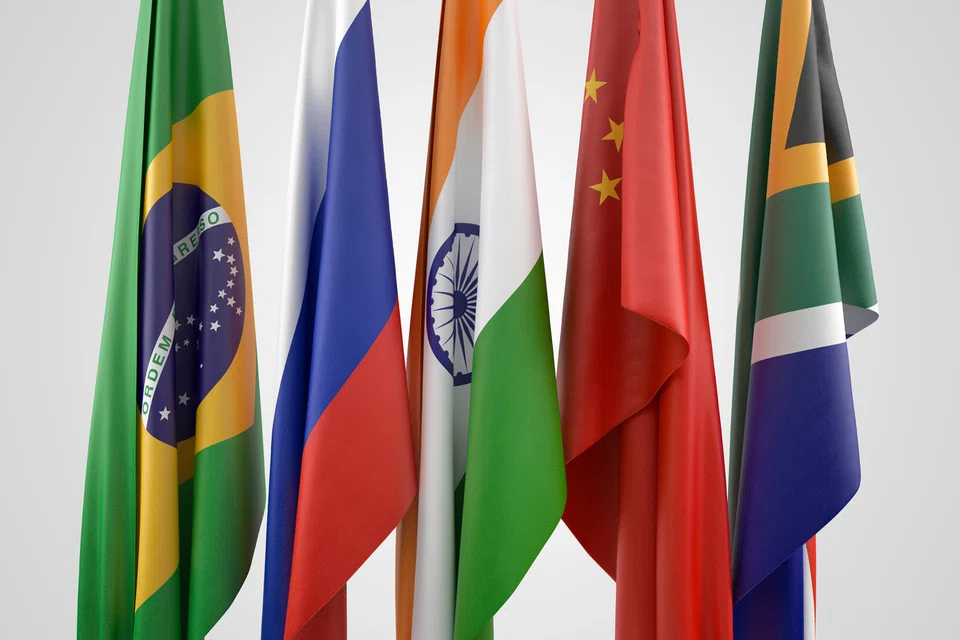
PRESIDENTS and prime ministers of the Brics meet this Thursday (June 23) for their annual summit, yet little may be said about the big “elephant in the room”: the Ukraine conflict.
Russia’s invasion is, by far, the biggest talking point in world affairs this year, yet it will not be a major topic for the Brics, partly because of the differences within the bloc (Brazil, Russia, India, China, and South Africa) on this issue. To be sure none of the club has joined the growing list of Western sanctions against Moscow, but beyond this, there are key differences: for instance while China has been relatively supportive to Russia, India has maintained a more neutral stance, reflecting its continuing alliances too with the West.
The host of this year’s event, Chinese President Xi Jinping, wants to move beyond such intra-group spats, and focus on what the Brics have achieved so far, and develop a clear forward agenda, including expanding the club. This is why last month Beijing invited nine other countries to attend the group’s meetings: Saudi Arabia, Argentina, Kazakhstan, Egypt, the United Arab Emirates, Indonesia, Nigeria, Senegal, and Thailand. There is widespread speculation that at least some of these states, including potentially Saudi Arabia and Argentina, may seek to join the club on a permanent “Brics plus” basis.
Today, the Brics account for over 40 per cent of the world's population, and around a quarter of global GDP. China will discuss measures at the summit for how the five, and possibly other new members of the club, could become even bigger players in trade and investment to spearhead a campaign for economic globalisation in the face of signs that the process may be going into reverse.
This week’s forum is not the first time this year that China has championed the benefits of market liberalisation. For instance, in 2017 he became the first Chinese president to give an in-person speech at the World Economic Forum in Davos, warning against any reversion to protectionism.
China’s advocacy of this agenda reflects, in large part, the fact that it has been a big beneficiary of globalisation, with IMF data since 2014 showing that the country’s economy is now larger than the United States on a purchasing power parity basis. However, another key reason why Beijing is pushing this is its interest in inclusive growth.
China wants this week’s summit to help usher in a new era of fairer global development. Through reform of the multilateral system, including the United Nations, and by refocusing the attention and resources of the global community on the sustainable development agenda, Beijing asserts that the Brics can support a more equitable global recovery.
This topic of inclusive growth and the Brics is especially pertinent given that the world is at a potentially pivotal moment in the battle against global economic inequality. World Bank research indicates that, for the first time in some two centuries, overall global income inequality -- one of, but not the only measure of economic inequality -- appears to be declining.
The Brics, especially China and India, have been the key drivers of this historic movement toward greater overall global equality. A report released this week by the Chongyang Institute for Financial Studies of the Renmin University of China notes that “IMF data shows that since the establishment of the Brics, the member countries have contributed more than 50 per cent to world economic growth, and developing countries, with the Brics countries at the core, have contributed more than 70 per cent to world economic growth, much higher than the G7”.
At the same time, however, there is an opposing force: growing income inequality within many countries, and this issue has become increasingly politically salient. It is the rising inequality in developed markets that gets most attention with concerns over inequality and stagnant living standards leading to surging support for some populist politicians, as shown in France’s recent elections.
These two opposing forces, like tectonic plates, are pushing against each other. While the net global trend for the past 200 years has been toward greater overall income inequality, there is now significant, growing evidence since the turn of the millennium that the “positive effect” of growing income equality between countries, spurred by the development of the global South, is superseding the “negative effect” from increasing inequality within nations.
However, the picture is not yet clear cut. In part, this is because data sources on global income are inevitably imperfect, which means conclusions are hedged with uncertainty.
While more proof is therefore needed to judge whether this economic phenomenon is robust, what is certain is that the overall lot of the South has improved dramatically, as exemplified by the Brics over the last generation. The most prominent beneficiaries have been a much heralded ‘new’ middle class -- estimated to be as large as a third of the world’s population -- disproportionately located in Asia.
With the current economic challenges that several Brics and other key emerging markets are now experiencing, it is unclear whether the development of the global South has enough momentum to keep driving forwards a more equitable world order.
To be sure, the trajectory of the global economy will very likely continue to shift toward the South, and for the foreseeable future some key emerging markets will probably remain in robust shape. The latest report from the IMF shows, for instance, that economic growth in 2022 and 2023 is expected to be 4.4 and 5.1 per cent in China and 8.2 and 6.9 per cent in India, substantially higher than the expected growth rates of 3.3 and 2.4 per cent in developed countries.
However, the recent remarkable wave of emerging market growth of the last generation appears now to be decelerating. And the global transformation it has produced in recent years may not be repeated.
This underlines that the fragile process of decreasing global income inequality could yet go into reverse if emerging market growth slows faster than anticipated and/or income inequality within countries accelerates. This would undercut efforts to foster inclusive growth, and the political ramifications that come with it may be ugly.
Andrew Hammond is an associate at LSE IDEAS at the London School of Economics
TRENDING NOW

South-east Asia has lost Nvidia’s best salesman

Higher rates, weaker spending: Is the Philippines entering stagflation?
Who is Leo KoGuan, the Singapore-based billionaire backing Nvidia’s Jensen Huang?

Demand, tech capabilities position Apac and AI as Skyscanner’s next growth frontiers: CEO Bryan Batista

