

Beijing needs to tackle its soft power deficit
It must find better ways to handle the situation, including enhanced international public diplomacy.
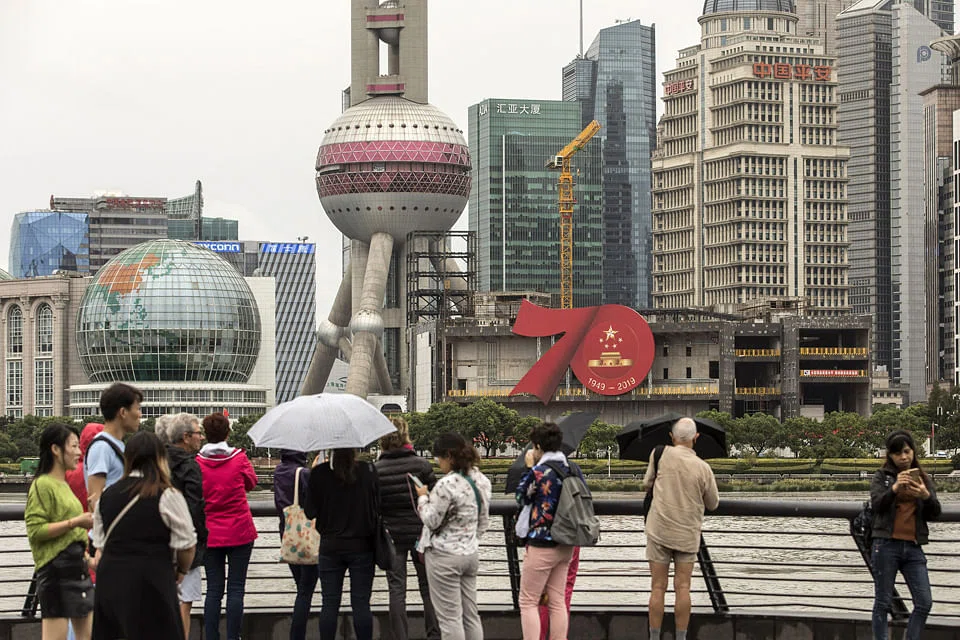
CHINA celebrates this month the 70th anniversary of the founding of the People's Republic. While Beijing has much to celebrate, it also faces several very pressing challenges, of which the demonstrations in Hong Kong are only the most visible right now.
One of the conundrums facing Beijing with the Hong Kong protests is that it has the muscle to put them down. Yet, in so doing, this would exacerbate the soft power deficit that the country already faces - which has the potential to become a growing headache for the ruling Communist Party in the 2020s.
China's soft power problems stem, ironically, from its very success in rapidly becoming a nascent superpower. Indeed, the nation's rise to greater prominence has been one of the defining features of the post-Cold War period, and this has been reinforced by major trade and diplomatic forays such as the Belt and Road initiative. Take the example of Beijing's growing economic power. International Monetary Fund (IMF) data since 2014 has asserted that the nation's economy is now larger than its US counterpart on a purchasing power parity basis which makes adjustments for the fact that goods are cheaper in China and other countries relative to the United States. However, the consequences of the country's generally strong growth in recent decades have been more than economic. In terms of perceptions, many believe the global balance of power has swung very significantly.
This has important, real-world implications - including feeding into the political posturing of some populist politicians such as US President Donald Trump with his strongly-held belief that Beijing is employing a range of unfair trade practices, including currency manipulation. He has frequently attacked China in a way that, however strategically ill-judged, has gotten domestic US traction.
One manifestation of Mr Trump's angst towards Beijing is reflected in his signing of legislation last year requiring the US Commerce Secretary to deliver a Report on Chinese Investment in the US to Congress and the Committee on Foreign Investment in the US every two years up to 2026.
While the bill focuses on military capabilities - not just of China, but also Russia and Iran as "potential adversaries" - it singles out Chinese investment as a security threat and zeroes in on Beijing's Made in China 2025 plan.
Yet, it is a potentially fully-fledged trade war that could be the most impactful, international result of Mr Trump's enmity towards Beijing. While US and Chinese negotiators are meeting again this week - and Mr Trump and Chinese President Xi Jinping at the Asia-Pacific Economic Cooperation summit next month - to try to secure a new trade deal, the US president could yet decide it is in his personal political interests for bilateral tensions to remain high going into his re-election campaign year of 2020.
Beyond Mr Trump, the stark change in international perceptions towards Beijing has been underlined by Pew Global Research. In 2018, the latest year for which research is available, domestic publics in 10 of 24 nations surveyed asserted that China is the world's "leading economic power". These were: Sweden, the United Kingdom, Argentina, South Africa, Spain, Australia, Nigeria, Canada, Russia and Germany. Thus 52 per cent of Australians in 2018 believed Beijing is the "world's leading economic power" which represents a rise of 12 percentage points (from 40 per cent) since 2008 alone. Comparable data for other countries includes the UK which has seen a rise from 29 per cent to 40 per cent over the same period.
CHANGED PERCEPTIONS
Much of the reason for these changed perceptions of China's strength stem from the aftermath of the 2008-09 financial crisis. While much of the developed world subsequently recovered - at a sometimes slow pace - from the worst economic downturn for a generation, China has enjoyed mostly strong growth.
While welcomed by many in China who understandably like recognition of the country's growing might, this opinion shift is not without headaches for Beijing. For, as Mr Trump's sometimes misinformed rhetoric shows, it has exposed the country to greater foreign scrutiny and fed into perceptions, and been seized upon by politicians like the US president who are tapping into concern about China's rise.
This is problematic for Beijing on multiple levels. For one thing, the country's grand strategy has long been premised on a gradual, peaceful transition to power during which it will grow stronger while keeping a low profile.
The significantly brighter spotlight on the country, especially since 2008, has exposed a deficit of soft power which is complicating its rise to power. Soft power - which rests upon the international attractiveness of a country's foreign policy, political values and culture - is recognised by Beijing as a key political commodity, but one that it has had limited success in cultivating to date.
As international perceptions of the country's power have changed, its global favourability has shown weakness in multiple key countries, as underlined in Pew's data in 2018. In around half the states where information is available, there are more unfavourable views of China than favourable.
The three continents where this is especially marked are Europe, North America and the Asia-Pacific. In Europe, six out of eight countries surveyed (Hungary, Greece, Spain, Sweden, France, Germany, Poland, and Italy) hold net unfavourable views of the country compared to the two outliers: Netherlands and the United Kingdom. Meanwhile, in the Asia-Pacific, views of China oscillated wildly with South Korea and Japan having highly net unfavourable views, while Indonesia and the Philippines are on the other side of the ledger.
In North America, both the US and Canada hold net unfavourable views of China. Mr Trump is well aware of this sentiment, and also the fact that US Republican voters tend to have lower overall favourability than Democrat counterparts towards the country.
If critical scrutiny intensifies, Beijing must find better ways to tackle this soft-power deficit, including enhanced international public diplomacy to win more foreign "hearts and minds". At a symbolic level, example measures include utilising the country's growing capabilities in science and technology for international cooperation with surveys underlining that many around the world admire China's strength in these important areas.
Beijing should also restart a process of addressing foreign concern about its intentions as a rising power. Here, it could intensify efforts to be seen as a responsible, peaceful global stakeholder. And it could match this rhetoric with actions, as exemplified by Mr Xi's pledge on Monday to uphold the "one country, two systems" principle in Hong Kong.
TRENDING NOW

Once staunchly pro-China, Malaysian Chinese businesses are now distancing themselves from Beijing

Looking beyond looming CEO succession, should UOB potentially pursue a transformative merger?

Could stablecoins be the future of money?

Grab CEO’s wife Chloe Tong on life with Anthony Tan and finding her purpose

