

Biden needs to spell out US foreign policy priorities
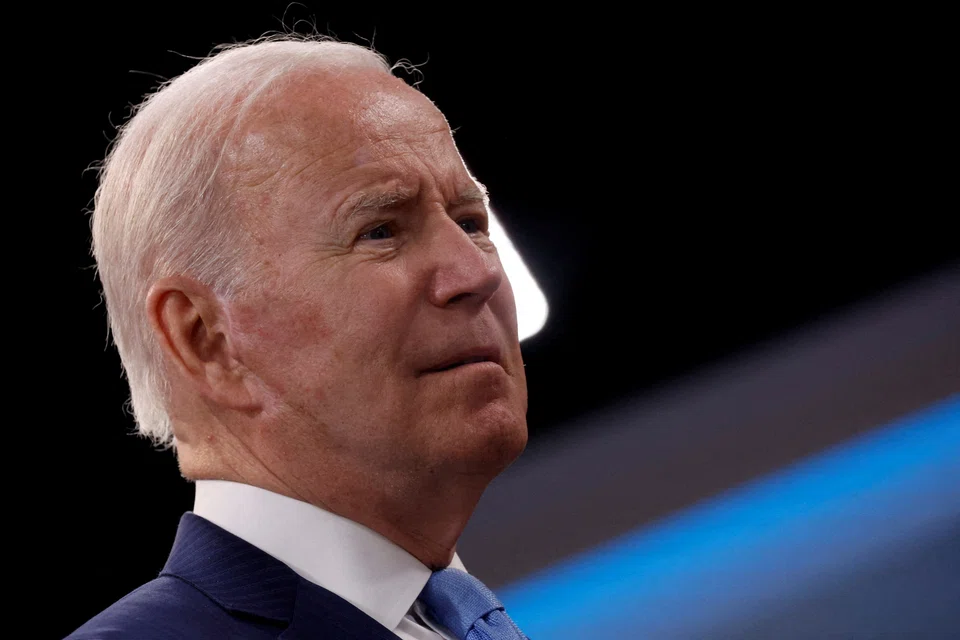
US PRESIDENT Joe Biden has won praise in Washington and world capitals for his performance on the global stage. He certainly deserves it.
Mobilising the support of America’s allies in Europe and Asia, President Biden has succeeded in forming a solid diplomatic and military coalition in response to the Russian invasion of Ukraine. It helped mount devastating economic pressure on Moscow to end its aggression and provided assistance to the Ukrainians fighting in defence of their country.
At the same time, demonstrating America’s commitment to maintain its interests and to its partners across the Pacific, President Biden during a visit to the region unveiled a new trade initiative in the form of the Indo-Pacific Economic Framework for Prosperity (IPEF) and highlighted US strategic interests by attending a meeting of the Quad grouping that includes also Japan, India, and Australia.
But President Biden’s global agenda has yet to evolve into a coherent grand strategy and if anything, it seems to set ambitious goals without explaining how the US would achieve them.
That Washington wants to continue sustaining and expanding its military alliances and economic presence in Europe and the Indo-Pacific and to prevent regional powers like Russia and China from challenging the balance of power in those two regions, makes a lot of sense, especially since President Biden, unlike his predecessor, is pursuing these goals not unilaterally but through multilateral means.
But then the Biden administration needs to recognise that there are limits to its ability to use its military and economic resources and the support of its allies in maintaining pressure on both Russia and China or “containing” them at the same time, and that doing that only leads them to band together against the US.
Hence perhaps the Biden administration needs to focus much of its efforts in the coming months on trying to enunciate its strategic goals vis-à-vis Russia -- and to use all possible means to achieve them before picking a fight with China over Taiwan and other issues.
Instead, Washington seems to have shifted its goals in Europe from that of helping Ukraine defend itself to declaring that the US “wants to see Russia weakened”, as US Secretary of Defence Lloyd Austin has put it.
This muddled strategy doesn’t enhance the US position at a time when the economic costs of the war are becoming evident, Ukraine’s prospects are dimming on the battlefield, and global players like India, Brazil, South Africa, and Saudi Arabia are resisting American pressure to join the anti-Russia coalition.
And consider that while Washington is calling upon the international community to stand up to President Vladimir Putin, US Secretary of State Anthony Blinken delivers a speech in which he enunciates that China, and not Russia, poses the greatest threat to US global interests. That reflects a certain strategic inconsistency.
Moreover, continuing American fixation on China as a rival runs contrary to the goal of forming a trade alliance with nations in the Indo-Pacific that maintain close economic ties with China.
Nor would the way the Biden administration presents its policies towards Russia and China -- as part of a struggle between democratic and authoritarian regimes -- help advance US geo-strategic interests.
Washington needs to set priorities when it comes to protecting its goals, and searching for enemies and conducting ideological crusades shouldn’t be on that list.
TRENDING NOW

World’s largest offshore wind platform by Seatrium consortium on track to be completed by 2028

Is stamp collecting enjoying an analogue revival or are its best days over?

GovTech retrenches another 38 staff in second round of layoffs

MBS adjusted property Ebitda falls 20.6% in Q3 with fewer high-roller visits, weaker hold

