

Biden's trade policies: Politics over business
He has made it clear that when it comes to his economic policies, he intends to put American workers first even if that clashes with other policy priorities, like trade.
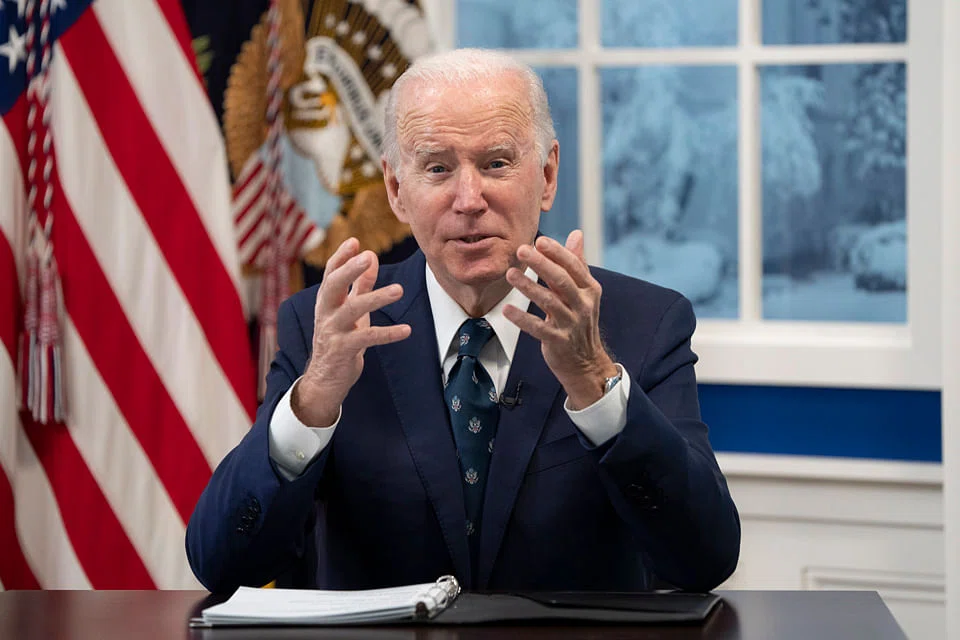
US President Joe Biden and his foreign policy aides have spent the past year declaring that the United States was back on the world stage. That the new president would reverse the supposedly isolationist and protectionist policies of his predecessor in office, and would pursue a strategy based on traditional US internationalist principles.
Moreover, if one were to sketch the outline of a Biden Doctrine on foreign policy it would be based on the assumption that the most effective way to respond to the geo-strategic and geo-economic challenges from China that are confronting the United States would be through multilateral action, working together with military allies and trade partners, as opposed to the unilateral approach embraced by former president Donald Trump.
That has made a lot of sense in theory, but fails to explain what has happened in the real policy arena, highlighting the following paradox: As the Biden administration talks the multilateralist talk, like its predecessor it seems to walk in a unilateralist direction.
Case in point: China has now joined other regional economies, that include America's allies Australia and Japan, in the new Asia-Pacific trade grouping.
The United States, on the other hand, will be missing in action. It won't be part of the Regional Economic Partnership (RCEP) that is supposed to eliminate 90 per cent of tariffs on trade among its 15 members.
Consider the irony: In 1989 the US was one of the founders of the Asia-Pacific Economic Cooperation (Apec) forum for 21 member economies in the Pacific Rim aimed at promoting free trade throughout the Asia-Pacific region.
In 2016 the United States helped launch the Trans-Pacific Partnership (TPP) forum as a multilateral mechanism aimed at further facilitating free commerce among the Pacific Rim economies.
The launch of the TPP - like that of Apec - was driven by the traditional US role since 1945 as the promoter of global free trade as well as by its interests to ensure that the Asia Pacific economies would embrace liberal trade principles.
Change of stance
More specifically, with the rising competition between the world's two largest economies, the US and China, the assumption was that with the TPP, the Chinese would face greater pressure to liberalise their economy while making it more likely that the US, and not China, would help write the rules on trade and investment in East and South-east Asia.
That notion that the TPP would turn out to be a tool to promote US interests in the region explained why China initially projected an unwelcoming attitude towards the trade pact while Washington put pressure on its members to ratify the agreement quickly.
And the rest, as they say, is history: With growing anti-globalisation sentiments rising in the United States, and growing protectionist pressures in both the Democratic and Republican parties, Congress refrained from approving the TPP deal in 2016.
And after Trump, a self-proclaimed economic nationalist, took office in 2017, one of his first actions was to withdraw the US signature from the TPP, which then could not be ratified and didn't enter into force. Upon entering office, Biden administration officials insisted that they had no plans to rejoin the TPP.
Hence the agreement from which Beijing was excluded and the US had led to counter China's influence in the region was no more - a prime example of what it means to shoot yourself in the foot.
So here we are in the week when the RCEP, the world's largest regional trade agreement, is taking effect, one that would provide China (and not the US) to help set the rules of trade and investment in the Asia-Pacific region, while the White House is being occupied by a president who in theory is committed to preventing that from happening.
In November 2020, then President-elect Biden said that the United States needed to "set the rules of the road instead of having China and others dictate outcomes". Now members of the RCEP including China would develop new rules and standards without the American sitting at the negotiating table.
Officially Biden administration officials suggested that the US would not join the new grouping because it fell short on labour and environmental standards. Members of the Democratic Party's more protectionist wing insist that without securing such requirements, the United States shouldn't enter into any trade deal. Which begs the question: Why didn't the Biden administration take part in RCEP negotiations and try to add those requirements to the accord?
At the same time, with the formerly pro-free trade Republican Party now under the influence of its protectionist Trumpist wing, Biden could not have counted on Senate Republicans to help him win support for joining the RCEP, assuming that that was his goal.
Moreover, at a time when Biden's approval ratings are sinking, he doesn't have the political capital needed to promote new trade deals, especially on the eve of the midterm election when Trumpists could bash him and his party as "globalists".
Ironically, in an indication that they were resisting the pressure from the Trumpists, some pro-business Republicans led by a group of 13 GOP senators, have sent a letter to Biden, warning him that the absence of the United States from the Pacific-Rim trade negotiations, like in the case of the RCEP, "encourages potential partners to move forward without us and ensures China will hold the reins of the global economy".
Bottom line
Like other internationalists and free traders these senators fail to understand why the Biden administration would provide an opportunity for China to expand its trade and investment ties with economies in the region and in the process strengthen its position there.
The bottom line is that politics has become the central force driving the Biden administration as it finds itself under growing pressure from members of his party's progressive wing and from the powerful labour unions that are allied with the Democrats.
Indeed, Biden has made it clear that when it comes to his economic policies, he intends to put American workers first even if that clashes with other policy priorities, like trade, which is one of the reasons his administration has yet to lift Trump-era steel and aluminum tariffs on Japan and Britain.
The result is that notwithstanding its internationalist rhetoric and commitment to multilateral principles, the Biden administration would probably continue to pursue protectionist policies and an industrial strategy that gives priority to domestic manufacturers, including by giving them substantial tax credits. Or, for that matter, it is showing no signs that it intends to reassess anytime soon the tariffs that Trump put on Chinese imports.
TRENDING NOW
Despite the de-dollarisation debate, demand for dollar liquidity in Asia is growing
URA to review guidelines on floor space to give developers more design flexibility: Chee Hong Tat

He built the Vingroup empire. Now South-east Asia’s richest man is handing some key roles to his sons

Can a first-time homebuyer couple earning S$18,000 a month afford a new EC unit?

