

Big bets on expanding MBS and RWS could pay off despite economic risks

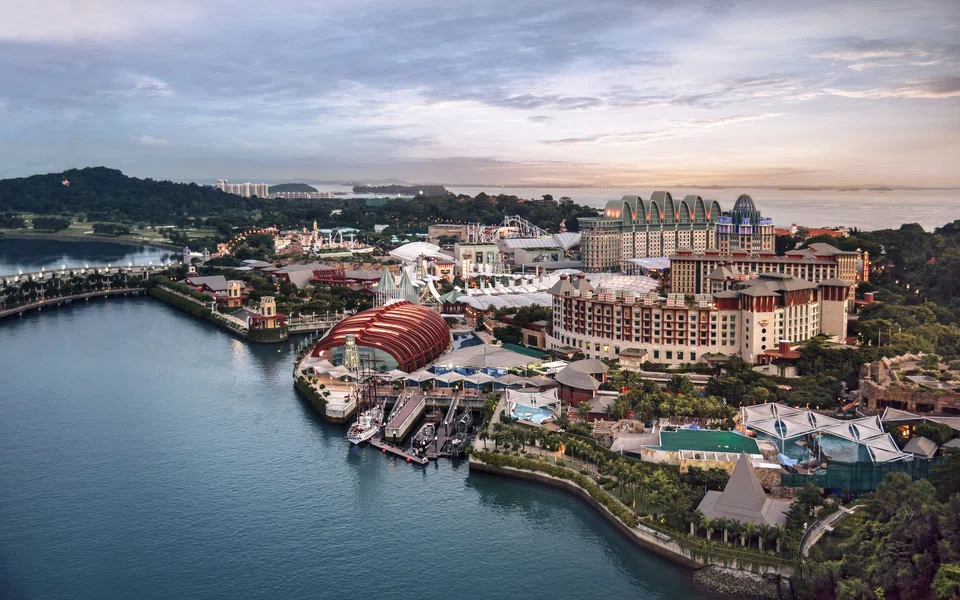
Singapore’s 2 integrated resorts (IRs) - Marina Bay Sands (MBS) and Resorts World Sentosa (RWS) - endured a torrid time from early-2020 to early-2022 due to Covid-related movement restrictions.
But the IRs are on the road to recovery. For the quarter ended Jun 30, 2022, Las Vegas Sands (LVS), which owns MBS, said the recovery at MBS accelerated during the quarter, with strong growth across gaming and non-gaming segments. MBS chalked up adjusted property Ebitda (earnings before interest, taxes, depreciation and amortisation) of US$319 million – nearly tripling from US$112 million the previous year.
Genting Singapore , which owns RWS, saw revenue for H1 2022 rise 20 per cent year-on-year, although higher utility tariffs and increased casino tax rates impacted the overall profitability.
The IRs are benefiting from the significant relaxation of Covid-related restrictions in the second quarter of this year. Singapore has lifted capacity limits for events and allowed nightlife businesses to reopen. Fully vaccinated visitors and non-fully vaccinated children aged 12 and below can enter Singapore without the need to quarantine, take any Covid-19 tests or apply for entry approvals.
In the first half of 2022, Singapore clocked 1.5 million international visitor arrivals, nearly 12 times that of a year ago. Visitor arrivals increased month-on-month in each of the first 6 months of this year.
Big capital expenditure
A brighter tourism outlook would cheer the owners of the two IRs, especially as they are incurring major capital expenditure.
LVS is spending US$1 billion in renovating Towers 1 and 2 of MBS to introduce a world-class suite product, with works to be completed in phases in 2022 and 2023.
The group’s US$3.3 billion expansion of MBS will feature a new luxury hotel tower with around 1,000 all-suite rooms, a state-of-the-art arena, additional meetings, incentives, conferences and exhibitions (MICE) capacity and new luxury retail. Targeted opening is in 2026.
Genting Singapore is carrying out renovation works to transform Festive Hotel at RWS into a business-leisure and work-vacation hotel, and upgrading Resorts World Convention Centre.
The group is spending S$4.5 billion to expand RWS - adding attractions, entertainment and lifestyle offerings to the destination resort. RWS recently broke ground for Minion Land - a new themed zone at the Universal Studios Singapore theme park. The SEA Aquarium will be enhanced and rebranded as the Singapore Oceanarium, which will be 3 times the size of the SEA Aquarium and encompass a research and learning centre.
Opened more than 12 years ago, both IRs have been gamechangers - boosting Singapore’s appeal as a leisure and MICE destination. They have also been great money spinners for their owners in the pre-pandemic days. In 2019, Genting Singapore posted net profit of S$689 million on revenue of S$2.48 billion, which translates to a net profit margin of around 28 per cent. LVS reported that MBS achieved adjusted property EBITDA of US$1.66 billion in 2019.
Mounting risks
The Singapore Tourism Board expects Singapore to receive between 4 and 6 million visitors in 2022. Pre-pandemic, international visitor arrivals in Singapore numbered 19.1 million in 2019.
Rising interest rates and high inflation may add to the expansion costs of the IRs as well as their operating costs. Also, economic weakness in the United States and China may trigger major weakening in many economies globally. Economic weakness could hit discretionary spending by leisure travellers and by businesses on MICE events.
Big bets can pay off
However, spending big on building and upgrading facilities amid uncertainty is nothing new to the owners of the two IRs. When the IRs were first being built, the world went through the global financial crisis of 2007-2008. There are reasons to be confident that the expansion plans of the IRs will pay off for their owners.
Firstly, as more countries move to live with Covid-19, international travel is recovering. Coming out of the pandemic and hibernation, many people have retained the appetite to travel for leisure in search of experiences or for business to build relationships. While MICE events may incorporate more virtual components, participants appear to value in-person events as being effective forums for business development.
Secondly, Singapore’s positioning as a premier destination for leisure and business travel may be relatively stronger post-pandemic. Travellers may value using well-designed and well-run airports such as Changi Airport. Singapore’s Changi Airport is expanding with its Changi East development that will feature a new Terminal 5, more cargo facilities and a 3-runway system.
Specific to the casino gaming business, Singapore could gain as tight restrictions in the gambling hub of Macau, which is pursuing a Covid-zero strategy, may drive visitors to Singapore’s IRs instead.
Thirdly, upmarket gaming facilities, fancy dining, luxury shopping and world-class entertainment offered by the IRs here can cater to the rising numbers of the rich in Asia as well as the wealthy who are setting up base in Singapore. There is a lucrative market for the IRs to capture business from the growing ranks of principals behind the burgeoning number of family offices here.
Fourthly, there is likely to be flight to quality playing out across various property segments, including the hospitality sector. People may opt to visit places with good public health like Singapore, and destinations that are compelling, such as the IRs. The continuous investments in the IRs by their owners will add to the value propositions of the IRs. And providers of premium offerings will likely enjoy some degree of pricing power.
Fifthly, as the IRs are sizeable operations, they have the economies of scale to deploy technology effectively to build up a productive workforce in a labour-constrained environment. Given their scale, the IRs can be employers of choice - they can offer greater scope for job rotation, learning and career development.
If the IRs succeed as great places for people to interact and play, the mega bets placed on expansion, amid these uncertain times, can pay off for their owners and Singapore’s tourism sector.
TRENDING NOW

Could stablecoins be the future of money?

Once staunchly pro-China, Malaysian Chinese businesses are now distancing themselves from Beijing

Global expertise and tailored solutions: How affluent S’poreans can grow and manage wealth across markets
GIC-backed Bank Jago sees wealth management as next growth engine as Indonesian investor base grows

