

Bolsonaro ballot is big moment for a Brazilian rebrand
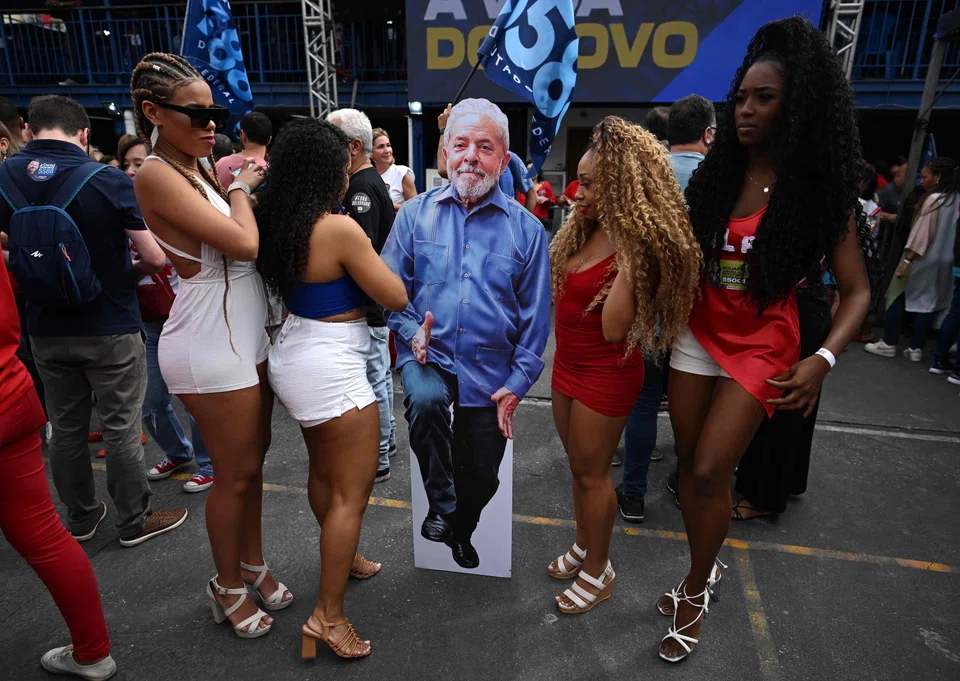
BRAZIL goes to the polls this coming Sunday (Oct 2), but it is more than the key presidential candidates on the ballot.
For after the controversies of the last few years, the election offers Brazil, as a nation, the opportunity to restore international trust and enter a new political era should President Jair Bolsonaro lose power. Bolsonaro – sometimes known as the “Tropical Trump” – has been a key part of the populism phenomenon sweeping the world in recent years.
Steve Bannon, former aide to Donald Trump, said recently that “Bolsonaro is a great hero for all of us... as someone that has stood for sovereignty and really grassroots”. Both former US president Trump and Bolsonaro campaigned as outsiders, promoting a nationalist, anti-globalist agenda, including gun ownership, which in the case of Brazil has led civilians to own more weapons than the federal police.
While populism in South America tends to be of the left-of-centre variety, what has been unusual about Bolsonaro’s period of rule is that he has been stridently right-wing. Not only has he brought in policies that have shocked global opinion, such as the intensification of deforestation in the Amazon, he has also attacked democratic institutions including the Supreme Court when it acted to curb his most anti-democratic moves. Moreover, he filled multiple key cabinet positions with retired and active-duty generals, and has appealed to his most vocal supporters to help him bring to power an overtly authoritarian government in which he could rule unrestrained by the law or other branches of power.
On the latter, although Bolsonaro has faced resistance among local governors and Congress too, none of them have been able to entirely tame his anti-democratic impulses. There is even doubt whether he will accept the result if he loses the forthcoming election which could, potentially, lead to a more overtly authoritarian regime with frostier relations with the West and potentially closer ties with Russia and China (in 2021, Brazil became the country in which China invested the most).
Since winning the election in 2018, Bolsonaro has repeated accusations of electoral fraud without any evidence. Brazil has had electronic voting machines since 1996, and no systematic fraud has ever been recorded.
During his recent UK visit to attend Queen Elizabeth II’s funeral, Bolsonaro said that if he received less than 60 per cent of the votes, then “something abnormal has happened” in the electoral court responsible for counting the votes. Yet, in polling in 2022, he has never surpassed 35 per cent and is typically polling about 10 percentage points behind former president Luiz Inacio Lula da Silva.
So, interest in who takes power in Brazil – whether Bolsonaro or Lula – is going to be high. And there is a growing sense that the election, should Lula win, could begin the path towards rebuilding Brazil’s damaged democratic institutions. Brazil is badly in need of a brand makeover and the 2022 elections could enable this.
As Brazilians prepare to cast their ballots, recent surveys suggest that 76-year-old Lula may be pulling further ahead and nearing the 50 per cent threshold needed to win the first-round election outright. While a first-round Lula victory is plausible, other polls have indicated that the race may be much closer.
Should Lula emerge victorious, he has highlighted a key goal is to forge a vision of Brazil to the world again of a modern, vibrant democracy and stable emerging market that is a prime destination for future investment and tourism. He has also therefore asserted that Brazil “can be a great country” after a troubled time of economic challenges, the health emergency of the pandemic, and political turmoil to boot.
For the difficult situation that Brazil finds itself in represents a dramatic change from the country of a decade ago when it was seen as an emerging democracy rising in global importance. Then, extreme poverty had been reduced through innovative welfare programmes and the nation’s diplomatic influence expanded across the world, including via membership of the BRICS. By 2014, however, amid the impact of the global financial crisis, right-wing populism began gaining ground in Brazil.
Two major questions arise from the potential pivot point that Brazil now finds itself in. Firstly, can a country’s reputation be enhanced in the same way as a corporate (or other organisations) might do? And, secondly, can this have a significant, sustainable national social and economic impact?
On the first issue, competition for the attention of stakeholders like investors and tourists is intensifying, and national reputation can therefore be a prized asset or a big liability, with a direct effect on future political, economic, and social fortunes. Boosting country reputation is therefore an ever-common ambition in what is an overcrowded global information marketplace, and a number of countries have successfully used key elections to rejuvenate themselves, including in Spain after its transition to democracy after the Franco dictatorship.
Yet, the simple fact is that many nations fail to fully capitalise, reputationally or economically, upon such major political moments.
To maximise prospects of Brazil benefiting, reputationally, in the middle of the country’s current malaise, it must pursue a concerted reputation and economic strategy that aligns all key national stakeholders (across the public, private and third sectors) around a single, coherent vision for its country brand. This exercise should not just be the preserve of government, but must involve the private and third sectors (that is, comprising non-governmental and non-profit-making organisations).
A key part of this must be connecting the end of Bolsonaro’s rule, if indeed that is the election outcome, to a wider story that showcases Brazil’s strengths so as to increase favourability of international perceptions of the country, politically, economically and socially. Major positives here include the fact that the country is a vibrant, diverse, multicultural state that has the potential to kick off its long-standing tag as a “sleeping giant” to become a regional superpower fuelled by its status as the world’s fifth-largest country by area.
Brazilian decision-makers would do well to act on this fast as they seek to capitalise upon the opportunities on the horizon. In the middle of the hurly-burly of the next few days and weeks, the long-term opportunities of the election should not be sidelined. For, in the middle of its current troubles, Brazil now has a significant opportunity to use this latest democratic moment for a positive brand makeover that could produce a lasting legacy for the country.
Andrew Hammond is an associate at LSE IDEAS at the London School of Economics.






