Boost market-making, broaden indices with bold moves, not incremental steps

THE Straits Times Index (STI) touched a 17-year high on Monday (Sep 23), hitting 3,638.54 points in intraday trading. Securities trading volume has been healthy lately, led by inflows of institutional money. How can Singapore quickly unfurl its sails to catch the wind at its back?
At the recent corporate governance conference organised by the Securities Investors Association (Singapore), Second Minister for Finance Chee Hong Tat said industry players have “shared ideas on possible measures to catalyse broader investor participation from both institutional and retail investors”.
These include “incentivising market makers to facilitate price discovery, broadening stock indices and expanding the pool of equity market derivatives”, he said.
Those are ideas that market participants have bandied about for a while, but that require significant strength and stamina to adequately introduce.
Take, for instance, the incentivising of market makers. James Leong, chief executive at market maker and proprietary trader Grasshopper, has long advocated for changes that would improve the profit opportunities for companies like his.
Market makers thrive on liquidity, Leong told The Business Times, and one important way to increase that is to increase the free float of stocks.
Singapore’s free float requirement is 10 per cent. This is a competitive number when it comes to attracting listings, but will not be of much help if the hope is to improve liquidity.
In 2021, London reduced its requirement from 25 per cent to 10 per cent to encourage more listings. The Tokyo Stock Exchange (TSE), however, has gone in the other direction. It not only has a relatively high free float requirement of 35 per cent for top-tier companies, but also stipulates a minimum daily trading value for these firms.
Interestingly, TSE’s requirements put the onus on companies to improve their liquidity – forcing several Japanese firms to disclose what they are doing on this front.
Such a requirement in Singapore might well see pushback. Boards often tell stakeholders that trading activity is market-determined and outside of their control.
Yet, listed companies really should be responsible for ensuring there is sufficient liquidity for minority shareholders to trade in and out.
Ong Hwee Li, CEO and executive director of SAC Capital, said one way companies could do this is by engaging a market maker.
“The job scope of the market maker must be clear – providing bids and asks all day, every day,” he said. “The company must undertake this as it must be accountable to all shareholders. If companies attract investors to invest but don’t provide an exit avenue, then investors are better off not investing, or investing in private companies.”
There has been unhappiness with market makers within the remisier community. S Nallakaruppan, president of The Society of Remisiers (Singapore), said in an article earlier this year that they “may help to boost volumes in the short term”, but in the long run are “harmful to the markets as they drive away many players in the ecosystem”.
Some in the remisier community believe market makers are able to manipulate the market with their heft and high-speed trading algorithms.
Ong believes such fears could be alleviated through regulation – which will require careful calibration and execution.
Another idea is to broaden indices. Having more constituents in the benchmark STI, for instance, would create demand for a larger pool of stocks, as index-based exchange-traded funds (ETFs) grow in popularity. A broader index might also attract a wider investment audience.
Grasshopper’s Leong believes efforts should not stop there, though. “The role of government support in Japan’s market reforms cannot be overstated,” Leong said.
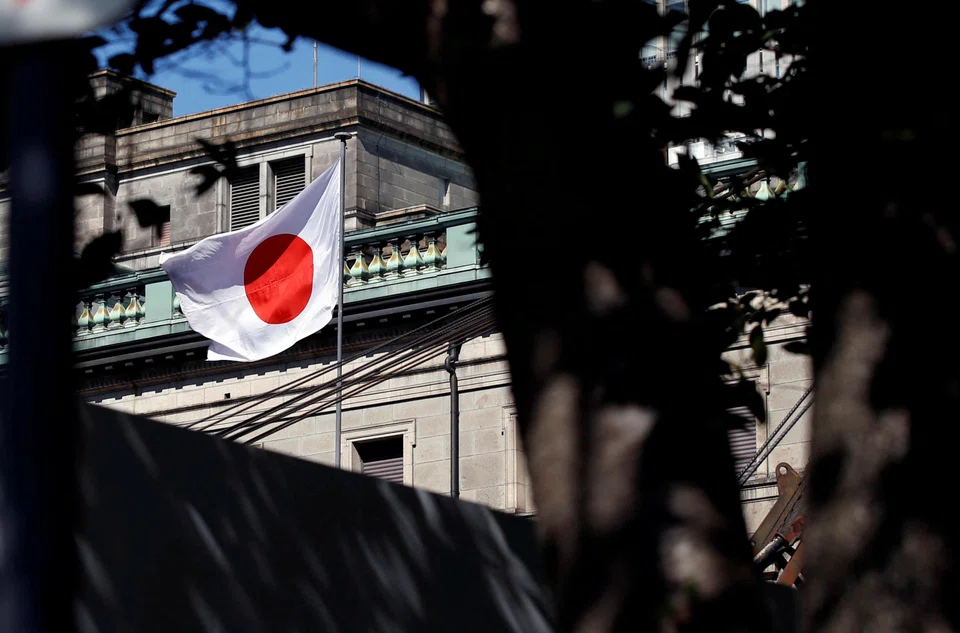
The Bank of Japan (BOJ) has only this year ended a 14-year ETF-buying programme that cost 70 trillion yen (S$626 billion) and now accounts for 80 per cent of all Japanese ETF assets and 7 per cent of the country’s stock market, according to Nikkei Asia.
The programme was meant to encourage domestic investors to take more risk, by creating a floor on ETFs. The BOJ also bought commercial paper, corporate bonds and Japanese real estate investment trusts.
Japanese investors are very conservative, preferring to hold cash. Critics say the programme has not done much to change that mindset, and may have the negative side effect of delaying governance reform because the BOJ does not exercise its voting rights.
While the programme has boosted stock valuations, these critics fear a crash once the BOJ starts to sell its holdings.
This is probably not a programme Singapore will seek to replicate, but more domestic money is needed to support domestic stocks. Foreign investors want to see a domestic vote of confidence.
By now, Singapore’s regulatory establishment may be getting tired of the parallels being drawn to Japan. It is important to recognise that Japan was in a different position from the one Singapore finds itself in today, which means not everything that worked there will work here.
Some fundamental principles will nevertheless be transferable. These include the principle that companies should be accountable to the shareholders whose money they took, and that we should not expect foreign investors to come if domestic money is going elsewhere.