

Bor-exit may be messy for Conservative Party
Amid the myriad economic and other challenges facing the UK, the ruling party will be tied up over the coming weeks picking a successor to Boris Johnson.
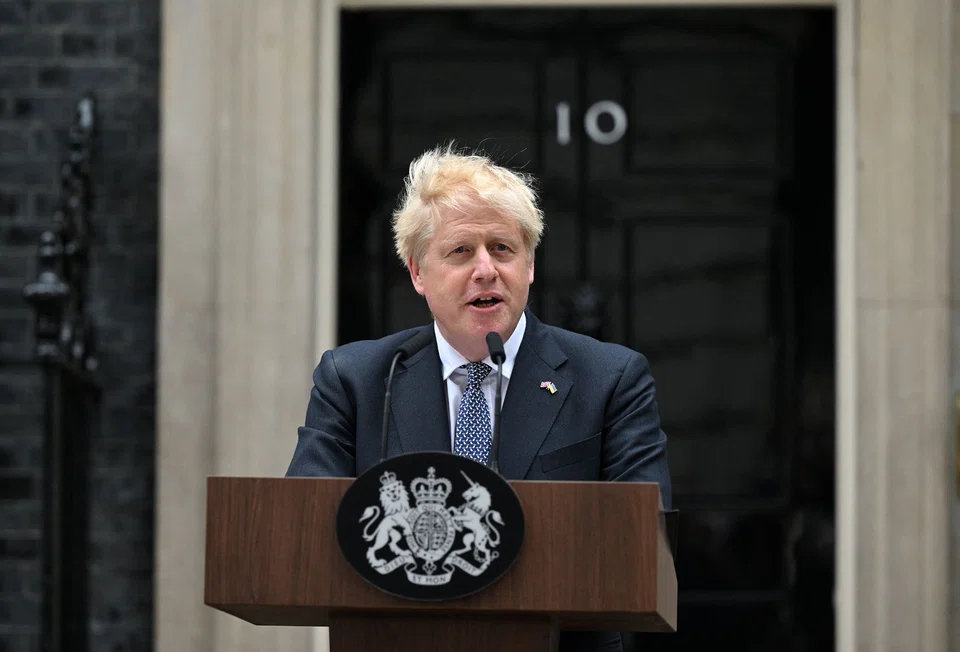
BORIS Johnson may have resigned as Conservative leader last week (July 7), after months of mounting pressure, but the UK ruling party’s troubles are far from over.
For while Conservative MPs are largely of the view that it is right for Johnson to go, they and the wider party are very divided as to who his successor should be. There is likely to be a big philosophical debate within the party in coming weeks, including about whether it needs to move back more toward a Thatcherite-style “low tax, small state” approach after the big spending, interventionist alternative of Johnson.
Early polling indicates that there is no overwhelming frontrunner, but an early outlier may be Finance Minister Rishi Sunak who was one of the first candidates to declare, and has benefited from the decision of Defence Secretary Ben Wallace not to enter the race. Sunak, whose resignation last week alongside fellow Cabinet Minister Sajid Javid precipitated Johnson’s downfall, could find it easier to make the case he will be a change candidate, restoring standards in public life, than those who have stuck with the prime minister right to the end.
The Conservatives, however, have a recent track record of not ultimately picking the early frontrunner as leader. Two of the last three Conservative Party leaders (David Cameron in 2005, and Theresa May in 2016) were not the favourites at the start of their leadership elections, but emerged during the contest as the clear winners.
The candidates to replace Johnson have wide-ranging policy ideas, but the single key task for his replacement will be stabilising the economy, and ending the months-long paralysis in government with a clear domestic and foreign policy post-Brexit vision for the country in the 2020s as it emerges (hopefully) from the pandemic. For the next few weeks, Johnson said major policy, including fiscal decisions, will be left for the next prime minister and the government will not seek to implement new policies.
This necessity of kickstarting the policy process from this autumn was highlighted in an important EY report released last month which looks at investor sentiment across Europe. It found that the United Kingdom remains a top FDI destination in Europe, but confidence is fragile.
The field of candidates seeking the party leadership, and thus prime ministership when Johnson vacates that post too in coming weeks, is large. Already announced candidates include Sunak, Javid, Attorney General Suella Braverman, Foreign Affairs Committee chair Tom Tugendhat, Foreign Secretary Liz Truss, Chancellor Nadhim Zahawi, Transport Secretary Grant Shapps, Trade Minister Penny Mordaunt, and former Foreign Secretary Jeremy Hunt.
The formal nomination process will open followed by a series of intra-party ballots of Conservative parliamentarians held with candidates gathering endorsements from fellow MPs. The lowest polling candidates will be eliminated at each stage until only two remain.
The Conservative Party membership of some 100,000 -- ie all members around the country, not just MPs -- is then expected to decide which of the two will become leader, and hence UK prime minister. The goal of narrowing down the field of candidates to two people may take place before the House of Commons summer break starts on July 21.
Until two or three favourites to replace Johnson emerge, the potential policy implications of the upcoming leadership change are unclear. The winner may not be finalised till September, although a faster decision is possible, as happened when Theresa May’s final opponent in 2016 (Andrea Leadsom) dropped out early.
While Johnson hoped to be in power for more than a decade after his big election victory in 2019, he has in fact served a short term of around three years. This puts his tenure around the same as May from 2016 to 2019, and just a little longer than Neville Chamberlain, the much criticised leader who served from 1937 to 1940 immediately before Winston Churchill’s first term.
The end of Johnson’s period in power came after a deluge of more than 50 resignations last week from the government or Conservative Party posts. Johnson sought to stop the haemorrhaging of his political power with a mini Cabinet reshuffle, but this failed badly.
In one of his final big acts last week before he resigned as Conservative leader, Johnson formally blocked a new independence referendum in Scotland which is being pushed by the devolved administration in power in Edinburgh. The UK Supreme Court is now expected to rule in coming months on whether such a referendum can go ahead as soon potentially as October 2023, and this is another key development to watch out for which could significantly impact the UK’s territorial integrity and political stability.
While the last word on Johnson’s prime ministership will be left to historians, what is already clear is that while he may be one of the best campaigners in UK politics, with an ability to cut through to the electorate with simple slogans such as ‘Get Brexit Done’, his ability to govern is much weaker. And his period of office reflects this, including the lax managerial discipline that enabled recent scandals to happen.
The reason for this dichotomy is his character and skill set. For much of the last two years of the Covid pandemic, his approach to tackling the crisis has been chaotic and incoherent reflecting the fact that his style is “big picture” and not details-focused, while his flamboyance is less suited to the demands of the pandemic era than previous times. Questions of integrity have also dogged him throughout his career, with a former journalist colleague of his saying in 2019, on the prospect of his becoming PM, “he has a very, very long track record of lying”.
It is not just domestic, but also international reaction, to Johnson’s resignation that has been mixed. Ukraine President Volodymyr Zelenskyy has expressed concern that the next UK prime minister may not be as robust in his/her response to Russia’s aggression. Yet, other key partners such as the US President Joe Biden has been more muted given the concerns that the White House has over Johnson’s policies in areas like renegotiating the post-Brexit Northern Ireland protocol which is widely seen to break international law.
Taken together, this is why Johnson’s controversial political legacy is likely to be disputed for years. While he achieved historic accomplishments, including Brexit, the nation is left more divided rather than united by his controversial premiership.
Andrew Hammond is an associate at LSE IDEAS at the London School of Economics.
TRENDING NOW

Knight Frank’s Tan Tee Khoon leaves firm, Nicholas Keong takes over auction business
Keppel Energy, Sembcorp Utilities and Tuas Power to supply biomethane in pilot project

GovTech retrenches another 38 staff in second round of layoffs

Take-up of new private homes dives 45% in Q3 as prices accelerate with 1.4% rise

