Boris Johnson may become ‘Trump-type’ figure in UK politics
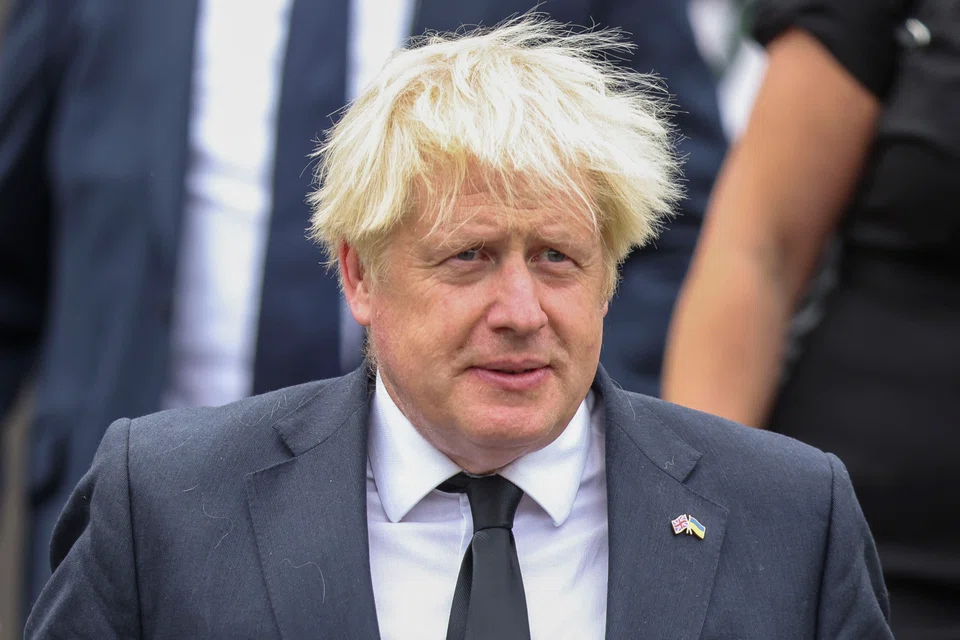
WHILE the United Kingdom has a new prime minister this week, it is the shadow of the former leader Boris Johnson that looms large over his successor’s future.
In his 3 years in office from 2019 to 2022, Johnson’s colourful, unconventional, populist political persona was a staple in UK politics. Especially if he remains an MP, he has the clear potential to become a “Trump-type” figure looming over the Conservatives, and indeed the wider political landscape in the 2020s.
All of the Conservative leadership candidates were unequivocal that Johnson would not be asked to serve in the next government. However, this does not mean he will lose all his political influence.
For Johnson remains very popular among Conservative members, more so than the new prime minister and any other politicians in fact. It is therefore plausible that he may try to run again for the Conservative leadership in the future, especially if his successor is perceived to “fail” by party members.
During his final Prime Minister’s Questions in the House of Commons in July, Johnson encouraged such speculation with his “Hasta la vista” remarks, which translate to “see you later” in Spanish. This scripted remark fuelled speculation that he doesn’t believe his frontline political career is at an end, and may well indicate a desire to return to Downing Street.
This point was emphasised by Lord Edward Lister on Sunday (Sep 4) when he claimed that his Conservative MP colleagues “overreacted” to the scandals that led to Johnson’s downfall, and it was wrong to get rid of him. He said Johnson was “the best prime minister we’ve had” and “I think he would continue to be a good prime minister. I think he would be very successful in a further general election”.
Lister added: “I’d never say never on anything with Boris Johnson, anything is possible in the future... if the ball comes loose at the top of the scrum. Well, he is an amazing person. He is full of energy. He works extremely hard.”
While much of the Conservative leadership contenders, including Liz Truss and Rishi Sunak, have competed in recent months for the legacy of former prime minister Margaret Thatcher, Johnson is a fan of wartime leader Winston Churchill. Johnson has written a biography of Churchill and may well be consoled by the possibility of repeating the statesman’s feat of winning a second period as prime minister.
In the last century, 4 people have served second periods in Downing Street after losing an election. They are Labour’s Ramsay MacDonald in the late 1920s and 1930s, Conservative Stanley Baldwin in the 1930s, Churchill in the 1950s, and Labour’s Harold Wilson in the 1970s.
Such is the uncertainty of modern politics that it cannot be ruled out that Johnson might be the fifth such person to achieve this feat. However, even if this does not happen, he has the potential to be a powerful, populist force in UK politics, perhaps in much the same way that Donald Trump has been since losing the 2020 US election.
What makes Johnson’s presence potentially potent is that he was turfed from Downing Street not by losing a national ballot, as was the case with the first period of office of MacDonald, Baldwin, Churchill and Wilson. Instead, he was deposed in an internal party vote which may be regretted by increasing numbers of Conservative Party members if the new prime minister underwhelms in office.
The historical parallel that the new PM’s team fears most is that of John Major, who succeeded Margaret Thatcher in 1990 after she was ousted by her party rather than a general election. Major’s position was undermined by a series of high-profile interventions from Thatcher, who remarked she was a “very good backseat driver”, with him later commenting that her behaviour was “intolerable”.
For Johnson to have a serious shot at a comeback, it may also be necessary for a wider slice of the electorate to become more positive about his legacy from 2019 to 2022. To be sure, some parts of the electorate continue to rate him highly.
However, several polls underline his divisiveness too. For instance, an Ipsos survey released last week showed almost half the UK public thought that Johnson has done a bad job as prime minister, the worst rating of any post-war leader.
Asked to rate British prime ministers since 1945, some 49 per cent of people said that Johnson had done a poor job during his time in Downing Street. This rating is worse than both his immediate predecessors, with around 41 per cent of people thinking Theresa May fared poorly, the second-highest total, while David Cameron’s 38 per cent was the third-highest total.
Although Johnson had the highest number of respondents saying he had done a poor job, he also had the fourth-highest number saying he had done well, underlining the highly polarised views of his prime ministership. A third of the people surveyed said he had done a good job in office, behind Tony Blair on 36 per cent, Margaret Thatcher on 43 per cent, and Winston Churchill who came out top of the post-war prime ministers, with 62 per cent saying he had done a good job.
So Johnson is therefore one of the few post-war prime ministers to have more people say he had done a bad job than a good one. That will probably need to improve, with time, if he is to win over Conservative MPs and party members sceptical of his record in office to date.
There is at least one other big potential “banana skin” too for him to avoid: he is under investigation by the House of Commons Privileges Committees into whether he misled MPs during the “partygate” scandal around lockdown gatherings. If he is found to be in contempt of parliament, he could be punished with a suspension from parliament.
Were Johnson to be suspended for more than 10 days, it can prompt a so-called recall petition. If more than 10 per cent of his constituents in Uxbridge and South Ruislip constituency sign the petition, a by-election will take place. Johnson could lose, thwarting any hopes of a comeback until the next general election, the latest date for which is January 2025.
Taken together, this is why Johnson faces such a highly uncertain political future. There is a significant chance of him making a comeback to frontline politics, but even if does not to happen, his presence will potentially continue to be keenly felt in Westminster.
Andrew Hammond is an associate at LSE IDEAS at the London School of Economics.