
Branching off from traditional retail banking
With banks offering more digital services, the role of physical branches will need to be reassessed.
 Add BT as a preferred source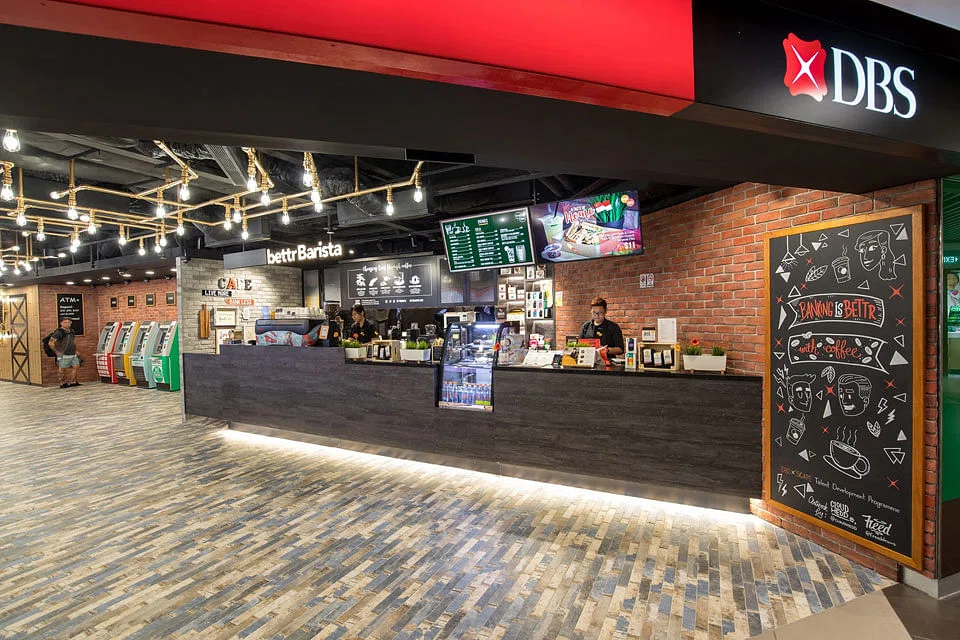
FOR years, brick-and-mortar banks filled with tellers, security guards and long queues were the only way for customers to access banking services. Over time, these traditional services centred around the bank branch have been increasingly sidelined as customers embraced automated and online banking offerings.
According to strategy consultancy Roland Berger's latest report on the future of retail banking branch networks, this trend is expected to accelerate rapidly over the next decade, and banks must adapt their branch network strategies to prepare for a redesigned, repurposed and reduced network.
In the next 10 years, a country's demographic shift, economic and digital maturity will be key to explaining its retail banking branch density development, and therefore its branch network footprint.
The majority of new banking customers will be digital-first people comprising Generation Alpha, Generation Z and Millennials, and it is estimated that the proportion of customers unlikely to use bank branches will reach 60to 70 per cent in the next decade.
Mature regions with high economic and digital maturity typically have high branch productivity, high bank penetration, and mature branch networks, and are likely to shed physical branches to reduce operating costs as customers move online.
Conversely, emerging regions will likely increase branches to meet the population banking potential and increase banking penetration in non-digitally savvy segments.
Navigate Asia in
a new global order
Get the insights delivered to your inbox.
Roland Berger estimates an 18 per cent overall net reduction in the number of bank branches in South-east Asia, which implies over 11,000 branches will be closed over the next decade. Reductions are expected in six markets - Singapore, Brunei, Malaysia, Thailand, Indonesia and the Philippines - and increases in four: Vietnam, Laos, Cambodia and Myanmar.
The number of branches in Singapore and Brunei has fallen since 2010, and this trend is expected to persist with a further decline of more than 20 per cent in both markets between 2020 and 2030.
SIGNIFICANT CONSOLIDATION
In Thailand, Malaysia, Indonesia and the Philippines, where some of these countries have experienced a recent growth phase, the number of branches is still expected to start falling or continue falling for those already on the downward trajectory. Indonesia, Thailand and Malaysia will see significant branch consolidation as their economies continue to grow and government regulations/incentives facilitate more digital banking activities.
In Vietnam, Laos, Cambodia and Myanmar, the number of branches has been steadily growing over the past decade and will likely continue increasing until 2030, because of their relatively underdeveloped banking sectors. These countries currently have the lowest branch densities in South-east Asia. As such, an increase in branch footprint and associated increase in financial inclusion is expected as the banking systems in these markets further develop.
The shift away from physical branches and the rise of digital banking will not only force banks to significantly reduce the number of branches in most South-east Asian countries, but also require them to fundamentally rethink the role of those that remain.
Banks will need to evolve branches from housing transactional activities, to providing customers with a personal touch and experience that they will return for. Future bank branches will have to move away from offering simple transactions and focus on higher value-added services, but the shift will be gradual as the transition to a purely cashless society is still a long way off in many South-east Asian countries.
Due to the different needs of each market, there is no one-size-fits-all solution to the role that bank branches should play in the future. Exact roles will need to be tailored to each branch model and to local needs.
For example, banks in more mature markets will leverage on artificial intelligence (AI) and machine interface for daily banking tasks and first-level customer services. They may consider transforming some of their branches into communal spaces such as lounges or cafes to draw in customers, or catering to mass-market customers by using their branches to offer non-banking services such as family activities or exercise classes.
Ultimately, finding the new role for branches in banks' integrated distribution networks will require careful planning with adequate consideration of market specificities. Banks that can best anticipate both global trends and local market characteristics with a customer-centric approach will be the most successful in their branch transformation.
OMNICHANNEL STRATEGY
With the development of digital banking, retail banks have shifted their client engagement model toward a so-called omnichannel strategy, aiming at seamless interactions between digital and physical channels.
However, most banks have kept the same structure, size and format of their existing networks. Only a few innovations have been introduced so far, mostly in the form of concepts/pilots, and trimming of the most unprofitable branches has only recently begun. These marginal initiatives will not be sufficient to successfully prepare banks for the next decade. The financial contribution of such a large asset will increasingly be questioned
Roland Berger's report suggests five key areas for decision-makers to dive into to ensure success and long-term sustainability in their branch network transformation journeys:
- Branch location optimisation
Locate branches to maximise customer service and revenue generation.
- Branch productivity improvement
Operate branches efficiently and effectively to generate profits.
- Customer experience enhancement
Improve service levels to compete with more innovative retailers.
- Organisational transformation and change management
Change mindsets and embed new technologies.
- Branch network transformation
Reduction, redesign and repurpose to prevent negative impact to profits and underuse of branch networks.
- The writers are from strategy consultancy Roland Berger, Singapore. Philippe Chassat is a senior partner and Luca Turba is a principal.
Decoding Asia newsletter: your guide to navigating Asia in a new global order. Sign up here to get Decoding Asia newsletter. Delivered to your inbox. Free.
Share with us your feedback on BT's products and services

