

Brexit is in the best interests of both Britain and Europe
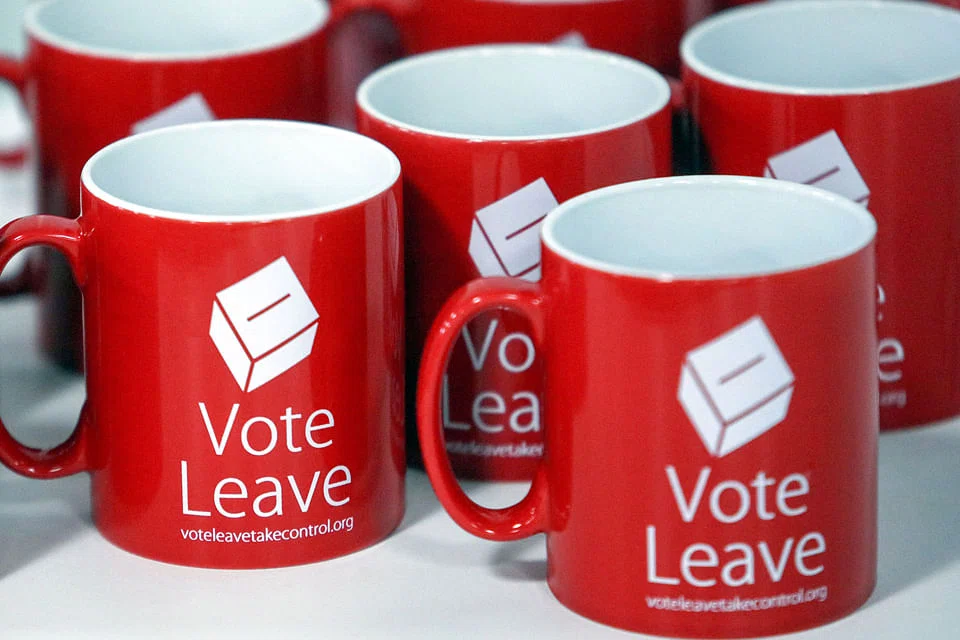
MY city career was wholly concerned with an issue that goes to the heart of the UK referendum campaign - sovereignty. I was exclusively involved with financial securities and related instruments, including weathering London's 1986 "Big Bang" liberalisation. By then, I had already spent six years developing and running the Liffe financial futures exchange.
I was initially an economist, later a bond salesman in the market for UK government bonds, known as gilts, because of their absolute, sovereign guarantee. London then was the only significant such financial market in Europe.
In the 30 years since Big Bang, the financial markets in Europe have shown they can make giant reforms. Unfortunately, we cannot say the same of the European Union (EU).
In attempting to renegotiate Britain's EU arrangements, David Cameron, the prime minister, has not secured a satisfactory deal. The UK has failed to enshrine the supremacy of UK law and parliament over European decision-making. The European Court of Justice can override the UK "supreme" court, so UK sovereignty is meaningless.
Mr Cameron is unlikely to achieve the fundamentally reformed EU for which he urged the electorate to vote. That goal does not appear to be even on the horizon.
I have watched developments from the 1970s, when the EU (as it now is) promised to be an enlightened, free trade-minded area. It has now become narrower and more introspective, with protectionist overtones, administered by bureaucrats in Brussels over-preoccupied by political goals, rather than the trade and financial aspects necessary for success.
Koen Lenaerts, the recently appointed chief judge in the European court, has stated that all cases should be heard with the presumption of always conforming with the move to ever closer union. This is necessary for the euro area, but the goal runs counter to Britain's global, free trade tradition and instincts. The two approaches appear irreconcilable.
A comparison of Mr Cameron's very good January 2013 European reform speech and the February 2016 deal highlights the paucity of his achievements. Mr Cameron probably got as much as he could on immigration; otherwise, the successes are threadbare. He wanted more competitiveness for the EU because, as he said three years ago, the single market "is only half the success it should be". Instead, he got "efforts to strengthen the internal market . . . lowering administrative burdens".
Mr Cameron wanted more flexibility "to accommodate the diversity of its members". He got agreement that "the UK . . . is not committed to further political integration into the EU" - an advance that doesn't go far enough. He wanted fairness in new euro area arrangements "for those inside it and out"; he got an assurance that non-euro countries would not be discriminated against by the euro bloc.
Mr Cameron wanted power "to flow back to member states", and greater democratic accountability through "a bigger and more significant role for national parliaments". In both areas, he achieved nothing of significance.
Unfortunately, the EU will remain bogged down for decades by the foolish decision to force a fundamentally flawed single currency and the Schengen treaty on so many countries with very different fiscal policies, cultures and customs.
The UK within a sluggish EU hidebound by the euro and the gaping democratic deficit risks losing out on worldwide opportunities to align with the more dynamic trading nations. The next European treaty would inevitably embroil the UK in even further euro-area integration, despite non-membership of the euro.
For all these reasons, in the June 23 vote, I favour leaving the EU, with which the UK will retain close and friendly trading arrangements. This outcome is likely to be in the best interests of both Britain and Europe as a whole. OMFIF
TRENDING NOW

Can a first-time homebuyer couple earning S$18,000 a month afford a new EC unit?

He built the Vingroup empire. Now South-east Asia’s richest man is handing some key roles to his sons

Asia needs new energy security architecture

Chagee, Mixue and Luckin won the market. Sustaining their edge is the harder part

