

Brian Williams, the least trusted man in America
Washington
ONCE upon a time in America, there were only three television news networks. From about the mid-1950s to the late 1970s, members of an average American middle-class family would gather in their living room, before or after dinner, to watch around 23 minutes (or 30 minutes with commercial breaks) of daily national and international news that were broadcast on one of the networks - CBS, NBC or ABC. And Americans would discuss what they had watched on the evening news the next morning at school or around the water cooler at work. It was a national ritual of sorts.
It may be difficult for young Americans, now used to uninterrupted 24/7 news flow on cable television news and the Internet, to realise that there was actually a time when their parents got most of their diet of daily news from the local newspaper they read with their morning coffee, and later in the evening, when they and most other Americans all watched the evening news on television.
So it is not surprising that anchormen or "anchors - the men who read the news on the three television networks, given that no women were doing the job at that time - were seen by Americans as figures of supreme authority - almost on the same level as the occupants of the White House or leading generals, senators and Supreme Court judges.
Indeed, Walter Cronkite, the CBS Evening News anchor who would end his broadcast every evening proclaiming "And that's the way it is" followed by the date, was referred to by Americans as "the most trusted man in America". His reports and assessments of current events were studied not only at the White House, but also around the world, as the accepted wisdom of the day that would eventually be shared by the majority of Americans and would affect their decisions on many issues.
American Presidents wanted to ensure that Cronkite and the other network news anchors were on their side when they attempted to mobilise public support for their domestic and international policies.
Indeed, when President Lyndon B Johnson was managing the costly and controversial US military intervention in Vietnam in the 1960s and facing criticism of the war at home and abroad, he was devastated when he saw Cronkite on the CBS newscast denouncing his strategy in South-east Asia. "If we lost Walter, we lost the American people, and we probably lost the war" was how President Johnson responded to Cronkite's report from Vietnam.
A lot has changed since that time, in the way that Americans have been getting their news, especially after the rise of cable television news in the 1980s and later, following the evolution of the Internet and online news coverage.
But notwithstanding these dramatic changes in media technology, the three television news networks have not abandoned the concept of a daily evening news programme. Part of it has to do with history and tradition with CBS, NBC and ABC trying to preserve what was once considered their flagship news show.
So despite the fact that only about 20 million Americans watch one of the three commercial broadcast news programmes on ABC, CBS or NBC these days, with most of them belonging to the least-coveted age group (above 54), network executives continue to deploy some of their best journalists to report on the evening news and appoint men (and now even a few women) who look and sound trustworthy as anchors; they are promoted as global stars who report from war zones, interview world leaders and who comfort victims of natural disasters, and who can sign off the evening news by proclaiming a la Cronkite: "And that's the way it is".
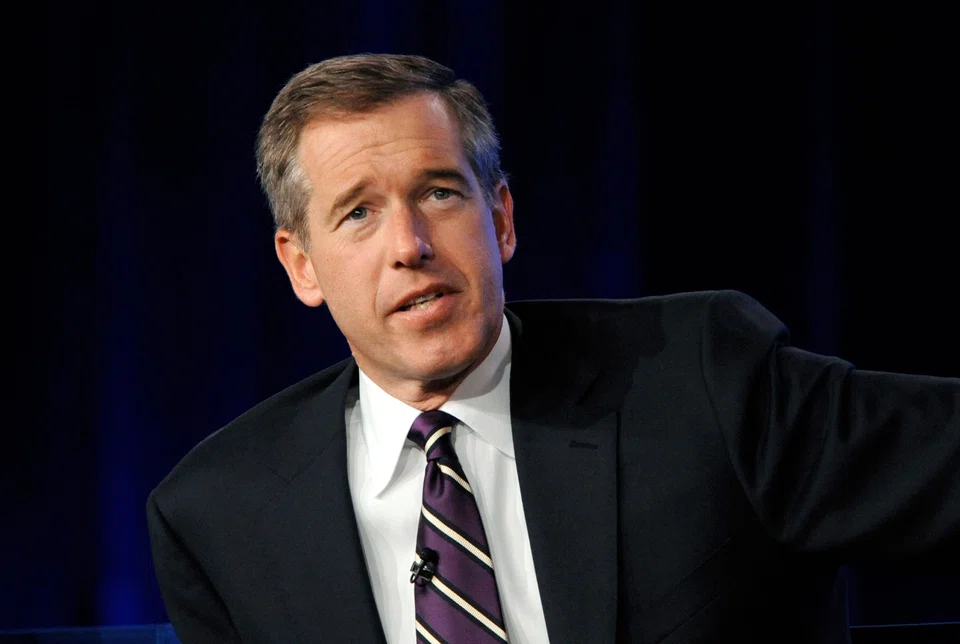
This was exactly the role that NBC News executives assigned to their star anchor Brian Williams on the NBC Nightly News since his appointment in 2004. One of the most important assets of the network, watched by about 10 million viewers every evening, Williams - who has made guest appearances on television comedy shows like 30 Rock and Saturday Night Live as well as on late-night television interviews - just signed a new annual US$10 million deal with NBC News last year. He is also managing editor of NBC Nightly News.
Some critics, disapproving of his morphing from a news reporter into a Hollywood celebrity, see this as part of an unhealthy process of television news looking less and less like the kind of hard news Cronkite reported about, and more and more like entertainment or "newstertainment".
From that time, some questions have been raised about Williams' personal behaviour: it was revealed in 2013 that he had fathered a child out of wedlock with a CBS production assistant and had reportedly paid her millions of dollars.
Questions have also been asked about his news judgment; some critics do not believe his claim of seeing a body floating beneath his hotel window after Hurricane Katrina.
But it was only after the military newspaper Stars and Stripes published early this month a damning story - that Williams had repeatedly embellished his 2003 war-reporting from Iraq - that serious questions began to be raised about his credibility as a reporter and a news anchor.
The revelations left him no choice but to recant a story he had told on the NBC Nightly News about being aboard a helicopter hit by RPG (rocket-propelled grenade) fire and forced to land during the US invasion of Iraq on March 24, 2003.
In fact, during his initial reporting of the incident, he indicated that the RPG hit a helicopter in front of his. But on subsequent news reports and television interviews, he seemed to have changed his story, and insisted that it was the helicopter he was on that was hit and crippled by enemy fire.
Soldiers and plane crews involved in the incident challenged his version of events, indicating that the NBC News anchor's Chinook helicopter arrived on the scene almost an hour after another helicopter had been hit and forced to make an emergency landing.
On the Feb 4 broadcast of Nightly News, Williams apologised and said he had "made a mistake in recalling the events of 12 years ago".
At the same time, NBC News announced that it would open a probe into his Iraq reporting. After the announcement, he said he would step aside from anchoring the Nightly News broadcast for "several days". NBC has since suspended him for six months without pay.
Meanwhile, social media - under the popular hashtag #brianwilliamsmisremembers - is rife with Photoshopped pictures in which he is seen at historic events such as the moon landing, the signing of the US Declaration of Independence and the raising of the flag at Iwo Jima.
Indeed, to contend that he has lost his credibility as a journalist would be an understatement. The man who once enjoyed making guest appearances on television comedy shows may have become now the star of his own satire about television evening news, turning on its head Cronkite's last words before signing off: "That's not the way it is".
Share with us your feedback on BT's products and services






