

BRICS flexing muscles on the world stage
The bloc has helped drive what could be the first period of sustained movement towards greater global income equality for two centuries.
 Add BT as a preferred source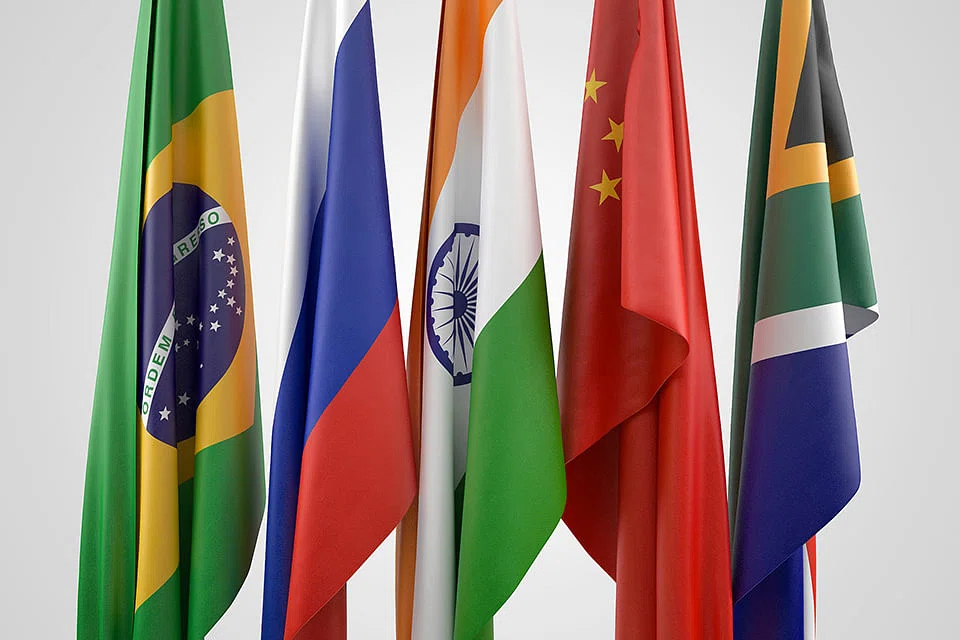
DeeperDive is a beta AI feature. Refer to full articles for the facts.
THE diplomatic highlight of each September is the annual UN General Assembly meetings, yet next month sees much stronger competition in a bumper month of global summitry that includes the BRICS and the Shanghai Cooperation Organisation (SCO) forums.
The SCO heads of state summit on Sept 16-17 will see leaders from Russia, China, India, Pakistan, Tajikistan, Uzbekistan, Kazakhstan, and Kyrgyzstan convene. The SCO is still a relatively little-known grouping, but covers some 60 per cent of the Eurasian continent on which three billion people reside, accounting for almost half of the world's population. And it could yet grow further with Mongolia, Belarus, Afghanistan, and Iran observers in the group, while Armenia, Azerbaijan, Turkey, Cambodia, Nepal and Sri Lanka have received dialogue partner status.
Important as the SCO is, however, it is the BRICS (Brazil, Russia, India, China, and South Africa) that continue to capture much more of the international limelight. This is because the five powers - three of which also form the nucleus of SCO - are increasingly flexing their muscles on the world stage.
The BRICS are not just pushing for a world order that includes a bigger role for developing nations.They are increasingly also becoming a meeting platform for those same nations and South-South cooperation.
While the origin of SCO lies in defence and security, it is economics that drove the formation of the BRICS, reflecting the fact that the five powers account for around a quarter of global GDP, and over 15 per cent of world trade. In their first decade of partnership, the bloc became a more cohesive force with a strong desire to advance their development strategies by coordinating macroeconomic policy.
Yet, while the bloc was originally formed for its economic potential, it has also seen political cooperation rise to the fore in recent years. This growing political bent is exemplified by this year's Indian presidency of the club of emerging market powers. The four priorities for New Delhi in 2021, with the leadership summit on Sept 9, include enhancing intra-BRICS anti-terrorism cooperation, and enabling greater people-to-people interaction.
Navigate Asia in
a new global order
Get the insights delivered to your inbox.
India's other priorities are delivering the Sustainable Development Goals (SDGs), and reform of the multilateral system to deliver on what BRICS says is a common ambition of sovereign equality of all states, and respect for territorial integrity. This emphasis on reforming the multilateral order is also showcased in broader BRICS projects, including creation of the New Development Bank, an alternative fora to the World Bank and International Monetary Fund.
The bank finances infrastructure and other projects in the BRICS, and a related US$100 billion special currency reserve fund. One driver for the new bank is the perception that it will allow BRICS to better promote their interests abroad, strengthening positions and opinions which are sometimes ignored by Western colleagues.
Another recent initiative, perceived to challenge US and wider Western preponderance in information technology, was agreed when the BRICS signed a letter of intent to cooperate in the sector. This builds on plans, first mooted in 2012, for a potential optical fibre cable system to carry telecommunications between the BRICS countries, partly as means to try to evade the purview of Western intelligence agencies, including the US National Security Agency.
EMERGING MARKET COOPERATION
These examples underline the hunger of the BRICS to become even bigger political players, raising fears in some quarters that the bloc could, ultimately, become a unified anti-Western alliance. However, this is most unlikely in the immediate future, and the bloc will probably not decisively move beyond an increasingly institutionalised forum for emerging market cooperation any time soon.
Part of the reason for this is the heterogeneity of the club with its diverse interests as showcased by Beijing's periodic tensions with New Delhi, including over border issues, which can adversely impact relations between the two. This has been one driver of the so-called anti-China Quad of powers comprising India, the United States, Japan and Australia.
At the same time that BRICS are stepping up their political cooperation, there is growing scepticism of the relevance of the group as an economic club given the diverging long-term economic trajectory of the five nations. Pre-pandemic, this has seen generally robust economic performance in China and India over the past two decades contrasting with disappointing results in Brazil, Russia, and South Africa. However, even India went into recession in 2020 while China was the only major global economy to grow.
Yet, with BRICS already accounting for around a quarter of global GDP, up by over 10 percentage points from around a decade ago, their overall growth is already having a major global impact, despite their diverging fortunes. World Bank research, for instance, shows that for the first time in some two centuries, overall global income inequality appears to be declining.
This is being driven by BRICS; especially the collective economic growth and very large populations of India and China.
At the same time, however, there is an opposing force: growing income inequality within many countries. This has assumed growing political salience helping fuel populist, nationalist politicians including Brazil's Jair Bolsonaro.
These countervailing pressures, like tectonic plates, are pushing against each other. While the net global trend for the past 200 years has been towards greater overall income inequality, there is growing evidence in the last two decades that the 'positive effect' of growing income equality between countries, spurred by BRICS, is superseding the 'negative effect' from increasing inequality within nations.
While the picture is still not yet clear cut, what is certain is that the overall lot of the South has improved dramatically, as exemplified by the BRICS.
Especially post-pandemic, it is unclear whether the bloc and wider development of the global South has enough momentum to keep driving forwards a more equitable world order. And this will therefore be one of the major agenda items at September's summit.
The trajectory of the global economy will very likely continue to shift towards the South. However, the remarkable wave of emerging market growth of the last generation may now be decelerating.
Conversely, it is not set in stone that ever-growing income inequality within countries will continue, especially if there is political will to address it.
While the coherence of the BRICS as a combined club is therefore increasingly questioned, they have helped drive what could be the first period of sustained movement towards greater global income equality for two centuries. Yet, the fragile process could yet go into reverse, post-pandemic, especially if growth in China and India flattens significantly in the 2020s.
- The writer is an associate at LSE IDEAS at the London School of Economics
Decoding Asia newsletter: your guide to navigating Asia in a new global order. Sign up here to get Decoding Asia newsletter. Delivered to your inbox. Free.
Share with us your feedback on BT's products and services
TRENDING NOW

Air India asks Tata, Singapore Airlines for funds after US$2.4 billion loss

Beijing’s calculated silence on the Iran war

China pips the US if Asean is forced to choose, but analysts warn against reading it like a sports result

Richard Eu on how core values, customers keep Singapore’s TCM chain Eu Yan Sang relevant

