

Brics pivotal in sustained move towards global income equality
But that's provided emerging market growth does not decelerate faster than anticipated or income inequality within countries accelerates.
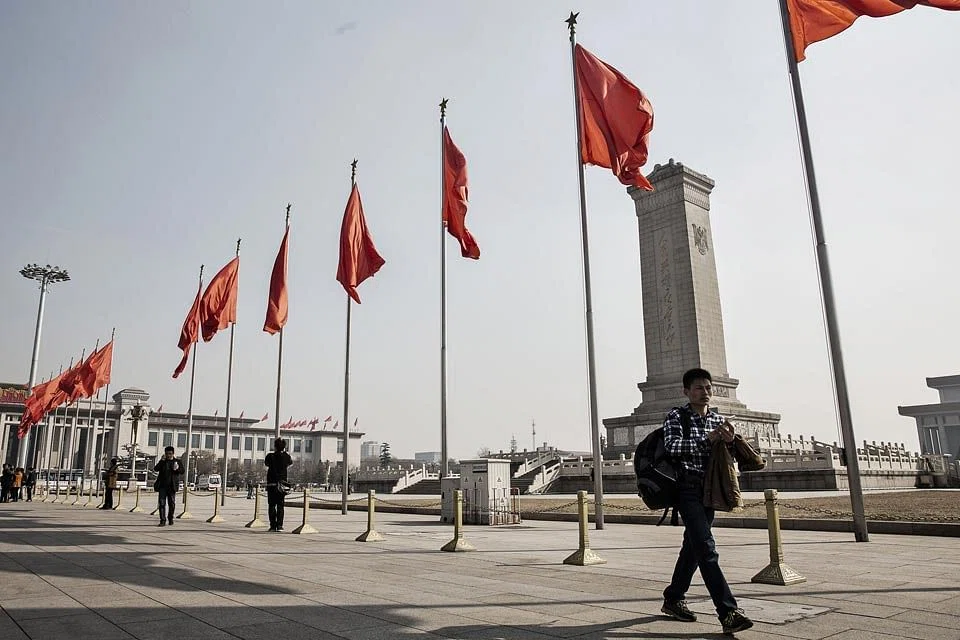
FOREIGN ministers of Brics (Brazil, Russia, India, China, and South Africa) meet on Sunday and Monday in Beijing, ahead of the group's 9th annual summit of presidents and prime ministers in September. The Beijing meeting will unveil China's agenda for this year's leaders event in Xiamen which will build upon the 2016 summit in India that focused on institution-building to deepen, sustain and institutionalise Brics cooperation to make the group even stronger in the future.
At last year's Goa summit, reform of the global financial architecture was a key agenda item, including expanding the role of emerging economies in the IMF, and the Brics agreed to set up a new credit-rating agency. The group also called on the Brics New Development Bank to focus on funding specific development priorities and set up research centres in areas including agriculture and railways.
The Beijing session, which will be chaired by Chinese Foreign Minister Wang Yi and feature all five foreign ministers except Indian External Affairs Minister Sushma Swaraj who will be replaced by Minister of State Vijay Kumar Singh, comes at a potentially pivotal moment in the battle against global economic inequality. Remarkable World Bank research indicates that, for the first time in two centuries, overall global income inequality - one of, but not the only measure of economic inequality - appears to be declining.
The Brics nations, which already account for more than 40 per cent of the world's population and just under 40 per cent of global GDP, have been the key drivers of this historic movement towards greater overall global income inequality. The collective economic growth, and very large populations of India and China in particular, have lifted a massive number of people out of poverty - an estimated 600 million between 1981 and 2004 in China alone.
This has helped catalyse what Branko Milanovic, who co-authored the World Bank research with Christoph Lakner, asserts is the "most profound reshuffle of individual incomes on the global scale since the Industrial Revolution".
At the same time, however, there is an opposing force: growing income inequality within many countries, with this issue becoming increasingly politically salient. It is the rising inequality in developed markets that gets most attention and this has fuelled an occasionally wild political period in some Western countries. Take the United States, for instance, where concerns over inequality and stagnant living standards have led to surging support for some populist and nationalist politicians including Donald Trump, powering his rise to the presidency last year.
These two opposing forces, like tectonic plates, are pushing against each other. While the global trend for the past 200 years has been towards greater overall income inequality, there is now growing evidence since the turn of the millennium that the 'positive effect' of growing income equality between countries, spurred by the development of the global South, is superseding the 'negative effect' from increasing inequality within nations.
Monumental as this moment could be, however, the picture is not yet clear-cut. In part, this is because data sources on income across the world are inevitably imperfect, which means conclusions are hedged with uncertainty.
While more proof is therefore needed to judge whether this economic phenomenon is robust and sustainable, what is certain is that the overall lot of the South has improved dramatically, as exemplified by the Brics over the last generation. The most prominent beneficiaries have been a much heralded 'new' middle class - estimated to be as large as a third of the world's population - disproportionately located in key Asian economies such as China, India and Indonesia.
The World Bank research also indicates that much of the bottom third of the global income hierarchy have also generally benefited too. As in China, many other hundreds of millions of people have transitioned away from absolute poverty.
However, not all the South has shared fully in this success story. Much of Africa and some of Latin America, for instance, have generally not benefited as much as Asia.
With the current economic challenges that China and some other key emerging markets, including Brazil and South Africa, are experiencing, it is unclear whether the development of the global South has enough momentum to keep driving forward a more equitable world order. This will depend largely on the same twin issues of whether emerging markets generally continue growing robustly, and whether the trend toward rising income inequality within countries is sustained.
On the first issue, the trajectory of the global economy will very likely continue to shift toward the South, and in the foreseeable future, many key emerging markets will probably remain in robust shape. However, the recent remarkable wave of emerging-market growth of the last generation appears now to be decelerating, and the global transformation it has produced in recent years may not be repeated again.
On the latter, it is not set in stone that ever-growing income inequality within countries will continue, especially if there is political and popular will to address it. However, the debate over what long-term reform agenda should be undertaken to tackle this problem is contested by the left and right across much of the world.
Taken overall, the Brics are therefore driving a pivotal point in world history which could potentially see the first period of sustained movement towards greater global income equality for two centuries. Yet, the fragile process could go into reverse gear if emerging market growth decelerates faster than anticipated or income inequality within countries accelerates. In such a scenario, the salience of economic inequality may only intensify in the coming years, potentially fuelling enhanced political appeal of nationalist and populist figures such as Mr Trump.
TRENDING NOW

Indonesia’s coal tycoon Low Tuck Kwong replaced as Bayan Resources president-director

OCBC names Ang Eng Siong as global corporate banking head in rejig of wholesale banking business

Consider lowering homeownership barriers for some non-resident foreigners

DBS opens flagship investment strategy to retail investors with new fund

