

Budget 2022: A progressive move towards greater solidarity

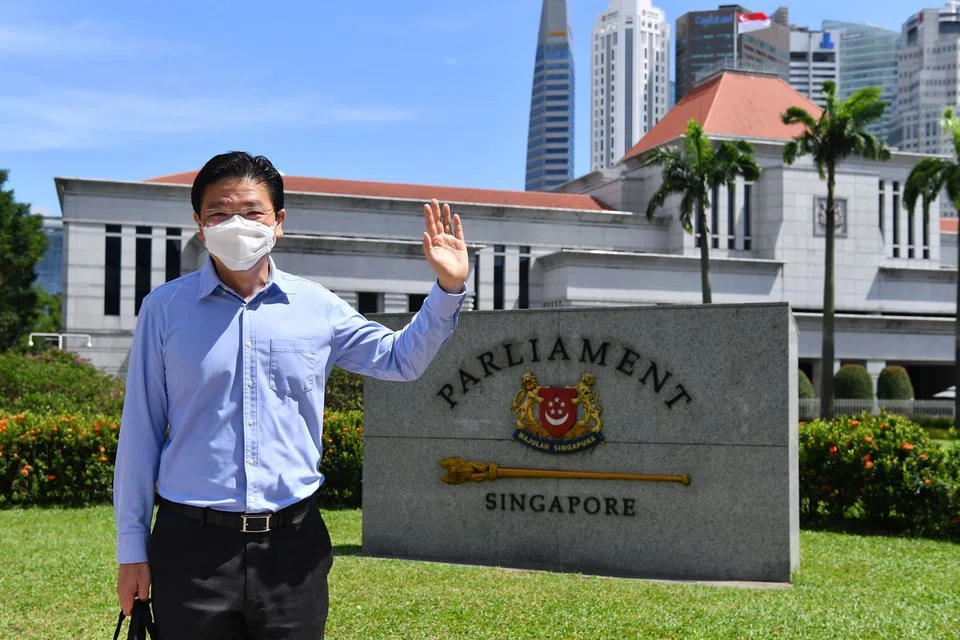
THOUGH the changes in tax rates were marginal, the rhetoric was bold. In his first Budget speech, Finance Minister Lawrence Wong built upon pandemic-forged solidarity to frame the paying of taxes as not a necessary evil, but an active show of solidarity.
It can be easy - not least for jaded reporters - to carelessly assume that the government is wedded to certain fears and orthodoxies: Don't tax the wealthy or the high-earners too much, lest we erode their work ethic or cause them to flee abroad. Keep corporate taxes low, to stay competitive. Singaporeans don't even want to pay higher taxes to support their fellow citizens, do they?
But fiscal pressures continue to build, making it untenable to leave tax rates untouched. Meanwhile, decades into nationhood, its seems reasonable to believe that Singaporeans are capable of making personal sacrifices for their fellow citizens - not least as the ongoing Covid-19 pandemic has shown.
Within this convergence of necessity and possibility, Wong's speech suggests that it is time to shed these old assumptions.
In a move with perhaps more symbolic than fiscal heft - given the actual timings of implementation - new taxes targeted at the wealthy were announced alongside a delay of the hike in the regressive goods and services tax (GST).
The signalling was clear: the fiscal burden should be borne by all, but especially the better-off.
Or as Wong made explicit later in his speech: "Everyone chips in and contributes to a vibrant economy and strengthened social compact, but those with greater means contribute a larger share."
Indeed, using perhaps the most pointed language in a Budget speech yet, Wong said that while Singaporeans enjoy the benefits of public spending, "we should not shirk from our responsibilities".
Arguably, this stance is partly facilitated by global circumstances. The global Base Erosion and Profit Shifting (BEPS) 2.0 initiative, for instance, is essentially forcing the government's hand.
The Global Anti-Base Erosion (GloBE) rules under Pillar 2 of BEPS 2.0 propose a global minimum effective tax rate for multinational enterprise groups with global revenues of 750 million euros (S$1.1 billion) or more. In response, Singapore is looking at a Minimum Effective Tax Rate (METR) to top up the effective tax rate of multinational enterprise groups in Singapore to 15 per cent.
In a sense, BEPS 2.0 has made the decision on Singapore's behalf, reducing old worries about keeping corporate tax competitive.
Furthermore, considerations of attractiveness require a new calculus in today's pandemic world. One of the Republic's erstwhile greatest rivals on this front, Hong Kong, now looks like a very different proposition from Singapore, due to diverging policies on Covid-19.
The pandemic has also made easy cross-border mobility a thing of the past, thus lending a greater weight to decisions about where one is located.
Those expats and high-net-worth individuals who choose to remain in Singapore are arguably here for the long haul; this certainly would not hurt Singapore's attempts to tax wealth more.
Wong did not frame wealth-related taxes as a path that the government is embarking upon reluctantly. There were no caveats about the need to move carefully, to avoid scaring off the rich.
Rather, he made the stance explicit: "Ideally, we would want to tax the net wealth of individuals." The government has held off for practical reasons of feasibility, not philosophical ones.
In fact, wealth taxes were positioned as important not just for the revenue generated, but their progressive role: recirculating wealth to "mitigate social inequalities".
Nor will it stop at expensive properties and luxury cars, with Wong instead giving due warning to those at the top: "We will continue to study the experiences of other countries and explore options to tax wealth effectively."
In contrast, the government has been very careful about the GST hike, taking great pains to show why it will not be as regressive as assumed, after accounting for various offsets.
Interestingly, Wong said he had decided to "delay" the hike to 2023, even though it was due only by 2025 - perhaps a nod to public speculation that it could kick in as early as this July.
The choice to stagger the increase in 2 steps, across 2023 and 2024, further points to the government's caution in mitigating the hike's impact.
Granted, most of the tax changes in Budget 2022 are marginal, in a literal sense: not an overhaul of the tax system, but raising their respective top rates.
Nor is this a paradigm shift; Wong was clear that Singapore does not intend to adopt "the European model of comprehensive universal welfare and high taxes".
Nonetheless, one can at least welcome the way in which the changes have been framed: not with reluctance, but with deliberate purpose; not with caveats about caution, but instead with exhortations to solidarity.
Rhetoric may not be as concrete as a tax rate increase, but it can still pave the way for future changes. Wong's first Budget might well be preparing the ground for further fiscal progressivity.
In this imagining of Singapore's social compact, taxes are not a burden to resent, but a symbol of care and common cause: "We want to uphold that sense of obligation to each other, and strengthen the assurance that, whatever the challenges we face, we will always have each other's back."
TRENDING NOW
Can a first-time homebuyer couple earning S$18,000 a month afford a new EC unit?

He built the Vingroup empire. Now South-east Asia’s richest man is handing some key roles to his sons

Asia needs new energy security architecture

Chagee, Mixue and Luckin won the market. Sustaining their edge is the harder part

