

The business case for sustainable design




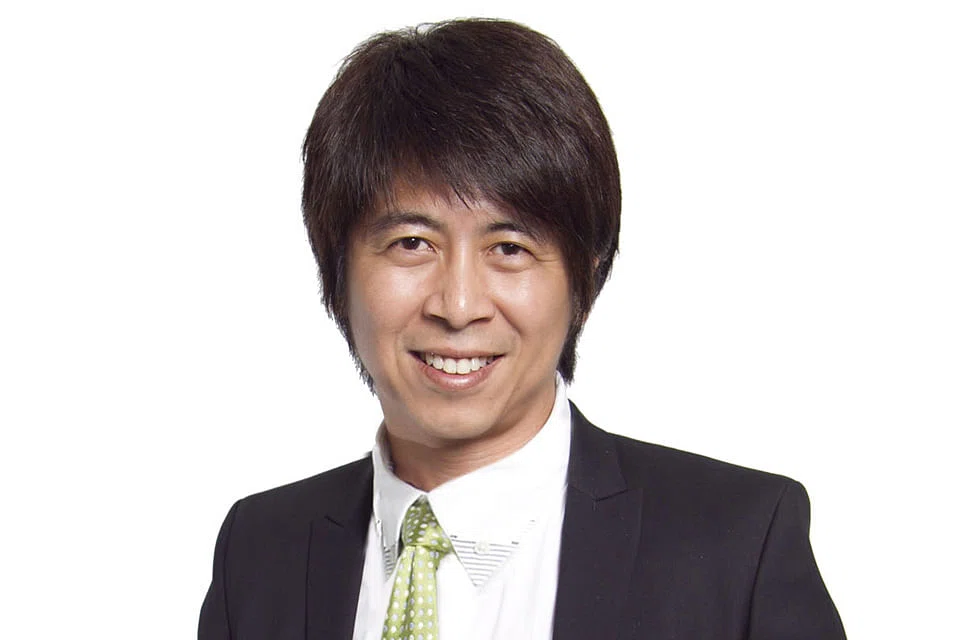
Roundtable participants:
Moderator: Tai Lee Siang, president of DBCS
CLIMATE change and environmental degradation have become pressing issues, especially after the fallout from the haze that shrouded large parts of South-east Asia recently. Much of this recurring hazard boils down to sometimes indiscriminate expansion by big business and poor environmental practices adopted by a long list of players in their supply chains.
So how can businesses today balance their commercial pursuits with socially responsible practices?
One way to address this is through sustainable design. The Design Business Chamber of Singapore (DBCS) has launched the new SG Mark 2016 - Green Business Design Award to encourage companies to tread the green path to success.
The Business Times and DBCS recently brought together champions of sustainability to discuss sustainable design for today's business.
Q: What is sustainable design?
SFIC: Sustainable design reduces or eliminates negative environmental impact through thoughtful design. It can be applied across all fields of design such as buildings or products to achieve environmental outcomes such as lower energy and water consumption through the entire product life cycle - from manufacture, daily use to eventual disposal; reduced greenhouse gas emissions and use of non-toxic materials that contribute to the health and well-being of the community.
OPUS: The concept is not limited to waste reduction or lowering the carbon footprint and environmental damage through saving or preservation of resources. It also extends to long-term sustainable investments before any benefits can be attained.
CDL: For the building sector, beyond creating eco-friendly physical spaces and developments, sustainable design is also about inspiring eco-lifestyles. As part of CDL's ethos to "conserve as we construct" for over a decade, we have been investing 2-5 per cent of construction costs of each new development on green design and innovations that minimise negative environmental impact and encourage sustainable habits such as the use of a vertical garden to reduce heat absorption and lower the energy needed to cool indoor spaces, yielding energy savings of between 15 per cent and 30 per cent.
SUTD: Sustainable design is a conscious and concerted effort to responsibly use resources such as energy, water, materials, and human capital at the global, regional and community levels to create innovative solutions to opportunities and problems.
Q: How can sustainable design be useful for businesses? What is the typical return on investment for sustainable design?
SFIC: Many global furniture and furnishing companies that have embraced sustainable design are financially outperforming their peers. More than one-third of companies, including Ikea, have reported a 23 per cent increase year on year, according to a study in 2013 by the Massachusetts Institute of Technology (MIT) and the Boston Consulting Group.
OPUS: The common myth is that sustainable design often involves high investment or running costs. This may be valid in some cases, but the inverse is also true.
Take IT, for example, it would be a waste of capital investment if a company does not have the economies of scale to build a full-fledged set-up. In such instances, leveraged solutions such as cloud-based e-mail and an all-in-one IT appliance may be a better alternative in terms of yields in cost savings and in carbon footprint reduction. Depending on the scale, the adoption of sustainable design can generate benefits in the form of savings in running costs which may more than cover the initial investment outlay.
CDL: Businesses that adopt sustainable design can achieve savings from more eco-friendly and efficient use of resources. Between 2008 and 2014, CDL achieved S$36.5 million worth of savings in annual electricity consumption from our Green Mark buildings.
SUTD: Sustainable design and associated processes and methods are useful to businesses and organisations to obtain competitive advantage, and help develop long-term and design approaches for an innovation economy as opposed to always being subjected to temporal, quarterly bottom lines.
Q: If sustainable design can bring about tangible benefits for businesses and consumers, why is it not widely adopted by the business community? What are the challenges in implementing sustainable design?
SFIC: There is currently a considerable gap between leading edge companies and the rest of the pack when it comes to the adoption of lean and green ideas in running businesses. Many companies still delay doing so on the grounds that it requires hefty capital investments. While there are some costs due to compliance, cost savings actually accrue over time under the new lean and green paradigm that stem from lower waste, better production efficiency and product quality.
OPUS: Awareness and cost are the crux to adoption. There is still a lot to be done when it comes to education and awareness to drive home the concept behind sustainable design and practices and the potential benefits that can be accrued from implementation.
CDL: Some businesses may view cost as a barrier, but this is a short-term view. With increased adoption of sustainable design, there will be greater economies of scale, which can lead to lower costs. Sustainable design can also improve resource efficiency and generate savings in the long run.
Q: How can businesses - especially SMEs - be encouraged to use sustainable design to enhance their business operations?
SFIC: SFIC organises training seminars and actively encourages its members - especially export-oriented SMEs - to help them obtain green certification for their products, such as the globally recognised Green Guard certification, to enhance their exports or entry to markets such as the USA.
OPUS: Solution & services providers can reach out through various channels such as the SBF and ASME to the SME community. More schemes or grants could be extended to help defray the costs involved to encourage SMEs to take up sustainable design and solutions.
CDL: CDL has been promoting awareness of the benefits and providing appropriate incentives for more businesses, especially SMEs. As one of Singapore's largest landlords, we have leveraged our strong position to influence commercial tenants to embrace sustainable designs and practices through several eco-outreach initiatives such as such as Project: Eco-Office in 2002, "1 degree centigrade up" Programme in 2007, and CDL Green Lease Partnership programme in 2014.
Q: How do you measure the success of sustainable design for business? What are the criteria applied to measure this?
SFIC: There are a number of assessment guidelines such as the Environmental Life Cycle Assessment (E-LCA) and Life Cycle Costing (LCC) as well as the Social and Socio-economic Life Cycle Assessment (S-LCA) that are used to assess the impact and benefits of the life cycle of products and services from the extraction of the natural resources to the final disposal.
OPUS: In IT, a sustainable design would likely be measured by the yardstick using the TCO (Total Cost of Ownership) of the implemented solution and savings from running costs such as electricity, maintenance & support costs among others.
CDL: For the building sector, the Building and Construction Authority (BCA) Green Mark scheme is a leading green building rating system and benchmark for environmental sustainability. We have achieved over 80 BCA Green Mark buildings to date, the highest among Singapore developers.
Q: How can the government help businesses to take up sustainable design practices?
SFIC: The government can do more to actively support sustainable business practices through various incentives such as a green technology financing scheme, more grants for waste recycling and treatment and to help defray the costs of certification or restructuring of non-green businesses towards sustainable ones.
OPUS: The government can take a more proactive approach in education as well as offer grants or subsidies to companies, especially SMEs so that they can benefit from cost-effective use of leveraged or all-in-one solutions.
SUTD: There are a number of practical and pragmatic approaches for government to help businesses. These include incentives and relevant regulations, professional development programmes and training, encouraging leadership in bringing science to bear and creating technically valid messaging as well as investing in significant research and translational centres to partner industry.
*The roundtable was convened in late October. Mr Kwek died on Monday morning from a sudden heart attack.
TRENDING NOW

He built the Vingroup empire. Now South-east Asia’s richest man is handing some key roles to his sons

Despite the de-dollarisation debate, demand for dollar liquidity in Asia is growing
Can a first-time homebuyer couple earning S$18,000 a month afford a new EC unit?
Asia needs new energy security architecture

