

Bye, bye, QE
Short of a new financial crisis and a major economic downturn, it's unlikely that the Fed would return to the quantitative easing (QE) tool any time soon.
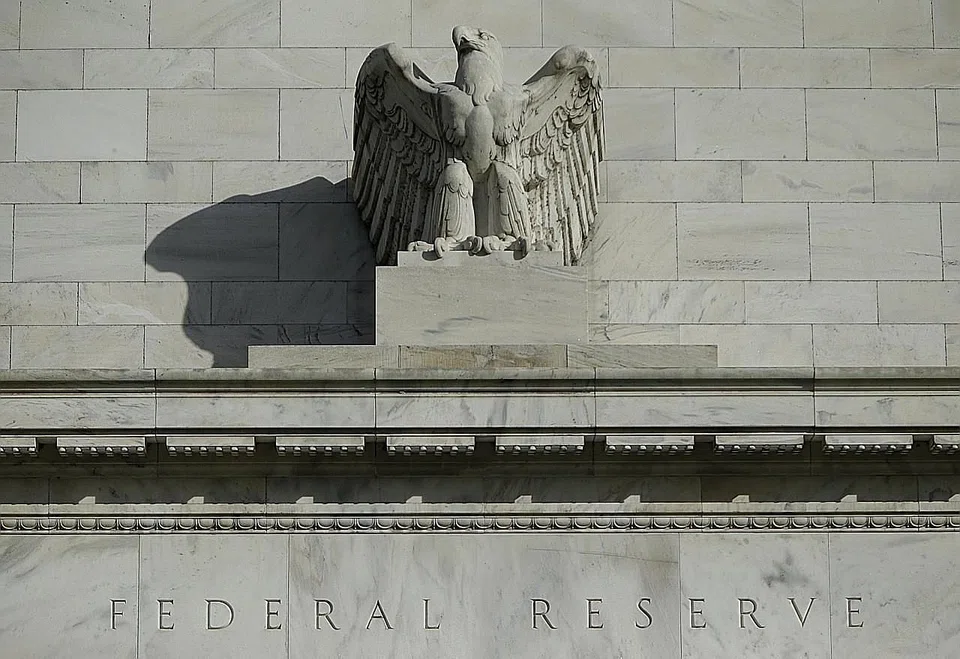
LAST Wednesday's announcement in Washington didn't come as a big surprise, and some would argue that it was anti-climatic. The US Federal Reserve was ending its quantitative easing (QE) stimulus programme - reducing its last US$15 billion-a-month of asset purchases to zero - which it had launched in November 2008 at the peak of the financial crisis and amid fears that the American economy and the rest of the world could face a rerun of the Great Depression.
The Fed said in a statement issued after its Federal Open Market Committee (FOMC) meetings last Tuesday and Wednesday that despite the current global economic downturn, it was confident that the American economic recovery would continue, and that the central bank's targets for inflation and unemployment were moving in the right trajectory. Responding to the improvement in the economy, the Fed has already started gradually cutting back - or "tapering" - QE since last year.
"The Committee continues to see sufficient underlying strength in the broader economy to support ongoing progress toward maximum employment in a context of price stability," the Fed said.
And suggesting that the QE programme - as part of the Fed's aggressive monetary strategy - has played an important role in generating the current economic recovery, the Fed declared "there has been a substantial improvement in the outlook for the labour market since the inception of its current asset purchase programme".
Congress had assigned the US central bank two tasks: To counter inflationary pressures and to stem the rise in unemployment. Traditionally, the main tool employed by the Fed to fulfil these goals has been the setting of interest rates through its so-called Federal Funds Rate.
But during the bleak economic times of 2008, the Fed, under its then chairman Ben Bernanke, came to the conclusion that its main interest rate target was gravitating towards zero and that it needed new ammunition.
Hence, Mr Bernanke and his colleagues decided to increase the money supply by buying bonds - a policy that came to be known as quantitative easing - and in the process, they added US$3.7 trillion worth of assets to the Fed's holdings.
The consensus among economists has been that when the QE programme was launched in 2008, it provided the necessary liquidity and helped restore confidence in the financial markets.
And there has also been general agreement that contrary to warnings by Republican and pro-free market-oriented economists, the Fed's policies have not produced inflationary pressures. And indeed the continuing price stability allowed the central bank to stick to its activist monetary stand.
But economists and historians will probably continue to debate for years the overall benefits and costs of the QE strategy, especially after the central bank decided to move ahead with two more rounds of the programme, including the last QE3 that was launched in September.
In particular, critics have argued that the Fed's loose monetary policies could produce another financial bubble by encouraging the kind of irresponsible conduct by investors that had created the conditions for the last financial meltdown.
Another criticism has been that the massive rise in asset prices that accompanied the QE mainly benefited the super-rich and was responsible in part for the rise in income and wealth inequality in the United States.
At the time, when the Republican-controlled Congress refused to vote in favour of any major fiscal stimulus programme to revive the economy - and at some point even threatened not to approve the federal budget and extend the debt limit - the Fed's activist monetary policy proved to be the only economic stimulus plan in town.
In fact, it was under this monetary policy that the American economy has continued to grow at a faster pace - although at 2 per cent, not that fast - than that of the European Union (EU) economies where the European Central Bank (ECB) has refrained until recently from embracing a similar QE programme (although there are other reasons than monetary for Europe's economic stagnation).
The Fed's leaders and the proponents of the QE contend that the programme helped to reduce the unemployment rate which has fallen to 5.9 per cent from 8.1 per cent at the start of the current and third round of QE in 2012. But then it's quite possible that the changes in the labour markets were an integral part of the ongoing economic expansion.
And in any case, the decline in the jobless rate is explained in part by the fact that more Americans have left the job market and stopped looking for employment, reflecting structural problems facing the American economy as well as long-term changing demographic trends that cannot be affected by monetary policy.
Indeed, Fed chairwoman Janet Yellen and her colleagues are probably aware that despite the major fall in the unemployment rate, there remains considerable weakness in the labour markets - long-term unemployment; more part-time workers; stagnant salaries - and that it may be too early for the central bank to declare victory and to move to the next stage of the "normalisation" of monetary policy, that of raising short-term interest rates.
NORMALISATION
Indeed, the Fed said that it was planning to keep those rates at around zero for a "considerable time". And without signs of rising inflation, the central bank may not be under pressure to raise rates. If anything, there has been some concerns about deflationary pressures that could slow economic activity.
In a way, the central bank had proved to be too optimistic in the past about the economy to terminate the first two QE programmes, and was forced to launch a third round when faced with a weak recovery.
In fact, one member of the FOMC, Narayana Kocherlakota of the Minneapolis Fed, voted against ending the QE programme, reflecting the view that it may be too early to move towards higher interest rates.
Although there are signs that the American economy is growing and that consumers and businesses are increasing their spending, there are also some indications of slower global economic growth, reflected in lower energy prices.
But short of a new financial crisis and a major economic downturn, it's unlikely that the Fed would return to the QE tool any time soon. After all, the US central bank has a balance sheet worth over US$4 trillion that allows it, when necessary, to provide liquidity and boost economic growth.
TRENDING NOW

Simba admits exceeding spectrum limits amid failed M1 deal; full-year profits surge 277%

Temasek’s Wan Chee Foong to helm PIL, Lars Kastrup to be board adviser

He built the Vingroup empire. Now South-east Asia’s richest man is handing some key roles to his sons

One-third of Singapore-listed firms at risk in severe AI downturn: MAS

