

Can old dogs learn new tricks? A look at BT’s journey to attract Gen Zs

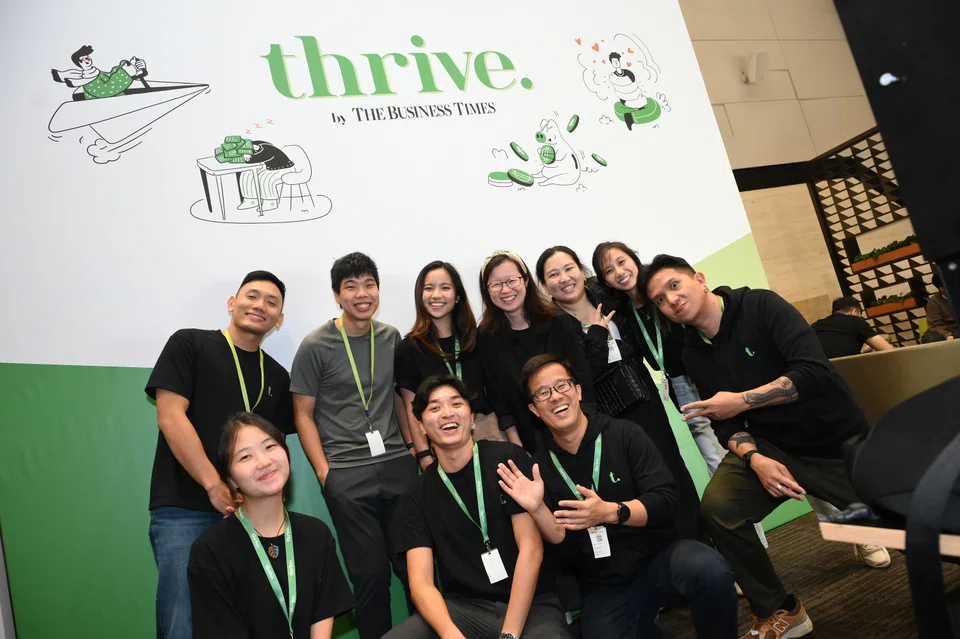
WHEN my former colleagues first came knocking on my door to get me to take on a new role in The Business Times (BT) less than a year ago, I was intrigued but sceptical.
They were looking for an editor for Thrive, BT’s young audience initiative.
It would be a stretch to say that their spiel was particularly compelling. The original team had all but left. It was a new product dependent on funding. The scene was saturated.
I was full of doubt: Do people actually read newsletters in Singapore? And exactly what do I know about Gen Zs, considering I’m no spring chicken myself?
Yet, despite the many reasons I could think of to say no, I had one good reason to say yes: I, too, saw the need for content targeted at young adults.
There is still a gap when it comes to content on issues relating to career, money and personal development; and content that is well-researched, practical and presented in a way that is easily understood.
This gap was something that my fellow BT journalists and I have talked about for years, but did not have the resources to pursue. We had imagined reaching out to young people where they were, sparking conversations and healthy debate on issues that mattered to them, and breaking free from the conventions of a financial daily.
Thrive’s raison d’etre of being a partner for young adults was something I could get behind. The question was: where to go from here?
The eight months I have spent running Thrive have been devoted to two challenges: building a brand identity and understanding its audience.
Challenge 1: Identity crisis
The team first had to figure out what Thrive was and, related to that, how to position our connection to BT. Would young adults find BT too staid and be turned off by the association, or would the reputation of BT lend our fledgling product credibility?
That identity would feed into Thrive’s content. After all, Thrive is aimed at growing BT’s future audience; it wouldn’t do to just be a meme page.
At the same time, we need to connect with our Gen Z readers. Anything too polished could be deemed inauthentic in today’s raw TikTok world.
We knew memes and video skits would do well on social media. At the start, I even had a meme roster for the team (yours truly was also on it). The person on duty had to come up with memes relating to either the newsletter topic or current affairs that week.
(On a separate note, memes are no joke. The team had to consider whether there were legal repercussions at one point because copyright came into play – something I never had to think about when I was a BT reporter.)
Yet, humour can be a double-edged sword – going to extremes can make us look immature or snarky. The use of satire comes with the risk that some might misunderstand and take offence.
The team began to feel concerned about appearing “schizophrenic” – one day we could be posting a work meme, and the next day we could have a serious post on financial planning.
While these posts were not necessarily incompatible, the team felt that this made us lose some credibility and resulted in some confusion for our followers.
We have since decided to meet somewhere in the middle. We are more thoughtful about our skits and memes; and have included more explainers, comic strips and street interviews that still have our own distinct identity and quirkiness.
Ours is still a work in progress, but there is more coherence in our social media feeds, with a more consistent look and feel that is uniquely Thrive.
Challenge 2: Who’s our reader?
Our understanding of readers has come from two formal sources, and many informal sources.
We distributed a survey to our earliest readers to get a sense of who they were. About half were aged 28 years and below, and 75 per cent were 35 years and below.
In April, we also held a focus group discussion with 20 Thrive readers over two hours – to find out what was working, what wasn’t and what they wanted.
It was at the focus group that we discovered memes were quite divisive – some found them hilarious, and others thought it made Thrive seem frivolous. That came as a surprise to us, and influenced our decision to scale back on meme use.
We have also been getting to know our audience through interactions at events. These events are where we get to hear unfiltered feedback from young adults on our content as well as on issues that matter to them. Event outreach remains an important pillar, despite the labour involved.
Social media analytics also helps in figuring out our followers’ ages, gender diversity and geography. Our TikTok audience was more than 80 per cent male at one point, but has become more balanced as we tried to be deliberate about the reels we were creating.
Knowing the reader is not enough – acting on that knowledge is what makes the difference.
What’s next?
The most pressing challenge now is to expand the team’s capacity, especially in event outreach and video content.
As the Red Queen said to Alice in Lewis Carroll’s Through the Looking Glass: “It takes all the running you can do, to keep in the same place. If you want to get somewhere else, you must run at least twice as fast as that!”.
Building the Thrive community of young adults will likely be a marathon and not a sprint, but the best marathoners also have speed.
To sign up for Thrive’s weekly newsletter, visit bt.sg/thrive. Follow on TikTok and Instagram for regular updates.






