
Can the Democrats hold on to Virginia?
The tighter-than-expected gubernatorial race becomes a barometer of American political sentiment and amounts to a referendum on the Biden presidency.
 Add BT as a preferred source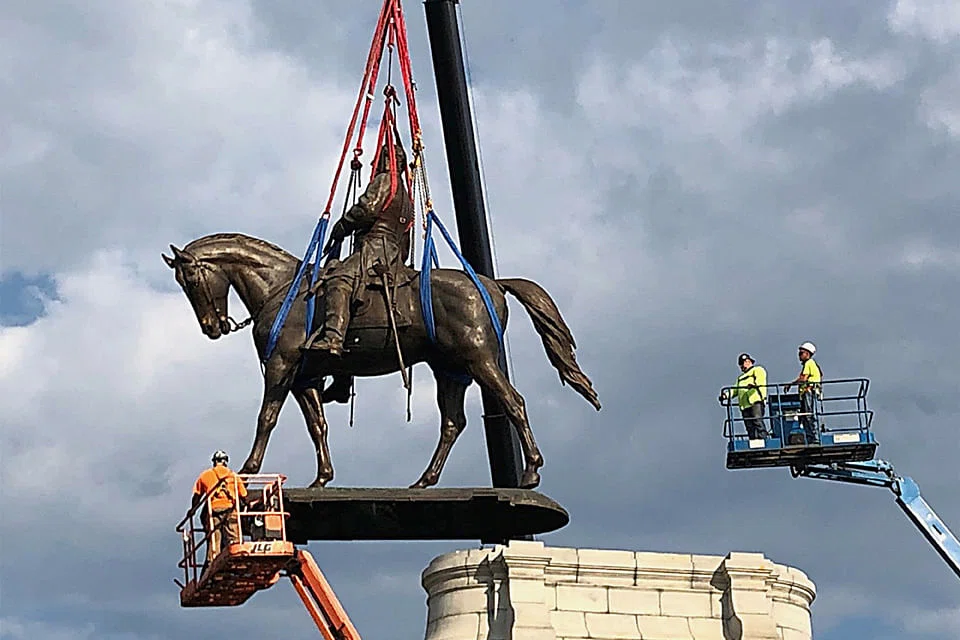
ONE of the most dramatic developments in American politics in recent decades has been the transformation of Virginia from one of the reddest (that is, Republican) strongholds in the nation into what looked more and more like a blue (or Democratic) state.
The Commonwealth of Virginia - the bastion of the slave-owning Southern Confederacy during the Civil War - was for years dominated by conservative white voters who began switching to the Republican side in the 1960s. But then oops... they started turning blue in the beginning of this century, electing Democrats as presidents since 2008 and voting for Democratic candidates in local races, including for the governor of the state.
The electoral shift in the Democratic direction reflected the changing demographic profile of the state, which has been absorbing a growing number of new immigrants. At the same time the suburban northern part of the state has become home to federal workers who commute to Washington, DC, each day as well as for young professionals, including in the high-tech sector. In short, the kind of demographic groups, well-to-do and educated, that tend to go Democratic.
Symbolising these changes has been the decision by Virginian voters to remove the statue of Robert E Lee, a Virginian who led the troops of the Confederacy during the Civil War, from the centre of Richmond, the state's capital.
That explains why Virginia rebuked President Donald Trump last year and why political experts have been speculating that Virginia was turning from a purple state - one that could go either Democratic or Republican - into a safe blue state. That meant that a Democratic political candidate could have a built-in advantage over his or her Republican rival in local and national races.
That is why when the 64-year-old former Democratic Governor Terry McAuliffe announced that he would be running again for the governorship, the expectation among the politicos was that, considering the anti-Trump sentiments in the state in the aftermath of the 2020 presidential election, the race was his to lose.
Navigate Asia in
a new global order
Get the insights delivered to your inbox.
The Democrats were certainly buoyed by the results of the recent California recall election where more than 60 per cent of voters rejected the call to oust Democratic Governor Gavin Newsom from power, thanks among other things to the success of the Democrats in identifying the Republican challenger with the loathed former president.
But then notwithstanding the rise of the new pro-Democratic electorate in Virginia, the state, unlike California, still has a large concentration of conservative Republican voters who could affect the outcome of any election. That meant that the 54-year-old Glenn Youngkin, a business executive who is running as the Republican candidate, could not be written off under any scenario.
TOO CLOSE TO CALL
Moreover, former President Trump may not be on the minds of many voters, including in Virginia, these days. Instead voters are now focusing their attention on President Joe Biden and his Democratic Party and their policies. And they don't seem to like much of what they see.
So while President Biden defeated his Republican rival by more than 10 percentage points in last November's presidential election, pollsters are now billing the Virginia gubernatorial race as a "toss-up", too close to call. Observers are pointing out that election campaign signs for Mr Youngkin now outnumber those for Mr McAuliffe in parts of the Democratic-leaning northern Virginia suburbs.
There is no doubt that Mr Youngkin has benefited from the continuing fall of President Biden's approval rating of late, which in turn is a sign of growing public discontent over the enduring Covid-19 pandemic, rising consumer prices, and the perception of a frail presidential leadership.
But the problems facing the Democrats in Virginia go beyond the lingering pandemic and the threat of inflation. They are also a result of growing political tensions within the Democratic Party, between its left-leaning progressive wing and its traditional but weakening centrist faction.
While the Democratic electoral base in, say, California or New York tends to trend to the left, most Democrats in Virginia remain in the political centre, and are represented by the state's two Democratic Senators, Mark Warner and Tim Kaine. These are two white men who, not unlike President Biden and McAuliffe, were once proud to be described as "Clintonites" - pragmatic politicians committed to a moderate agenda that included support for fiscal responsibility and law and order.
But as the Democratic base started embracing more left-leaning and even socialist policy ideas, such as allowing more illegal immigration into the country, promoting identity politics, nationalising sectors of the American economy, "defunding" the police, and dismissing the concerns of white middle-class voters, the "Clintonites" including President Biden found themselves under pressure. They could either adopt these more radical ideas or lose the support of members of the powerful progressive wing, led by two self-proclaimed socialists, Vermont Senator Bernie Sanders and New York Congresswoman Alexandria Ocasio-Cortez (AOC).
At the same time, centrist Democrats and even some Republicans and Independents had voted for President Biden who had marketed himself as a moderate Democratic presidential candidate. They had hoped that a centrist president would help counter the influence of the radical former president, but have now been alienated by signs that the Democrats and the Biden administration have been drifting to the left.
At the centre of the anti-Democratic backlash has been the debate over the so-called Critical Race Theory (CRT), which argues that despite the fact that some of the racist laws and practices have been eliminated in the US and extreme attitudes and beliefs are less common among white Americans, most people of colour continue to be routinely discriminated against and unfairly treated in both public and private spheres.
The most controversial aspect of the CRT is its contention that racism in America is natural, institutional and ingrained among whites with their alleged sense of supremacy. Whites need therefore to recognise and admit that they are, well, racists, and in order for that to happen, CRT has to be taught to Americans from an early age, including in schools.
Many American parents, including non-whites, reject that kind of thinking and have mobilised in action, including in Virginia, against school boards that have forced the teaching of CRT in public schools. They expect the politicians they support to join their campaign.
While Republicans like Youngkin have placed the issue at the centre of their election campaign, Democrats like McAuliffe are reluctant to criticise the progressives and the teacher unions.
PREVIEW OF POLITICAL MAP
Hence during a debate on September 28, the Democratic candidate declared that he didn't think that "parents should be telling schools what they should teach", angering many voters and playing into the hands of the Republicans who want to paint McAuliffe as a leftist politician a la AOC.
A recent YouGov and CBS news survey found President Biden's approval rating at 48 per cent among likely voters in Virginia, while 52 per cent in the state disapprove of the job he was doing. That explains why McAuliffe has been hesitant about inviting the president to campaign for him in the state.
At the same time, the Republican Youngkin has been trying to dissociate himself from former President Trump who is even less popular than Biden in Virginia. He recognises that the only way he could win is by persuading moderate Republicans and Democrats as well as Independents to support him. These are the same kinds of voters who had rejected President Trump last November but who may not cast their ballots for McAuliffe this November.
With a tighter-than-expected race both sides believe that the contest in Virginia would amount to a referendum on the Biden presidency. It could also serve as a preview of the nation's political map ahead of the 2022 mid-term elections when the Democrats will have to fight to defend their razor-thin-majorities in the House of Representatives and the Senate.
"All politics is local," the legendary Speaker of the US House of Representatives, Tip O'Neill, once said, suggesting that politicians need local skills and should focus on the specific needs of their district and state if they want to win in critical elections.
The current race for the Governor of Virginia seems to challenge that maxim. At a time of growing political polarisation across the nation, all politics is becoming national.
Decoding Asia newsletter: your guide to navigating Asia in a new global order. Sign up here to get Decoding Asia newsletter. Delivered to your inbox. Free.
Share with us your feedback on BT's products and services

