

Casino levy hike a welcome move, but more effort needed to curb addiction
EARLIER this month, the Singapore government increased the casino entry fees for citizens and permanent residents by 50 per cent to S$150 for the 24-hour daily levy (up from S$100), and S$3,000 for the annual levy (from S$2,000). The surprise announcement was made on the evening of April 3, with the new amounts kicking in just hours later at the stroke of midnight.
It is the first time that the levies have gone up since the two integrated resorts - Marina Bay Sands (MBS) and Resorts World Sentosa - opened in 2010. The higher charges are meant to deter casual and impulse gambling by locals, said the Ministry of Home Affairs and the Ministry of Social and Family Development. The fee hike was determined after the authorities looked at the state of the problem gambling situation, household income levels, and the cost of visiting alternative gambling locations in the region.
While it is not possible to eradicate gambling addiction entirely, the statistics show that problem gambling here is under control. According to the two ministries, local visitorship to the two casinos has declined significantly over the last decade. At MBS, for instance, the number of locals frequenting its casino each year has fallen by 50 per cent since 2010.
According to the National Council on Problem Gambling, the probable problem and pathological gambling rate has decreased to 0.9 per cent in 2017, from 2.6 per cent when the IRs first opened nine years ago. There are about 67,500 people on the "casino exclusions" list, and 7,000 others have caps on their monthly casino visits. All the levy fees go to the Tote Board, which said that it collected S$131 million for the 12 months that ended in March 2018. That is 41 per cent less than the S$223 million in the 12 months that ended March 2011, the first full financial year after the casinos opened.
The higher levies will likely go some way to bringing those numbers down even further. While it will deter the casual casino patrons (those who gamble only occasionally and typically have smaller budgets), a S$50 increase in the daily levy realistically will not do much to keep the more hardcore punters away. These are the gamblers who play at the higher-limit tables and think little of wagering hundreds of dollars on a single bet.
Unless the daily levy is raised significantly to say S$500 or even S$1,000, this group of gamblers is not likely to think too much of paying S$50 more to enter. It is probably fair to assume that the majority of them hold the annual levy, which allows for an unlimited number of visits over the course of a 12-month period.
Beyond the two casinos, there is certainly scope for more to be done to ensure that the dangers posed by gambling continue to stay in check, especially among the young. Online gambling is fast becoming a serious threat, and it is relatively easy to get hooked when one is able to gamble anonymously - be it on football, motor- racing, horse-racing, 4D or Toto - from the comfort of home using a computer or smartphone.
At Singapore Pools, the minimum age to place a bet or claim winnings at a physical outlet is 18, while the minimum age is 21 for its account betting service. Perhaps it is time for the gaming company to consider raising the minimum age to 21 for all its services, given that this is also the legal age to enter the two casinos. There should be an all-hands-on-deck effort to ensure that as few people as possible are exposed to the risks posed by gambling addiction.
TRENDING NOW

‘If there’s a price to be paid, so be it’: George Yeo says Singapore must safeguard its reputation

South-east Asia has lost Nvidia’s best salesman
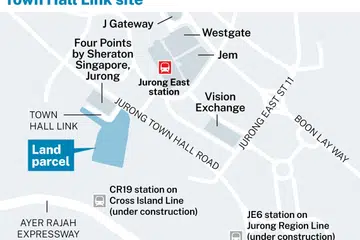
CapitaLand, Far East, Sing Holdings team up for S$1.8 billion bid at S$910 psf ppr for Jurong Lake District site

Beyond the greenback, Vietnam’s big borrowers turn to Asian-currency bonds

