

China and the poisoned chalice
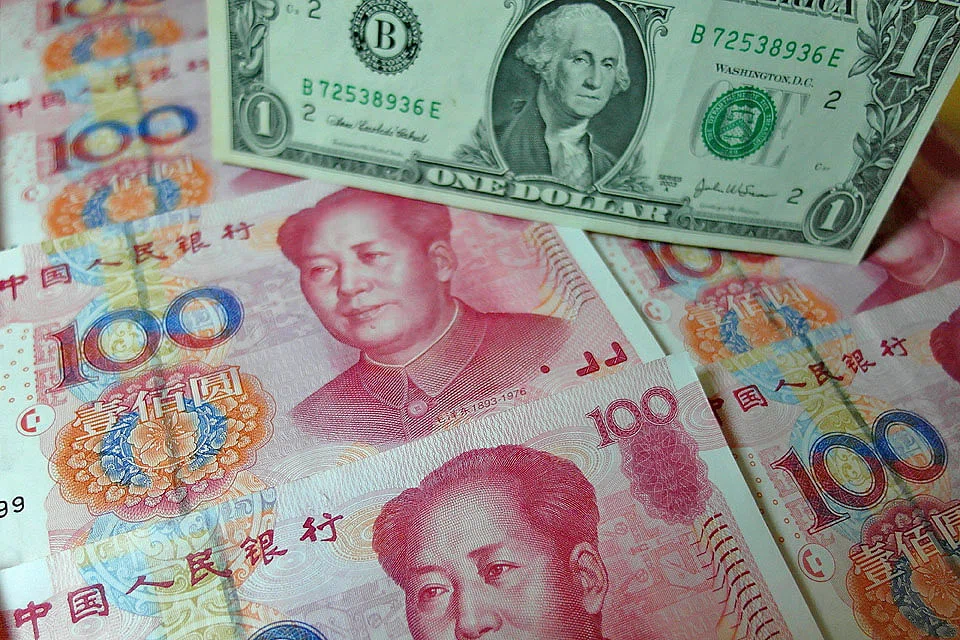
ONE of the larger surprises of the summer is how the Chinese authorities have allowed an apparently technical matter - the possible inclusion of the yuan in the International Monetary Fund's (IMF) special drawing right (SDR) - to become the stuff of global headlines.
Whether or not the Chinese currency becomes part of the IMF's composite accounting unit should be a question for specialists. But instead - as part of the wider fallout over the performance of the Chinese economy, and as a result of the Chinese leadership brandishing its credentials for SDR inclusion just a little too energetically - it has ended up on the front page of The New York Times.
The Chinese decision last month to widen the band for the yuan's fluctuations against the US dollar should have been part of somewhat geek-like technical preparations for freeing the exchange rate and meeting one of the IMF's conditions for bringing the Chinese currency into the IMF reserve unit - at present limited to the US dollar, euro, sterling and the yen.
Relaxing the US dollar peg is perfectly consistent with the long-term Chinese goal of turning the yuan into a fully fledged international currency - in fact, it is a precondition for that to take place. It would be difficult for the yuan one day to rival the US dollar as an international monetary standard if it was, to a large extent, more or less the same currency.
However, as deeper-thinking Chinese officials are aware, a fundamental question has to be raised: Whether internationalising the Chinese currency is actually an advantage or a drawback for China.
As US, UK and German experience shows, internationalisation is not a cost-free option. Reserve currency status can be an "exorbitant privilege" for countries that can issue low-cost debt to other people's central banks. But it can equally become a "poisoned chalice" if nations with an international currency - and the corresponding liabilities and obligations that go with it - become overextended, as both Britain and (West) Germany learned during the 1970s and 1980s.
In a speech that I gave in August at a long-running seminar series in Chautauqua, US, in the north-west of New York state, I theorised that, if I was a believer in conspiracy theories, then I might say that someone in the Obama administration (no doubt buried away in the Pentagon) was deliberately encouraging the Chinese to turn the yuan into an international currency in order to undermine the Communist Party. West German Chancellor Helmut Schmidt railed against the Deutsche mark becoming an international reserve currency in the 1970s precisely because he believed that it would unduly expose the country's many vulnerabilities. This was one of the reasons for the formation of the euro.
China is a lot bigger than the former (divided) Federal Republic, but it can still be undermined by forces within and outside the country. Opinion is divided over whether then-president Ronald Reagan's 1980s espousal of the Strategic Defence Initiative (SDI - the missile defence programme otherwise known as Star Wars) was instrumental in overextending the finances of the Soviet Union and ultimately bringing it down. No one can know whether this was a deliberate ploy, but it certainly happened.
I wouldn't wish to stick my neck out on this, but historians may at some stage see an analogy between Mikhail Gorbachev's bid to catch up with SDI and Xi Jinping's wish to join the SDR.
Beijing certainly demonstrates signs of overstretch. Beijing authorities are carrying out exchange rate liberalisation, at the same time as they have been trying to weather a stockmarket rout, by bringing in (and then suspending) all kinds of expensive support operations. As a consequence, the Chinese leadership has prompted considerable political and financial market confusion about the separate issues of economic management and technical currency adjustments.
Carrying out the de-pegging earlier would not have obviated this dilemma altogether, but it would have softened it considerably.
The best possible result is still realisable: A relatively soft landing for the Chinese economy, stabilisation of the Chinese stock markets at lower levels, a mid-path between under and over-appreciation for the Chinese currency, and a relatively problem-free pathway towards the yuan becoming part of the SDR next year.
But the odds have shortened on a less benign outcome, under which the Chinese get the worst of all worlds: a much more abrupt domestic slowdown, further stock market attrition, a further damaging fall of the yuan (especially if the Fed decides on an early rise in interest rates) and a shelving (no doubt for "technical" reasons) of the SDR decision. In 40 years, the historians will be able to tell us what it all means.
TRENDING NOW

One-third of Singapore-listed firms at risk in severe AI downturn: MAS
‘Not done’: Keppel CEO Loh Chin Hua transformed the group, but says there’s ‘still a lot to do’

He built the Vingroup empire. Now South-east Asia’s richest man is handing some key roles to his sons

‘We don’t want to stay as we are’: CEO Patrick Ng builds a more resilient Huationg

