

China’s Covid policy exacts huge economic price
LAST month, when the Covid-19 death toll in the United States reached a million, China’s government and state media took delight in mocking and shaming America in its moment of national grief.
A Chinese foreign ministry spokesman, Zhao Lijian, after offering “deep grief for the tragic loss of one million lives”, extolled China for the way it had handled the Covid-19 virus, saying that China’s policy -- dubbed “dynamic zero-Covid” -- “gives priority to people’s life, safety and health”.
Under this policy, China locks down large areas, including entire cities, to stop the virus from spreading. Beijing claims that from the beginning of 2020 to June 2022, the loss of life had been capped at little over 5,200.
The official China Daily newspaper asserted that a million Covid deaths in America was “the highest number ... in the world”, while current US infections exceeding 80 million “is also the highest number worldwide”.
“These stark and sad statistics shame the US, as it boasts the strongest medical resources in the world, as well as the most advanced technology in medical science,” the paper commented.
The purpose of such commentaries was to depict the US as a country whose leaders care more about politics than the lives of their citizens. Global Times, another state-owned newspaper, ran the headline “Freedom to Die” over its story on the US death toll.
Actually, from China’s standpoint, the Covid issue isn’t a question of which country is coping better with the virus. Rather, it is a question of which system is superior -- Beijing’s “socialism with Chinese characteristics” or capitalism, of which the United States is the unquestioned standard-bearer.
The idea of “the eventual demise of capitalism and the ultimate victory of socialism” has been part of the thinking of Xi Jinping since his first months in power, as revealed in a speech he gave in early 2013.
While on the surface the Covid issue may appear to be “a battle of ideas, strategies and methods of fighting the epidemic”, an April article in the Shenzhen Economic Zone Post explained, in essence it is “a battle of systems, national strength, governance capabilities, and even civilizations”.
Ironically, on May 13, when the United States announced its grim death toll, China was in the midst of a Covid crisis of its own with Shanghai’s 25 million people in the second month of what was originally meant to be a four-day lockdown. According to Nomura, about 373 million people in 45 Chinese cities, accounting for 40 per cent of China’s GDP, were under some form of lockdown in April.
Three days earlier, the party’s Politburo Standing Committee had insisted on continuing with the zero Covid strategy, with Xi insisting that the policy “will stand the test of time”, although the rest of the world had mostly moved on to a policy of coexisting with the virus.
On May 10, the director general of the World Health Organization, Tedros Adhanom Ghebreyesus, who had praised Beijing in the early stages of Covid, shocked China by calling on it to change course.
Talking about China’s zero Covid strategy, Tedros said, “We don’t think that it is sustainable considering the behavior of the virus now and what we anticipate in the future, and especially when we have now a good knowledge, understanding of the virus.” He added: “Transiting into another strategy will be very important.”
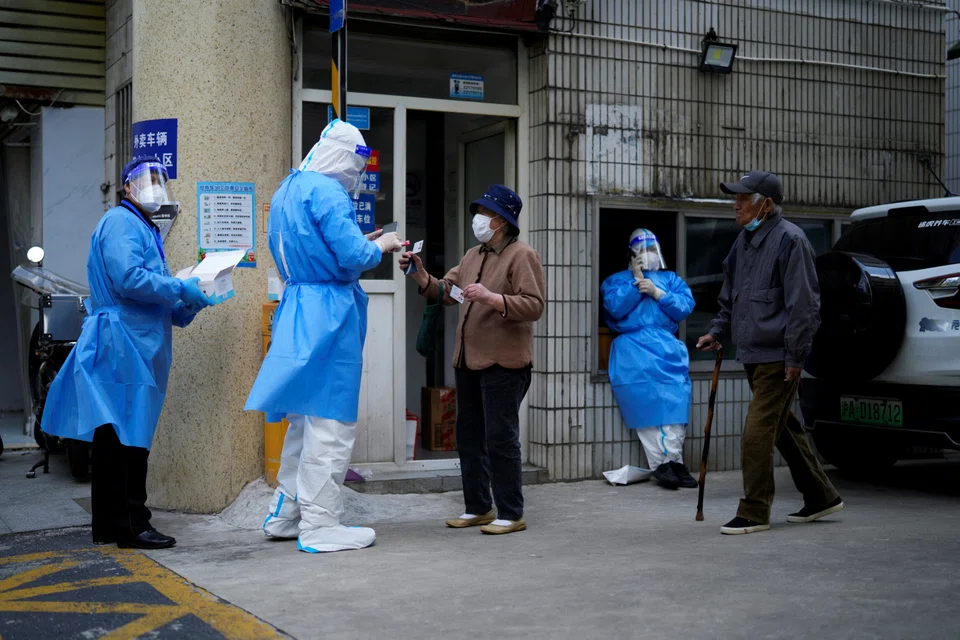
Looking at the Shanghai lockdown, it is difficult to describe the policy being implemented as one of “putting people first”. Residents were imprisoned inside their homes and allowed out only to receive nucleic acid tests. Food delivery was unreliable and hunger widespread. Children were separated from parents. The sick were unable to receive medical care. There were numerous protests against Covid enforcers in white hazmat suits.
This led some analysts to predict that there would be a national crisis that could derail Xi’s plan for a third term as China’s leader when the 20th party congress is held in the autumn.
Such drama is unlikely but the economic price paid for Xi’s politicisation of Covid is huge. The 5.5 per cent growth target for the year announced in March now appears wildly unrealistic.
The Chinese economy has also suffered from Xi’s decision to prioritise state-owned enterprises when the private sector creates more jobs. There are other ideologically driven policies that have hurt the economy. In the short term, Xi may be forced to ameliorate some of these decisions but, in the long run, he has his eye set firmly on the ideological struggle with the West and on “socialism with Chinese characteristics”.
TRENDING NOW
First Resources blames El Nino, outside fires for Kalimantan hotspots amid haze scrutiny
High Court rules against Julius Baer’s Singapore trust arm in US$50 million family trust dispute
Singapore key exports jump by higher-than-expected 68.4% in September, led by non-electronics
MSCI proposes downgrading Indonesia to standalone market status

