

Chinese hoarding may be a reason for rising food prices
 Add BT as a preferred source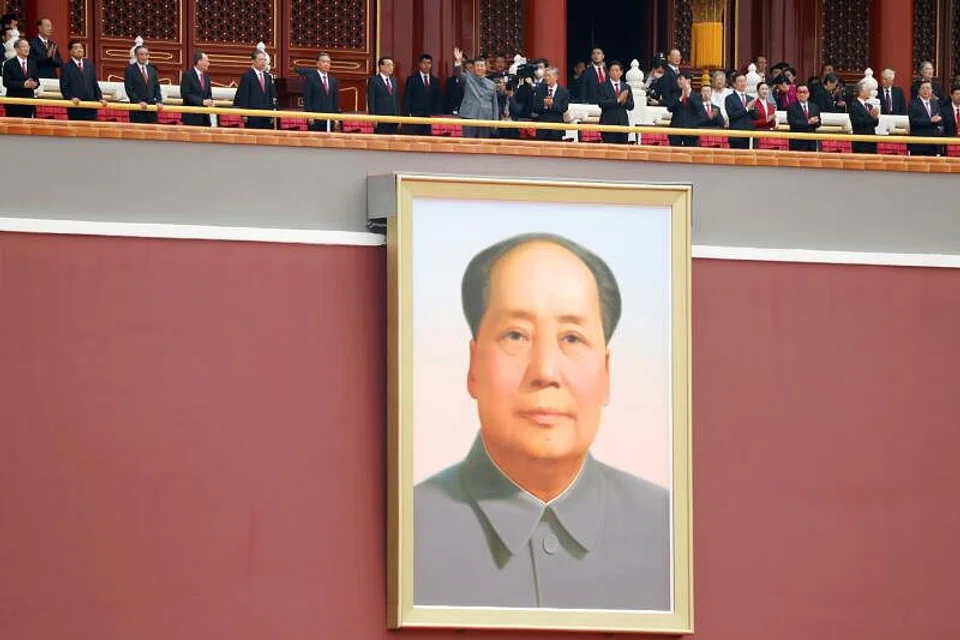
DeeperDive is a beta AI feature. Refer to full articles for the facts.
IN RECENT months, food prices have hit 10-year highs, causing concern worldwide. Supply-chain bottlenecks, labour shortages, bad weather and a surge in consumer demand are among the factors responsible for the spike. So, too, is a lesser-known phenomenon: China is hoarding key commodities.
By mid-2022, according to the US Department of Agriculture, China will hold 69 per cent of the world's corn reserves, 60 per cent of its rice and 51 per cent of its wheat. By China's own estimation, these reserves are at a "historically high level" and are contributing to higher global food prices. For China, such stockpiles are necessary to ensure that it won't be at the mercy of major food exporters such as the US. But other countries, especially in the developing world, might ask why less than 20 per cent of the world's population is hoarding so much of its food.
China has operated granaries for thousands of years. In imperial times, they served as a source of tax revenue and a means of managing bad harvests, natural disasters, and war. Their importance grew as China's population soared, yet the state's ability to manage them faltered. During the late 19th and early 20th centuries, natural and political disasters brought hunger and starvation to millions. Outsiders referred to China as "the land of famine". Political instability and revolution soon followed.
Mao Zedong and China's Communist Party staked much of their credibility on "solving" hunger, but mid-century famines took the lives of tens of millions. President Xi Jinping, never one to criticise his own country, once remarked that many members of his generation still recall hunger.
'Clean-plate campaign'
Those memories have informed Xi's policies since the start of his regime. In 2013, just weeks after taking office, Xi endorsed a nationwide campaign to discourage people from wasting food. In 2020, the "clean-plate campaign" was resurrected as he called on Chinese to "maintain a sense of crisis about food security".
Navigate Asia in
a new global order
Get the insights delivered to your inbox.
That crisis isn't just about having enough to eat. It's about having enough food produced domestically to minimise reliance on anyone else. Two weeks ago, Xi told a high-level Communist Party meeting that "the food of the Chinese people must be made by and remain in the hands of the Chinese people".
That won't be easy. China's inventory of arable land has been in decline for decades, nibbled away by urban development and soil contamination, and its farms are far less productive than counterparts in other countries. Efforts to boost productivity with policy incentives and technology investments are promising but unlikely to pan out for years.
So China is stockpiling. At home, the government is offering farmers a minimum price for their crops (which are then often stockpiled). In March, it raised the minimum price for wheat for the first time since 2014. Meanwhile, traders have taken advantage of a strengthening yuan to snap up grains at a feverish pace. China's wheat imports surged 50 per cent between January and July, compared to the same period of 2020.
The size and content of China's commodity stockpiles is a jealously guarded state secret. But officials have been unusually open about the matter lately. In November, after a vaguely worded government missive about potential shortfalls this winter caused nationwide panic, agricultural officials announced that China had enough wheat stockpiled to last 18 months.
Other countries have been building up food reserves too, of course, especially as Covid-related disruptions persist. In June, the United Nation's food agency warned that some low-income countries were likely to see food import costs jump as much as 20 per cent for the year. Though the report didn't single out any country for responsibility, China - as the world's largest agricultural importer - certainly plays a crucial role.
Famine to feast
Right or wrong, China has no intention of unwinding its stockpiles for the benefit of others. Nonetheless, there are steps it could take to help mitigate inflation. Most important, it should begin unwinding crop supports that raise domestic food prices beyond global ones. Meanwhile, a more open acknowledgement of China's inevitable role in driving food inflation might encourage its leaders to work with others on food assistance to low-income regions.
China's evolution from famine to feast delivered hundreds of millions of people from hunger. As its economy and clout grows, it should seek to ensure that others can enjoy the bounty. BLOOMBERG
Decoding Asia newsletter: your guide to navigating Asia in a new global order. Sign up here to get Decoding Asia newsletter. Delivered to your inbox. Free.
Share with us your feedback on BT's products and services
TRENDING NOW

StarHub hands Ensign InfoSecurity control back to Temasek in S$115 million deal, books S$200 million gain
Singaporeans can now buy record amount of yen per Singdollar

Air India asks Tata, Singapore Airlines for funds after US$2.4 billion loss

Keppel DC Reit posts 13.2% higher Q1 DPU of S$0.02833 on strong portfolio performance

