

Chop and change is Trump's game
Defining his global strategy is a lost cause. His trial-and-error tack may have worsened things
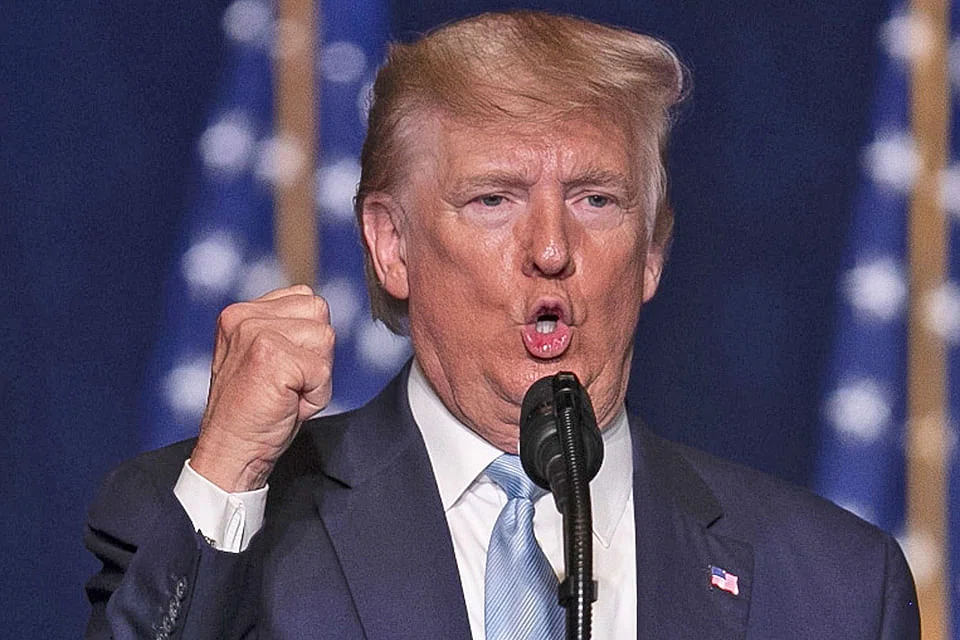
PUNDITS in Washington have given up trying to define President Donald Trump's foreign policy doctrine, after having discovered during his first year in office that a grand design explaining his global strategy - not to mention a coherent worldview - did not exist.
Indeed, President Trump can be compared to Schrödinger's Cat - to cite the famous scientific theorem proposed by Austrian quantum physicist Erwin Schrödinger in the 1930s; this theorem imagines a sealed box containing a cat that may be simultaneously both alive and dead, and which is linked to an event that may or may not happen. Likewise, Mr Trump can be simultaneously both a hawk and a dove, an isolationist who has pledged to end America's wars in the Middle East and an interventionist who stands at the ready to launch new battles.
After all, this is the same president who had threatened to nuke Pyongyang, but who is now exchanging love letters with North Korea's leader; he also pledged to stand by America's allies in the Middle East and then abandoned the Kurdish fighters in Syria to their fate. He has as well been criticised for his bromance with Russian President Vladimir Putin, but has at the next turn ordered a revocation of a major nuclear agreement with Russia.
The US leader has been bashed by members of Washington's foreign policy establishment for a lack of coherent diplomacy, but some of the so-called "realist" analysts have tended to accentuate the positive - that having an unpredictable American president who leaves his enemies disoriented will make them think twice before trying to test him. ("Who knows how this crazy guy would respond, so let's not take a chance.")
Moreover, there are certain benefits in having a pragmatic leader who does not operate based on a dogma and grand ideas, who embraces a trial-and-error approach to foreign policy, and changes his policy when things do not seem to work.
And talking about Big Ideas, we all remember what happened when a president who vowed to "democratise" Iraq and the Middle East was occupying the White House.
In a way, for a while it seemed as though President Trump's non-traditional diplomacy (if "diplomacy" is even the right term to describe it) was working, or as say they say, the proof was in the pudding.
For more than three years the United States has not been drawn into new military conflicts in the Middle East and elsewhere. The president resisted pressure to intervene in the civil war in Syria, and seemed to have taken steps to defuse a dangerous nuclear crisis with North Korea and to avert a military confrontation with Iran.
Or did he?
NORTH KOREA AND IRAN
At first, President Trump's decision to engage directly with North Korea's dictator Kim Jong Un was hailed by as an example of his pragmatic and creative style. It raised expectations that he would reverse years of US failures to end North Korea's nuclear military programme and convince the country's leaders to make a deal with the US, in exchange for promises to them to turn their country into an economic success story (including a bunch of Trump hotels).
But close to 20 months after the American President and the North Korean leader met for their first summit in Singapore, the negotiations between the two governments have broken down and they seemed to be back to Square 1, with no sign that President Trump's new BFF in Pyongyang is ready to dismantle his nuclear programme.
Instead, it is the old story of North Korea demanding relief from the sanctions imposed on it, in exchange for promises to dismantle some of its nuclear arsenal.
But much more worrisome has been the failure of the Trump administration to get Iran to the negotiating table, after revoking the nuclear deal with Tehran, also known as the Joint Comprehensive Plan of Action (JCPOA), and imposing punishing economic sanctions and exerting "maximum pressure" on the Islamic republic.
It seems that President Trump expected that the combination of economic pressure on the Iranians, together with his insistence that he wanted to pursue a diplomatic detente with them, would lead to negotiations between the two governments.
He even went out of his way to try to assure the Iranians of his peaceful intentions, cancelling at the last minute a planned strike against Iran and refraining from responding with military force to Iranian attacks on shipping in the Persian Gulf and against the oil installations of Saudi Arabia, America's military ally.
But without a clear strategy that is based on an understanding of the history of the relationship between the United States and Iran or of American policy in the Middle East, President Trump's discordant moves have reached a diplomatic dead end - and have actually made things worse.
Hence in Tehran, where the US economic sanctions were perceived as a form of anti-Iran warfare, President Trump's gestures of goodwill were seen as a sign of a president fearful of a full-blown military confrontation with the Iranians, in addition to facing the threat of impeachment by US Congress.
In short, President Trump's Iran policy has failed to achieve its declared goals. At best, it has helped to maintain a fragile status-quo; at worst, it has created a dangerous environment in which a misstep by one side could lead to retaliation by the other side, raising the risk of military escalation.
This is exactly what has happened, creating a chain of events that culminated on Jan 3 with an American drone strike that killed Major General Qassem Soleimani, the head of the Iranian Islamic Revolutionary Guard Corps' (IRGC) Quds Force, as well as Abu Mahdi al-Mohandas, a commander of the Iraqi Popular Mobilisation Units (PMUs).
President Trump's decision to assassinate General Soleimani, a major figure in the Iranian leadership, came following a series of actions and retaliations : On Dec 27, pro-Iranian Iraqi militias within the PMU attacked an Iraqi military facility, killing an American contractor and injuring several soldiers.
Two days later, the United States responded with an air raid on several targets linked to Kataib Hezbollah, an Iraqi militia that is part of the PMUs, which resulted in the death of at least 25 of its members.
And on Dec 31, the American embassy in Baghdad's Green Zone was stormed and parts of it were set on fire.
So President Trump decided that he needed to "do something" to send a clear signal to the Iranians that he was not a paper tiger, while demonstrating to the American people his resolve on the eve of a crucial presidential election.
A DANGEROUS GAME
If this was a game of chess, getting rid of the second most powerful man in Tehran - who has been an architect of Iran's efforts to form an axis of Shiite allies in the Middle East, and who is responsible for terrorist attacks that killed American soldiers and civilians - could be seen as a winning move on the chess board.
But it is not clear whether the Trump administration has a strategy that outlines the next moves in this dangerous game, when one considers the potential for an anti-American blowback, including demands by the Iraqi government to withdraw US troops from the country.
It is difficult to predict at this stage the possible Iranian response to the assassination. It could include targeting US military installations, terrorist attacks on American officials, or confronting Saudi Arabia and Israel, which could ignite a regional war.
That in turn could draw in the United States, led by a president who has pledged to get US troops home from the region, while putting upward pressure on energy prices, halting global and American economic growth, and ruining Mr Trump's shot at getting re-elected.
Unfortunately, this US leader (who neither reads history books nor plays chess) will now be facing a nation with a long history - it may not have invented the game of chess, but certainly knows how to play it.
TRENDING NOW

He built the Vingroup empire. Now South-east Asia’s richest man is handing some key roles to his sons
China’s Pinglu Canal likely to benefit Singapore, other South-east Asia ports in the long term
Suntec Reit to increase Singapore focus, sell three Australia properties
Despite the de-dollarisation debate, demand for dollar liquidity in Asia is growing

