Civil justice in S'pore: 50 and going strong
Singapore has had a headstart due to the strong commitment of its leaders in enhancing both its legal infrastructure and the quality of its stakeholders.
CIVIL society rests on the foundation that its members will conduct themselves justly. Aristotle described justice as the "bond of men in states". He believed that "the administration of justice, which is the determination of what is just, is the principle of order in political society".
AS Singapore celebrates its Golden Jubilee, it is opportune to track how its administration of justice has evolved, and cast an eye on the horizon ahead. When it gained independence in 1965, Singapore did not even have its own legislation governing the constitution and operation of its judiciary. Today, Singapore has a well-regarded judiciary and a leading arbitration centre, complemented by sophisticated mediation options. This comprehensive suite of dispute resolution services is sought after not only by the local population but also businesses worldwide. Both place faith in the ability of the civil justice system in Singapore to "right the wrongs" occasioned to them in their commercial dealings. This did not happen by chance but by planning and foresight.
In 1963, when Singapore became part of Malaysia, the High Court in Singapore was a branch of the Malaysian High Court. Appeals lay to the Federal Court of Malaysia, with further appeals in certain cases to the Judicial Committee of the Privy Council (JCPC) which sat in London and was the highest court of appeal for the British Empire.
When Singapore became independent in 1965, its High Court curiously remained part of the Federal system of Malaysia as a result of the problems that the leaders of the day had to prioritise upon leaving Malaysia. Singapore enacted its own Supreme Court of Judicature Act in 1969, setting up its own Court of Appeal independent of the Malaysian judiciary. Subsequently, it removed appeals to the JCPC in 1994, making the Court of Appeal the supreme appellate court of Singapore.
Through the years, the courts were re-organised to improve the administration of justice. For example, the Technology Court was launched in 1995 to make use of technology in the presentation of cases. The strength of the bench was also reinforced with the appointment of specialist judges. The Intellectual Property Court and the Admiralty Court were established in 2002 so that specialist disputes are assigned to judges with the right expertise.
In late 2014, the Singapore International Mediation Centre (SIMC) was launched. With its focus on cross-border disputes, the SIMC complements the Singapore Mediation Centre (SMC), which largely serves disputants within Singapore and has mediated over 2,300 cases since it was established in 1997.
Early this year, another development from the Singapore disputes scene set the global legal community abuzz - the launch of the Singapore International Commercial Court (SICC). Despite being a division of the Singapore High Court, the SICC incorporates ideas from international arbitration to make it a unique judicial institution customised to hear international commercial disputes. Unlike a conventional court, the SICC panel of judges includes both serving Supreme Court judges as well as international judges from both common law and civil law jurisdictions. The eminence of the first batch of international judges who have agreed to serve on the SICC panel attests to as well as reinforces the stature of the Singapore court system.
It is not only the judiciary which has come a long way since independence. Arbitration was virtually unknown to businesses in Singapore in the first few decades of the nation. In 1990, the Singapore International Arbitration Centre (SIAC) was incorporated following a recommendation by a Working Party that Singapore should aspire to be a regional arbitration centre. Over the years, the SIAC has seen its case load grow significantly with the growing appeal of Singapore as a seat for international arbitration. A specialist maritime arbitration institution - the Singapore Chamber of Maritime Arbitration (SCMA) - was set up in 2004 and has steadily gained popularity with the maritime sector.
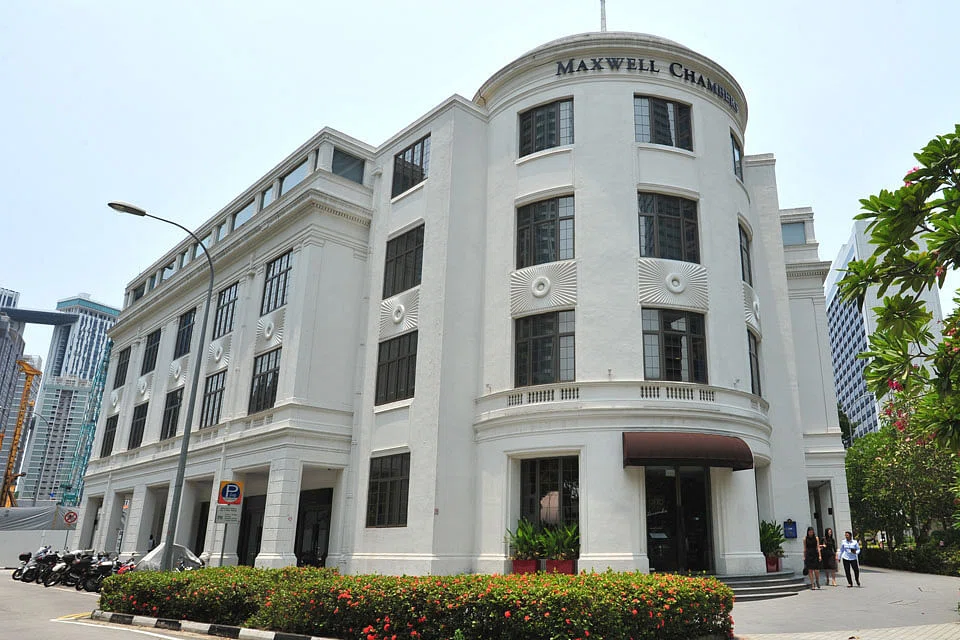
In a move that was both symbolic and practical, the world's first integrated dispute resolution complex named Maxwell Chambers was built to bring leading institutions and service providers related to alternative dispute resolution (ADR) under one roof. Maxwell Chambers has since become an iconic manifestation of Singapore arbitration.
Legislation on arbitration was constantly updated to ensure that it meets the expectations of the international community on arbitral policies. Singapore now stands in the top tier of renowned arbitration centres with cities such as London, Paris and Geneva.
One can say that the geography of Singapore - in the heart of South-east Asia - has helped. Like Hong Kong, Singapore has benefited from the rise of the Asian economy as Asian companies gain more bargaining power in shifting the seats of arbitration from the US or Europe to somewhere closer to home. On their part, companies in Europe and the Americas are prepared to accept a forum which they know to be neutral and competent. Infrastructure, the use of English as the lingua franca, transparency, the rule of law and a respected judiciary give comfort to those that seek justice from its legal system.
Looking ahead, what would the next 50 years hold for Singapore's bid to be a dispute resolution hub? In the foreseeable future at least, the shift towards Asia is inexorable. So is the trend towards resolution of disputes in Asia. Other Asian centres - such as Kuala Lumpur, Seoul and Tokyo - will gain in experience and expertise. However, Singapore has had a headstart due to the strong commitment of its leaders in enhancing both its legal infrastructure and the quality of its stakeholders. The constant review of the system and legislation show that Singapore is determined to stay ahead of the curve. It will thrive as long as it is run by people who are committed to the service of justice.
Institutions and legislation are only hardware. They are important in providing the framework within which disputes can be brought for resolution. The structure must be accessible and efficient, like a well-run train station that serves a myriad of travellers on their way to a destination - in this case, an outcome to their dispute. However, a cathedral does not make saints. It is easier to build an edifice of justice than to populate it with just people.
The success of Singapore in attracting disputants to its shores to seek a fair and just outcome depends not just on its efficient machinery. It depends on the reputation of its judges, arbitrators and all who serve a quasi-judicial function. Confidence in its judiciary, in particular, is key, whether in the direct determination of a dispute brought to the Courts, or in the supervisory role played by the judiciary in relation to arbitration.
The formidable intellect of the Singapore judiciary is widely acknowledged. There is another fundamental quality that must remain immutable if Singapore is to remain a trusted forum for dispute resolution. It is apt to end with the emphatic exposition of this value by Chief Justice Sundaresh Menon.
"Society accepts our judgments because they trust us and because they expect and believe that we will be the incorruptible guardians of the law; ultimately that we are men and women of integrity. On this analysis, judicial integrity is the basis upon which our legitimacy as an institution is founded in the eyes of the community and it is the condition for public acceptance of our authority."