

CLMV countries must step up reform of business and financial ecosystems
Thailand's move to work with the CLMV bloc is a right step, but the CLMV governments need to raise standards of doing business
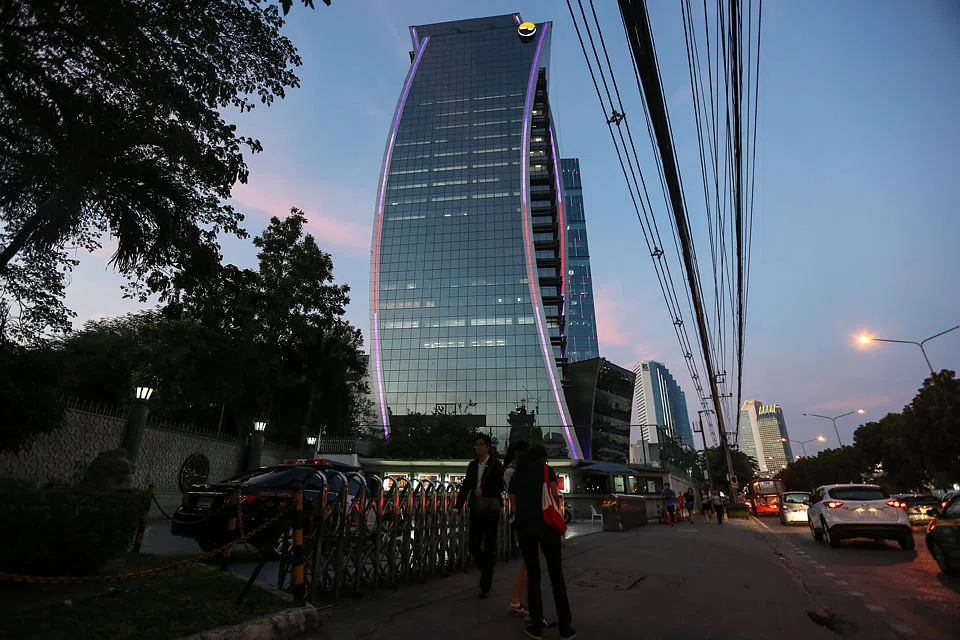
The CLMV countries (Cambodia, Laos, Myanmar and Vietnam) are grabbing investor attention following the creation of the CLMV Exposure Index on the Stock Exchange of Thailand (SET), and an audacious plan to list CLMV companies on the Thai bourse.
Thailand announced plans in June this year to create a new master plan to collaborate with the CLMV bloc, in a move aimed at ensuring that the five countries would prosper amid strong global competition. Thai Deputy Prime Minister Somkid Jatusripitak declared that the plan would open opportunities for private companies in the four neighbouring countries to raise funds from Thailand's capital market and to dual-list on the stock markets.
The SET is now preparing to launch a board that lists stocks from its CLMV neighbours. The stock markets of the four less-developed countries are much smaller in size and liquidity than Thailand's, which had the second largest market capitalisation in South-east Asia last December. In contrast, the combined market capitalisation of the CLMV exchanges is just 0.3 per cent of that of the SET.
Plans to create a pan-regional board are still under consideration and would require the SET to relax the listing conditions to encourage CLMV companies to list. The SET and the market regulators of the CLMV stock exchanges have studied the plan, and trading is expected to commence in about three years.
The outgoing president of the Stock Exchange of Thailand, Kesara Manchusree, stated recently that the CLMV exchanges "are our brothers and sisters ... and they need a lot of funding to develop their countries". She added: "They can raise funds here, trade here and bring back the money to develop their countries."
Last year, the SET created a new CLMV Exposure Index which indicates the price of Thai-listed companies that generate revenue from operations in the CLMV countries.
The SET believes that the index has several benefits: It funnels investments by Thai companies into the CLMV countries, and is useful for investors to profit from these growing economies.
Thai-listed companies looking to figure on the CLMV Exposure Index must qualify on the following counts: They must generate at least 10 per cent of annual revenues from the CLMV countries (or at least 100 million baht annually); their market capitalisation must not be lower than five billion baht; and they must have free-float of at least 20 per cent.
The SET is escalating its cooperation with individual CLMV countries. For example, in Laos it is establishing the country's first infrastructure fund, which aims to securitise hydro electricity generating assets to be listed on the Thai bourse. And the SET is discussing co-listing stocks with the Cambodia Securities Exchange, an arrangement under which companies of each country would list on the other's bourse.
All these moves spell big boosts to the CLMV countries, where the financial markets are starved for capital. Despite the constraints, all four countries have enjoyed the fastest rates of economic growth in South-east Asia. The combined GDP in CLMV is US$309 billion (12.15 per cent of Asean's GDP). The Asian Development Bank estimates that economic growth in CLMV countries will remain high, ranging from 6.8 per cent to 7.1 per cent between 2018 and 2021.
But an OECD report released this year, titled "Corporate Governance Frameworks in Cambodia, Lao PDR, Myanmar and Vietnam", warns that one of the biggest business constraints faced by CLMV companies lies in accessing finance. There is a large gap between the scale of capital markets in the CLMV countries and the rest of Asean.
The stock markets in CLMV are the region's newest, having opened only in the last two decades. Both the Cambodia Securities Exchange (with five listed companies and market capitalisation of around US$300 million as of April 2018) and the Lao Securities Exchange (seven listed companies and a market capitalisation of US$1.28 billion as of April 2018) are confronted by the challenge of attracting companies to list.
The Yangon Stock Exchange had just five listed companies and a market capitalisation of US$0.45 billion as of April 2018. Vietnam's two markets - the Hanoi Stock Exchange and Ho Chi Minh Stock Exchange - have the most developed capital market, with a combined market capitalisation of some US$137.69 billion and over 700 listed companies as of April 2018.
The current small size of these markets can be seen in the following data: The average market capitalisation per listed company is US$60 million in Cambodia, US$183 million in Laos, US$90 million in Myanmar and US$186 million in Vietnam, compared to an average of US$890 million in the rest of Asean, according to the OECD report.
Governments in the CLMV countries have made a commitment to develop their capital markets and have undertaken reforms to ensure their companies adhere to higher disclosure and transparency standards, but they still have some way to go to conform to global corporate governance benchmarks.
The World Bank's Doing Business Report of 2018 ranked the CLMV countries among the low performers in the area of "Protecting Minority Investors". This is because the CLMV countries have yet to introduce significant reforms to protect minority investors. Indonesia, Malaysia and Thailand, on the other hand, introduced reforms to improve the protection of this group of investors back in 2017.
Each CLMV country needs to demonstrate an improvement across a range of standards in the World Bank's Doing Business Report. For example, Cambodia is the weakest performer in the Shareholder Rights Index, and Laos appears in the middle on the Corporate Transparency Index. Myanmar performs unsatisfactorily on the Director Liability Index (which measures the strength of minority shareholder protections against directors' misuse of corporate assets for personal gain), and Vietnam fares badly on the Ease of Shareholder Suit Index (which measures shareholders' ability to sue officers and directors for misconduct).
In addition to these weaknesses, there are other sub-indices in which CLVM countries are not doing well, such as the Conflict of Interest Regulation Index and the Ownership and Control Index.
The CLMV governments have their work cut out for them: They are taking steps to ensure that their companies have better access to finance, both from commercial banks and the capital markets, and they are urging their companies to strengthen corporate governance. With a major market such as Thailand doing its bit to help, the CLMV are moving in the right direction, but they need to quicken the pace.
TRENDING NOW

What shattered Crystal Jade? How the culinary empire shrank from 120 to just 9 outlets

Thai brand Dr Pong takes T-beauty ambitions to Singapore as part of South-east Asia push

As Indonesia picks new vice-president to succeed Gibran, investors see risks and opportunities

Nvidia’s Jensen Huang fallout is a gift to billionaires Ambani and Adani

