

Close government-business ties vital to tackle global challenges
 Add BT as a preferred source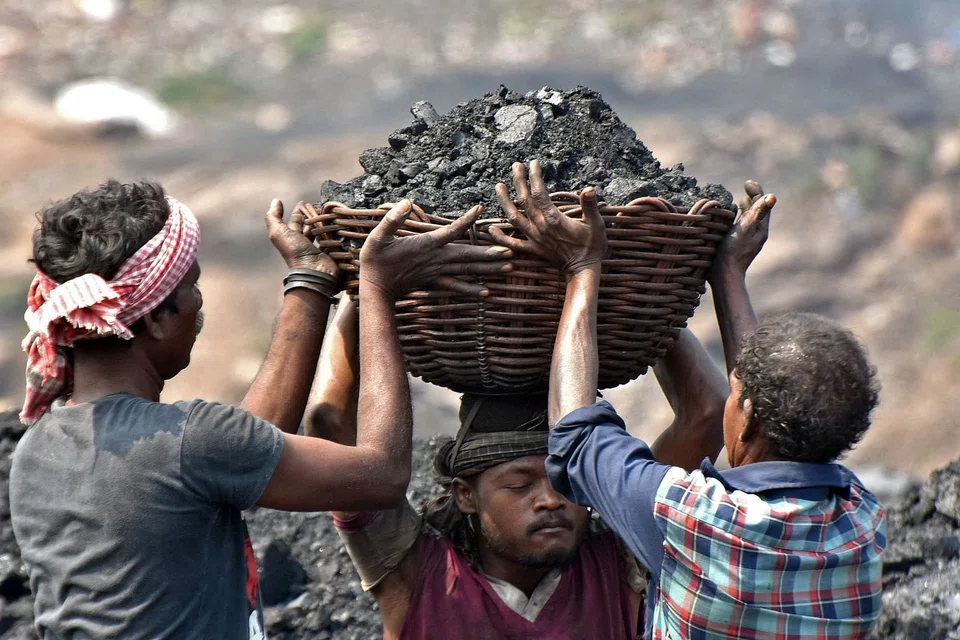
ONE of the most encouraging developments at the United Nation's global summit on climate change in Glasgow, Scotland, came from India. Prime Minister Narendra Modi made a new commitment to accelerate clean energy investments, increase energy efficiency, and put India on pace to reach net-zero emissions in 50 years. But he also made clear: He cannot do it alone.
India is one of the world's fastest growing economies, and it is still heavily dependent on the largest contributor to climate change: coal-fired power plants. Other nations with high economic growth rates - like China, Indonesia, Vietnam, Kenya, and Ghana - are also dependent upon coal to power their industries and light their homes.
Rising living standards are great news, but if growing demand for power is met by burning more and more coal, the world will lose the battle against climate change and suffer catastrophic consequences.
This week, the Bloomberg New Economy Forum in Singapore will be the first major gathering of principal public and private sector leaders since the beginning of the pandemic. The conference has taken place in Asia each year since it was created, expressly for the purpose of fostering closer ties between East and West - not only on the topic of climate change but the many global economic issues that are connected to it.
Modi, for example, wants to transition India off coal not only because of climate change: it's also terrible for public health, causing death and disease. Helpfully, he has market forces at his back. In recent years, technology has overtaken coal, which is no longer the cheapest form of power in markets around the world: wind and solar often are.
But the upfront costs of renewable energy can be higher, with the savings appearing over the long run. For governments, financing these projects has grown more difficult by the squeeze the pandemic has put on public coffers.
Navigate Asia in
a new global order
Get the insights delivered to your inbox.
In Glasgow, Modi pointed out that wealthy nations must fulfil the commitments they made to provide at least US$100 billion annually in climate financing to developing countries each year. He is absolutely correct. That pledge was first made in 2008 and reaffirmed in the Paris Climate Agreement, but it has never been fully honoured. That is disgraceful, and it must change.
But even if it does, the fact will remain: Governments cannot do this alone. Public aid will be nowhere near enough to build the clean energy capacity that is necessary to reach net zero. Success will only come by making full partners of the private sector - and India is showing how it can be done.
Modi's government has supported the work of a group I help lead, the Climate Finance Leadership Initiative, which helps nations attract investment in clean energy and sustainable infrastructure. The group launched its first national pilot programme in India, where we are bringing together a wide range of Indian and international partners from government, business, and financial institutions.
Together, we are identifying promising projects and laying the groundwork for them; offering technical assistance that is essential to designing profitable projects; providing the data and detailed analysis that investors demand before making decisions; and making it more attractive to invest, by developing incentives, assurances, and guarantees that help investors reduce their risk, and thus bring down the cost of borrowing.
If any one of those elements is missing, a project can fail to move forward. But by bringing investors, government leaders, and clean energy experts to the same table, we are working to make sure each of the puzzle pieces gets put in place.
CRITICAL ROLE FOR PHILANTHROPY
There is also a critical role for philanthropy in this work. At the recent UN climate summit, Bloomberg Philanthropies announced a new global effort to close coal-fired power plants that builds on the success we have had in the US (where we have helped close two-thirds of all coal plants) and Europe (where we have helped close half of them). We will begin working in 25 more countries around the world towards an ambitious goal: closing one-quarter of the world's coal plants by 2025, and cancelling all planned coal plant projects by that date.
Achieving those ambitious goals, and meeting the energy needs of underserved populations, requires increasing the supply of private capital to replace coal projects with clean energy ones - and that will require strong partnerships with private sector leaders. The good news is: more investors and business leaders are actively searching out opportunities in the growing renewable energy industry, while also seeking to reduce their exposure to fossil fuels.
In recent months, institutions that manage or control US$130 trillion in assets have joined the Glasgow Financial Alliance for Net Zero, setting science-based targets for reaching net-zero emissions in their own firms and across their asset portfolios.
In addition, more than 2,700 organisations have endorsed the work of the Task Force on Climate Related Financial Disclosures, and governments like the United Kingdom's have endorsed mandatory reporting requirements of climate-related risks and opportunities.
Overcoming the biggest challenges facing the world requires closer collaboration between government and business, and between East and West - not only on climate change, but also on fighting pandemics, untangling supply chains, spreading opportunity more broadly and equitably, and promoting peace and security.
Traditionally, those ties have been defined by national governments. But increasingly, heads of state are recognising that global businesses can be powerful allies in achieving their goals. Markets, as much as militaries, are shaping global diplomacy - and that is a hopeful development, because going to war isn't going to save us from a climate catastrophe or the next pandemic. But going to work, together, can.
- The writer is the founder of Bloomberg LP and Bloomberg Philanthropies and is the UN Secretary General's special envoy for climate ambition and solutions
Decoding Asia newsletter: your guide to navigating Asia in a new global order. Sign up here to get Decoding Asia newsletter. Delivered to your inbox. Free.
Share with us your feedback on BT's products and services
TRENDING NOW

DBS CEO Tan Su Shan strikes upbeat tone on deposits, wealth growth after strong Q1; raises full-year guidance

How China’s young workers are securing their future even as AI disrupts job market, triggers pay cuts
Middle East-linked energy supply shocks put Asean Power Grid back in focus
Malaysia’s 8th richest man Jeffrey Cheah wants Sunway business to last 10 generations

