

From commercial to community – the next lap for the Sports Hub
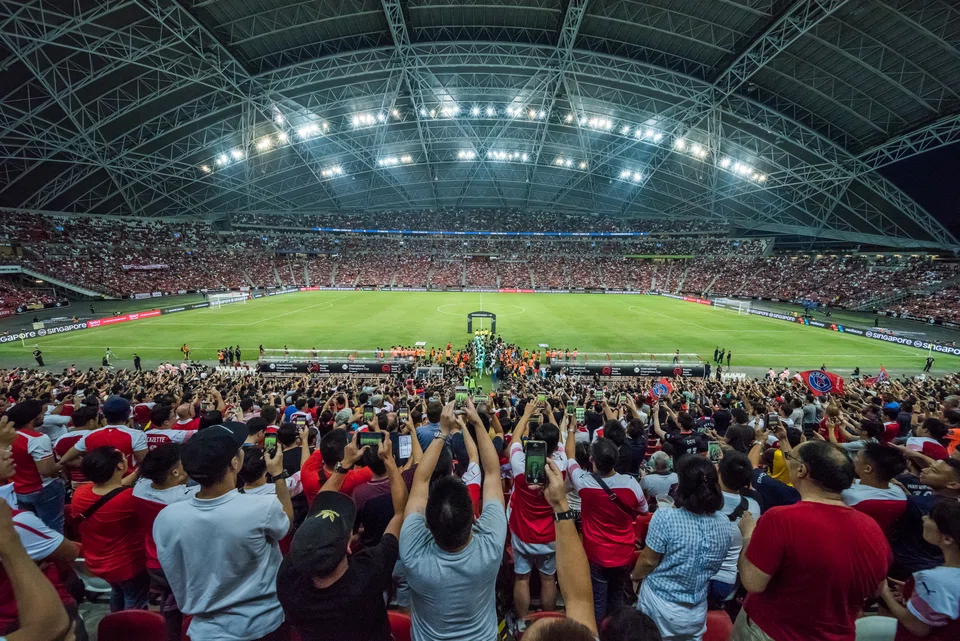
WHEN news broke recently that the government would take back the Singapore Sports Hub from private consortium SportHub Pte Ltd (SHPL) on Dec 9 this year, the first reaction from many in my network was: what does this mean for Singapore sport? In my opinion, the slightly unsatisfying answer is, as with most complex issues, it depends.
From the government’s and Singaporeans’ point of view, the move is undoubtedly a good one. Taking back control of a major asset such as the Sports Hub will enable it to better achieve its declared aims of putting sports firmly back in the community, and Singaporeans at the centre of all that happens at the Hub.
The move to integrate the Sports Hub’s infrastructure more closely into the national sports agenda offers many important opportunities for synergies and strategic efficiencies. The government’s intent to embed sports more firmly in the local community, and to allow Singaporeans greater and more frequent access to the Sports Hub will go a long way to encouraging a more vibrant sporting culture.
Lessons from the early years
It’s worthwhile to consider lessons that can be learned from the first phase of the massive public-private partnership (PPP) project.
Much has been made of the incompatible and ultimately irreconcilable objectives of both sets of stakeholders involved in the PPP. The government is focused on ensuring that the infrastructure could be a focal point for community activities and national events, while the private sector partners are always looking at ways to optimise the project from a commercial and financial perspective by becoming a marquee attraction on the global scene.
It’s not surprising that these diverging interests would clash. A case in point would be the National Day Parade which, when held at the Sports Hub, would require months of preparation and rehearsals that would preclude any other activities taking place at the National Stadium and its surroundings. This would of course have a commercial impact.
Neither side can be blamed for sticking to their respective missions. The PPP arrangement made sense at the time as SHPL took on the burden of designing, building, financing and operating the Sports Hub, and bore all the costs of the project which was completed in 2014.
The consortium brought together international partners with deep experience in the sports and entertainment and infrastructure management sectors, along with construction and other key capabilities.
Critics have pointed to this international group of partners as a factor in the Hub not developing a deeper resonance with Singaporeans. This argument potentially borders on overly nationalistic and jingoistic rhetoric, and runs contrary to Singapore’s long-held approach to tap on best-in-class expertise from around the world for its growth and development.
The consortium has increasingly sought to tap on local expertise, including through the appointment of two Singaporean independent non-executive directors to its board in 2021 (full disclosure: I am one of them).
Internally, there was a clear recognition that Singaporeans had to form the core focus of the Sports Hub experience and programming, events and activities. However, the Covid-19 pandemic meant that the past 2 years were disastrous from a sports and entertainment perspective, beyond the broader impact on society.
While mass participation and spectator events dried up completely, and travel almost non-existent as borders closed, the Sports Hub tried to continue contributing in different ways, including housing foreign workers impacted by the pandemic, and also accommodating national team athletes preparing for the Tokyo Olympics and other major games.
There was an attempt to pivot to virtual or “hybrid” events and programming to keep patrons engaged, but these were pale shadows of regular “live” activities.
Ironically, when the worst of the pandemic looked behind us and measures were eased, leading to the return of live events, the government chose to trigger the commercial clause that would allow it to take back the Sports Hub without penalty.
Future steps to success
The move comes at an important juncture for Singapore sports. We are progressing towards becoming a true sporting nation, with a growing sports culture, increasing participation in sporting activities by citizens, and more Team Singapore athletes excelling at the elite level internationally.
There are 3 focus areas that must be addressed, if we are to look back in 2035 – the original year that the SHPL concession to run the Sports Hub was to expire – and conclude that the right decision was made in 2022.
Firstly, it’s heartening to note that government is confident enough in local talent and expertise - built up in the years since the PPP project was launched - to take back the reins. At the same time, there is a need to recognise the difference in capabilities required to run local sporting infrastructure and to ensure success of world-class facilities present in the Sports Hub.
Singapore has hosted and organised major global events, from the International Olympic Committee session in 2005 to the inaugural Youth Olympic Games in 2010, to international concerts and the F1 night race.
Sport Singapore (SportSG), the agency overseeing sports development, has also run the local sporting calendar and infrastructure which encompasses everything from youth and school sport, to mass participation events and health and wellness, to active ageing programmes for the elderly.
It needs to be seen if those experiences can be leveraged on to develop and plan a comprehensive programme at the Sports Hub that will cater to community sports and activities, but also boast top-notch international sports and entertainment content that befits a billion-dollar facility.
This will require people with the networks and experience in such sectors to be able to work effectively and efficiently with stakeholders from around the world. SportSG has indicated it will seek to retain SHPL employees in a new entity that will be set up to run the Hub, and it’s important to ensure such talent is developed properly.
Secondly, while SportSG has said it will work with international partners to ensure the Hub is a success under its watch, there is a need to allow and encourage the local sports business sector to grow and flourish.
Most of us would be hard-pressed to point to many local sports businesses and say they are on the cutting edge of the global industry. Many local sports concepts and events seem to rotate around tried-and-tested ideas, rather than breaking new ground. At the same time, most funding support from the government is poured into bringing in international brand names.
For the Sports Hub to be a success and resonate with a Singaporean audience, SportSG should not just work exclusively with international players, but also seek to support and collaborate with local players so that Singaporean content can be developed and showcased.
Finally, there is a need to ensure Team Singapore athletes continue to improve and perform at the highest levels, which would then galvanise more support, excitement and passion among fans.
It is one thing to bring major global competitions like the World Athletics Championships to our shores, but these would resonate far more deeply with a broader range of Singaporeans if a Shanti Pereira or Calvin Quek, for example, featured in the later rounds of the competition, or even the final itself.
While it may sound like the bulk of the heavy lifting that lies ahead has to be done by the authorities, like any sporting endeavour, it will take a team effort to make the reclaimed Sports Hub a success.
The private sector and local sports ecosystem need to aim high and work to catch up to international competitors, as do our athletes so that they can fill the National Stadium and bring back the Kallang roar.
And of course, sports fans must do our part to support the Hub by coming out in force for events and competitions instead of staying home to watch on TV. We must rally others to share our love for sports to help build a truly national sporting culture. If we can do that, we will bring together the best hardware, software and “heartware” to give the Sports Hub the optimal chance of success in the years ahead.
The writer, a former national athlete and sports administrator, is an independent non-executive director of SportsHub Pte Ltd.
TRENDING NOW

Britain’s mansion tax shows the difficulty of targeting wealth

Once staunchly pro-China, Malaysian Chinese businesses are now distancing themselves from Beijing

The only common thing in S-E Asia is that we all eat rice: Cisco’s Asean president

Singapore data centre operator DayOne opts for US IPO at likely US$20 billion valuation

