Commodity prices: a bull run in the Year of the Ox?
A currently evolving commodity price cycle was initiated in 1998, reached its peak in 2011, and is now likely nearing its trough, but beware of lumping commodities too generally.
IN the past month, much ink has been spilled on the idea that commodity markets have entered a new era. That is, from the ashes of the Covid-induced commodity bust of early 2020, prices of all types of commodities are poised to rise in the long run and in unison. But is this really the case?
In 1968, Paul Ehrlich, a Stanford biologist, won wide acclamation and fame for his book, The Population Bomb. For Ehrlich and others, the tremendous growth in human population from 1800 was a serious problem in a world of finite resources. In time, such growth would hit a hard constraint with humankind being consigned to a fate of conflict, disease, and famine.
Julian Simon, an economist, became Ehrlich's biggest intellectual opponent with the two sparring for the better part of a decade and Simon finally responding with a book of his own, The Ultimate Resource. In it, Simon turned Ehrlich's reasoning on its head: we do indeed live in a world of finite resources, but humanity in all of its creativity represents not just the problem but also the solution. That is, humankind has always figured out the means by which to balance the at-times competing demands of economic growth and the environment and, presumably, will continue to do so in the future.
This gave rise to the famous Simon-Ehrlich wager - a bet on the direction of commodity prices in the 1980s. The terms were such that they would mutually construct an equally-weighted portfolio of commodities and track its performance over time. For every percentage point decline in the portfolio, Ehrlich would pay US$10. And for every percentage point increase in the portfolio, Simon would pay US$10.
In late 1990, Simon received an envelope simply postmarked "Palo Alto, CA" and containing nothing but a cheque for US$576.07. Thus, Ehrlich lost the bet very decisively... and very quietly.
FROM BOOM TO BUST
And where do we stand now?
If current trends continue, we are likely to see the re-emergence of the same Simon-Ehrlich debate from the 1970s with some arguing that the world will quickly run out of key materials and growth grind to a halt. Others will assert that going long on commodity prices is equivalent to shorting human ingenuity. Necessarily, such prognoses and their related policies have big implications for an economy like Singapore which is both so heavily engaged in commodity trading and so heavily reliant on commodity imports.
But how should we assess such claims? First, we need to start with the idea that commodity prices are inherently cyclical. That is, commodity prices have both trends and cycles which may be long in duration. And because of this, long-run patterns can be easy to miss because we have a natural tendency to confuse cycles for trends.
Of course, talk of recurring cycles in markets may seem a little mystical to some, but it is fundamentally a story rooted in the basics of economic analysis, supply and demand. We can think of these cycles as emerging from the interaction of two forces: surging demand related to episodes of mass industrialisation and urbanisation as in China over the past 20 years and acute capacity constraints in the production of commodities, particularly energy products, metals, and minerals.
Once these forces emerge, the result of such inelastic supply and demand is that one can expect to see above-trend commodity prices for years - if not decades - as it takes a substantial amount of time to build additional capacity in these sectors.
LONG-RUN PHENOMENA REQUIRE LONG-RUN DATA
As cycles and trends can span decades, we need very long-run commodity price data to accurately detangle the two. And as cycles and trends can differ across goods, we need a wide range of commodity price data. In related work, I have documented the price history of over 40 commodities back to the 19th century (see http://www.sfu.ca/~djacks/data/).
So how does the historical record speak to the present day? Over the very long run, real commodity prices are estimated to have increased by a relatively modest 0.18 per cent per year from 1950. The data also indicates the presence of two complete commodity price cycles, entailing multi-year positive deviations from the long-run trend. A currently evolving cycle was initiated in 1998, reached its peak in 2011, and is now likely nearing its trough.
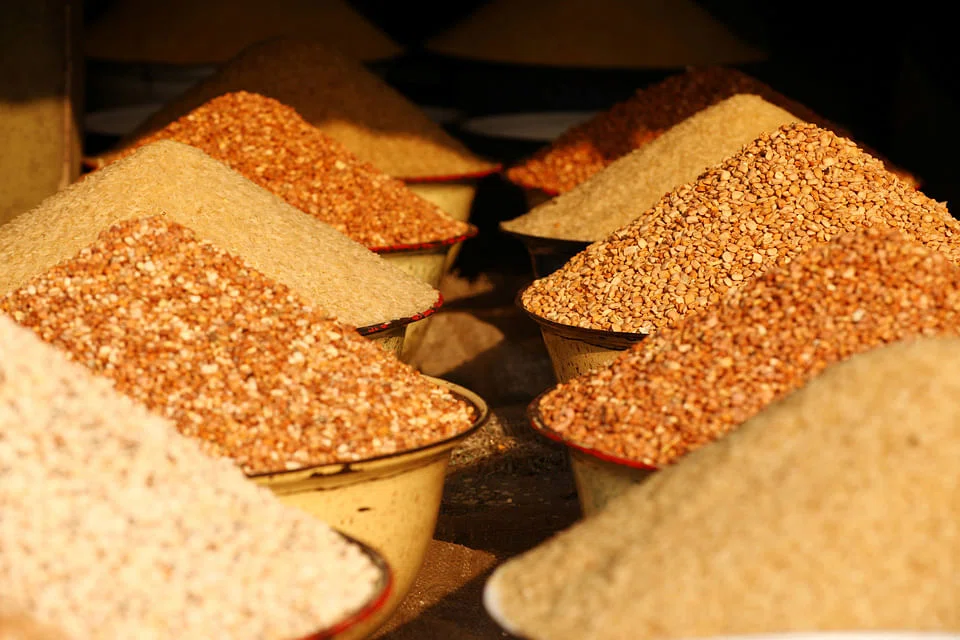
The data further underline the important point that not all commodities are alike. For "commodities to be grown" like grains, prices have declined from 1950. This downward trajectory has been driven by radical improvements in crop science resulting in greater resistance to stressors and higher yields for so-called soft commodities.
For "commodities in the ground" like energy products, metals, and minerals, prices have increased from 1950. This upward trajectory was first driven by deregulation of key markets (in particular, petroleum but also gold to a lesser extent). We also now contend with much higher capital costs in the mining sector from having to go deeper into the ground and into more remote - and oftentimes, less secure - areas.
Cumulatively, what this suggests is that recent developments in commodity markets are indeed encouraging from the perspective of those in the industry, particularly in metals and mining. But it also pays investors and policymakers to be sceptical of characterising these developments as a new "supercycle" in which prices rise in all commodity sectors for an extended period of time.
Lacking the spark of a large and unanticipated demand shock like China in the early 2000s, investment decisions and policy should continue to be made on a commodity-by-commodity basis.
- The writer is Visiting JY Pillay Professor of Social Sciences (Economics) at Yale-NUS College, and Professor of Economics at Simon Fraser University