

Commonwealth’s future in spotlight with Queen’s Jubilee
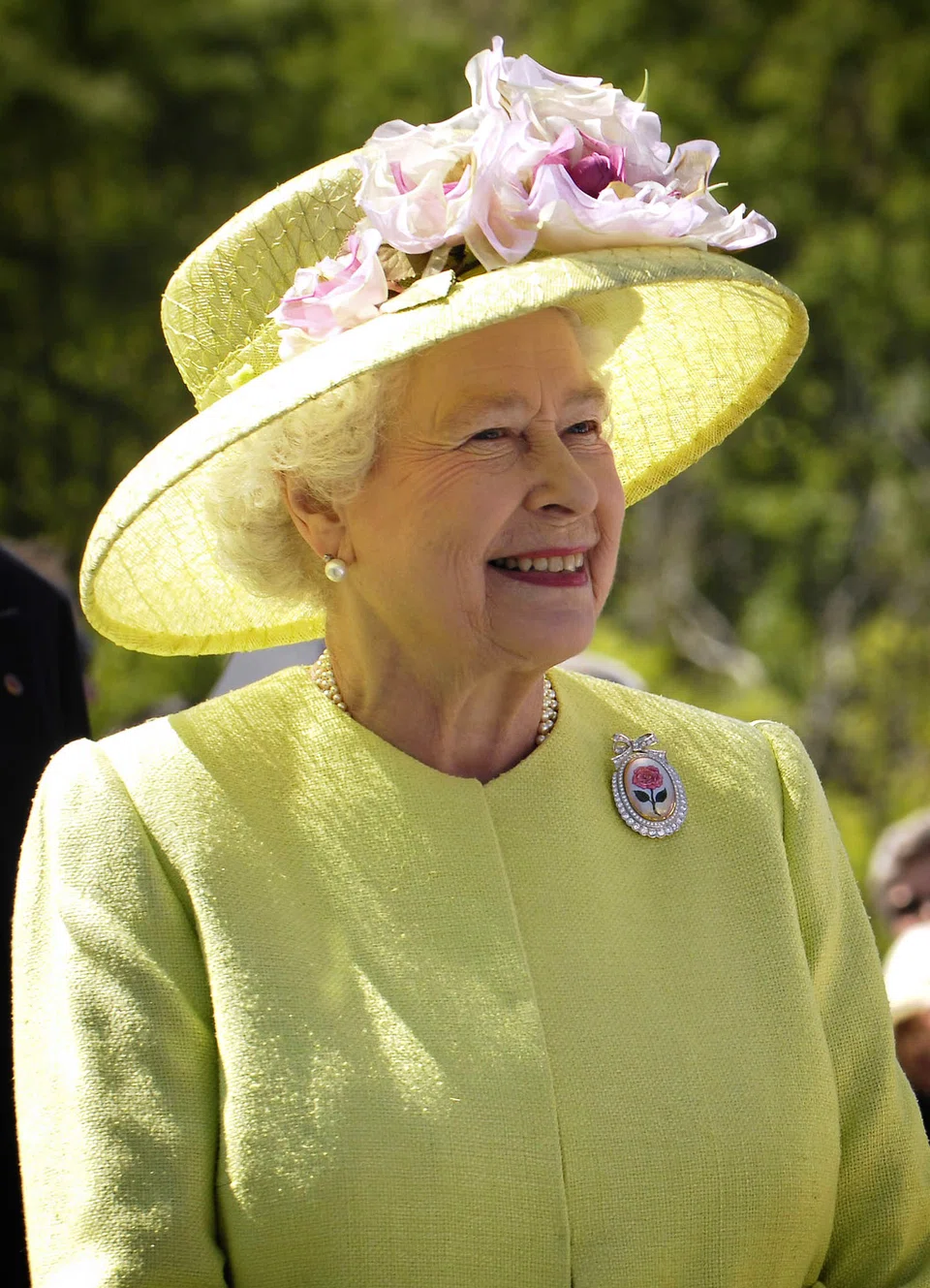
QUEEN Elizabeth celebrates 70 years on the throne this week, in her Platinum Jubilee, which is shining a spotlight on the uncertain future of not just the monarchy, but also the United Kingdom and the wider Commonwealth.
The Queen is now 96 and, sadly, her health has visibly declined in the last year since the death of her husband, Prince Philip. While she may yet beat her mother’s record of living to 101, preparations are intensifying for her eventual passing.
In this context, this week’s Platinum Jubilee will remind audiences not just in the UK but also abroad including the Commonwealth, about the unifying role she has played in recent decades. For the Queen is widely admired, internationally, fuelled by her visits to well over 100 countries during her long reign, including Singapore.
Part of the reason why this is so is that she represents a figure of significant continuity during a seven-decade period when the world has been transformed. When she assumed the throne, Winston Churchill was UK prime minister, Joseph Stalin was leader of the Soviet Union, Harry Truman was US president, and Mao Zedong was the Chinese Communist leader. Then the Korean War was still underway; the People’s Republic of China (PRC) was only two years old; and the UK was just about to join the United States and Soviet Union as a nuclear weapons power.
Today, the PRC is an emerging superpower (in fact the largest economy in the world on purchasing power parity terms); the Soviet Union has long ago disappeared from the geopolitical landscape (although Russia continues to challenge the world, as shown most recently in Ukraine); and the UK has transitioned to what some term as a ‘middle power’ with its Empire now dismantled, although some of these former colonial states and dominions, including Singapore, remain in the 54-member country, 2.4 billion population, Commonwealth which the Queen has done much to champion.
The stability she has provided has been important for many institutions, including the monarchy and Commonwealth, but also the UK itself. For the continued union of England, Scotland, Wales and Northern Ireland could suffer from a potentially less popular UK head of state in the future.
Starting with the Commonwealth, whose 54 nations account for around one third of today’s global population, question marks hang over the body’s continued relevance. To be sure, the Queen attaches high importance to the organisation’s future, and many countries want to remain the club, but uncertainty will only grow once she passes.
Early ‘straws in the wind’ in this direction are the fact that current commonwealth nation Barbados last year became the latest state to remove the Queen as its head of state. Similar sentiments are stirring in some other nations too, including Australia, whose new Prime Minister Anthony Albanese is a longstanding republican who favours replacing his nation’s current constitutional monarchy.
The winds of change are also blowing in the UK too. While the Queen remains a stabilising force for many people, the United Kingdom appears to be increasingly divided on geographic lines.
This is especially given increased pressure post-Brexit for independence in Scotland. Plus also the growing signs of political change in Northern Ireland too with the nationalist Sein Fein party, which favours unification of the island of Ireland, becoming the largest single party in May’s elections.
Beyond the debates about the Commonwealth and UK, there is also significant uncertainty over the future of the monarchy itself. Amidst the high esteem that the Queen and some other royals are currently held in, what is sometimes forgotten is that she has enjoyed bouts of significantly lower popularity.
The 1990s were particularly troubled, with 1992 becoming her self-described “annus horribilis” when the marriages of three of her children, including her heir Prince Charles, disintegrated, and Windsor Castle was nearly destroyed by fire. Meanwhile, her response to the 1997 death of Charles’s first wife, Princess Diana, was widely criticised at the time by the UK public.
Nonetheless, the Queen and immediate family appears to have largely recovered from this period, and the media focus on her remarkable, long life around her Platinum Jubilee is highlighting the continuing fascination much of the population has with the monarchy. This is a key driver of the fact that less than a quarter of the UK population today wants a republic, and many believe that it is better to have a non-divisive, non-political head of state.
That said, the personal popularity of Charles is neither as high as his mother’s, nor that of his own son William. Moreover, at 73, Charles is already at an age when many people are retired, and is the longest-waiting and oldest heir to the throne in UK history.
Indeed, some polls show that a significant body of the UK public would prefer the monarchy to skip a generation from Elizabeth to William upon the Queen’s passing. This leaves open the significant possibility that the Royal Family could become less popular under Charles’s rule.
Going forward, if the Queen does live for years more, a key question might be whether or not she chooses to abdicate before she dies. She has already stepped back from duties requiring long-distance flights, and speculation has been heightened following the abdications in 2013 of both Queen Beatrix of the Netherlands, and King Albert of Belgium. However, there are no obvious signs yet that she will do anything but follow the example of her great-grandmother Queen Victoria (1837-1901), the previous holder of record longevity for a sitting UK monarch, who died in office.
In this uncertain landscape, the skill Charles eventually shows as Elizabeth’s successor could therefore have implications not just for the monarchy, but also the wider union of England, Scotland, Wales and Northern Ireland, plus the Commonwealth too. He will do well to learn the trick his mother has shown of being a reformer, while widely being seen as a force for stability, evolving to meet the changing social, political and economic contours of the 21st century.
The writer is an associate at LSE IDEAS at the London School of Economics
TRENDING NOW

Two Singapore-listed palm oil firms named in Greenpeace report on Indonesian plantation fires
Singapore Airlines flight returns to San Francisco after ‘unruly’ passenger incident

Singapore looking into which companies responsible for haze-causing fires: PM Wong

Deluge IPO 3.86 times subscribed ahead of SGX debut

