

Constraints of being small in a huge market
Among tech firms in China, competition is stiff and there are many challenges that one must address in order to find success.
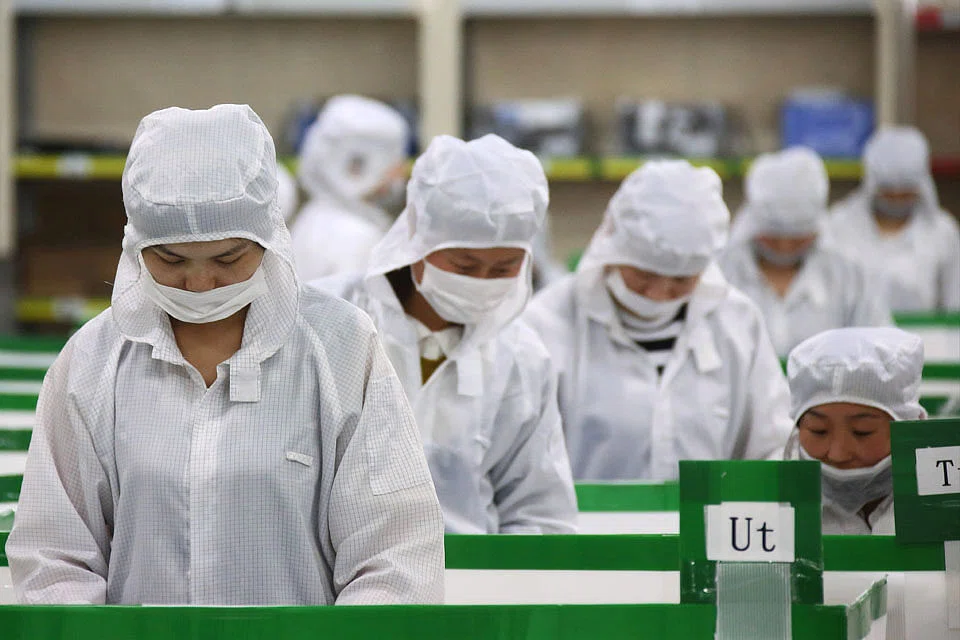
IT'S no secret that when it comes to manufacturing technical gadgets, China holds a prominent place. Yet among tech firms in China, competition is stiff and there are many challenges that one must address in order to find success.
Going by the experiences of Shenzhen-based Hali-Power, a company that's been manufacturing electronics products since 1984, there are four main challenges that small tech firms in China must address on their path to success. Hali-Power, most popularly known for its MiLi brand of hardware, is an example of a company that pushed its way to success, making everything from battery packs to smartphone projectors. As Hali-Power sees it, being small - even with its disadvantages - offers more flexibility and better avenues for true innovation.
Challenge #1: Unfair competition It's fair to say that intellectual property protection is relatively weak in China. In certain segments, fake products can be seen flooding the market rampantly. The word in Chinese for this phenomenon is Shanzhai or mimicry. It is bad enough when a small firm produces something Shanzhai, but when a large firm engages in the act, the damage is not only limited to small rivals; the entire industry will be affected and could even be destroyed.
Large firms with capabilities of mass production have powerful sales channels, and they could dump Shanzhai products at below-cost prices. For example, the raw materials needed to make a 5000mAh power bank (not including production or marketing costs) are estimated to be 55 yuan (S$11.80). Should a large company sell such a product at 49.9 yuan, pretty much all the manufacturers of power banks would be squeezed out.
It's a logical strategy to take, as Chinese consumers have proven to be highly sensitive to pricing. However, when companies focus too much on cost reduction and competing on price, they tend to spend less effort on innovation. After all, small enterprises need profit incentives to pursue technological innovations. When industry leaders engage in dumping in order to dissuade smaller rivals from entering the market, consumers will suffer. Small firms must find a way to work with this unfair competition.
Challenge #2: Choosing the right partners Today's world is global. Even in restricting distribution to only major markets, a company would still need to deal with some 20 countries. To market products on such a scale, one needs to overcome differences in business models, value systems, missions, visions and culture. One must search for long-term partners who have integrity, innovation, passion and commitment.
Large companies have many advantages because they have the resources to build their own brand and then ask smaller firms to act as original equipment manufacturers (OEM) - ie, ask them to make products using their brand. A large company might ask Hali-Power to produce a power bank yet would not allow Hali-Power to distribute it under the established MiLi brand, as they would want to showcase their own brand. Working with such partners is almost deleterious for smaller firms, yet at the same time, making alliances with other small firms might turn out to impede rapid growth in the long run because of a resource pool lacking in scope.
Challenge #3: Product transformation Hali-Power evolved from an OEM to a firm with its own brand. They are now an MFi, a company designated to work with Apple through a licence. For now, the company's products are solid hardware, boasting good design and product features, yet its place in the future isn't as solid.
Today, smart devices are the trend, and in the near future Hali-Power believes these will displace other hardware products, just like what the iPhone did to Nokia. Thus it is not enough for Hali-Power to upgrade only its product lines. It is already planning new innovation in software. The company looks to roll out a new device that will make beauty care smart. A skin sensor, completely compatible with existing mobile devices, will soon be on the market to detect dryness and analyse personal skin care needs.
Because such smart devices typically integrate different types of players, from upstream technologies to downstream sales channels, Hali-Power will need to develop a strong ability to find the right distribution channels to best market its innovative software. Many small firms face similar challenges to develop in areas outside of their proven experience.
Challenge #4: Managing product innovation While innovation is typically a good thing, too much innovation can carry risks, resulting in "over-innovated" products. This is because all innovations must be based on the needs of end-users. Technology and innovation alone have no value. Value is only created when an innovation is seamlessly incorporated into a product with end-users in mind.
Firms must think from the standpoint of end-users and ask whether or not they need new features. If something turns out to be "over-innovated", the price in extra time and resources to educate the public is very high. Or, if the innovative product has a different target group than that of the original sales channel, we need to invest in developing new sales channels.
Take the easy example of cables. Many larger companies have long established profitable sales channels where they focus on the production of white coloured one-metre cables. Hali-Power saw an opportunity to manufacture one-metre cables in several colours and also to vary the length to 20 centimetres and two and three metres. This is obviously a very small innovation, but it is one that is easily understood and accepted by end-users. And, as it is a value innovation, it brings more profits than the ordinary one-metre white cable.
For all tech firms, value derives from innovation. In the vast landscape of tech players, both large and small, industry players would be wise to compete and partner together to ensure survival and bring real value to end-users. But for all small firms, often up against powerful giants, know that being small is beautiful. You have the drive, flexibility and savvy to bring the technology that will move us into the future.
TRENDING NOW

Nvidia reinstates Jensen Huang as CEO; Trump says move poses no national security risk

Indonesia’s coal tycoon Low Tuck Kwong replaced as Bayan Resources president-director

Nvidia surges 33% after reinstating Jensen Huang, reviving AI trade; stocks soar in US and Europe

Consider lowering homeownership barriers for some non-resident foreigners

