

COP27: Why world must break ‘groundhog day’ climate loop
THE 1993 hit movie, Groundhog Day, is based around the lead character played by Bill Murray being caught in a time loop, repeatedly living the same day.
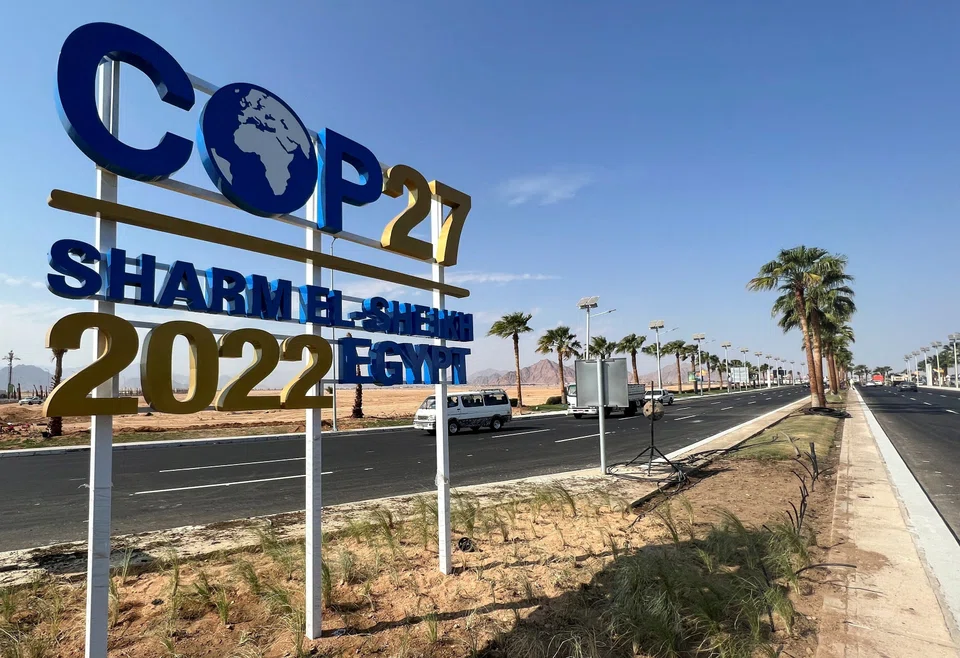
COP climate change watchers will be forgiven for having the same feeling as the latest big, annual summit starts in Egypt on Sunday (Nov 6). Despite landmark report after report being released recently on the crisis point the world is at with climate change, game-changing progress in global negotiations is unlikely to be reached at COP27 in Sharm el-Sheikh this month.
In recent days, for instance, the United Nations concluded in a hard-hitting publication that there is now “no credible pathway” to keep the increase in global temperatures below 1.5 degree Celsius above pre-industrial temperatures. That target, which was set at the Paris conference in 2015, is so significant as many scientists say it is the threshold at which global warming will have the most dangerous impact for populations around the world.
The report goes further that, since COP 26 in Glasgow one year ago, moves by governments across the world to tackle climate change have been “woefully inadequate”. So today only a profound change of our economy and society can avoid worst-case scenarios.
While the difference between a 1.5 degree C rise, or higher, may seem inconsequential to some, the impact is huge. For instance, the UN forecasts that the portion of the global population subject to water stress could be 50 per cent lower with overall warming of 1.5 degrees compared to 2 degrees. Meanwhile, a forecast 99 per cent of corals could be lost at 2 degrees C rise compared to perhaps 10 per cent at 1.5 degrees.
While the world is currently on course for disastrous warming of potentially more than 3 degrees C, this pathway can potentially still be changed through proactive, concerted global action, starting at Egypt. In so doing, we can move out of the ‘groundhog day’ loop of climate summitry.
Many concerned bystanders had hoped that the recent cacophony of damning publications, alongside the growing incidence of extreme weather events across the world, would be a “call to action” for world leaders. More than 90 heads of state have confirmed their attendance at COP27, with new UK prime minister Rishi Sunak the latest to do so on Wednesday, reversing an earlier decision not to go.
There were also concerns about whether Egypt is fully prepared to host the mega event. To be sure, Cairo has been doing extensive diplomatic legwork in recent months, but it lacks the global convening power, which makes it harder to get a big deal over the line this month.
The nation that held the best COP ever was France in 2015 which saw Paris throw the full weight of the state behind the talks. This included then-foreign minister Laurent Fabius, who was in the 1980s France’s youngest ever prime minister, showing the full range of his diplomatic skills to become the most effective ever COP president.
The clear danger this time around is a weak COP27 outcome, and potentially even the collapse of the process as almost happened in Copenhagen in 2008. At a minimum, all steps must be taken to keep a final outcome as close to 1.5 degree C “alive” to set a pathway to avoid the worst impact of climate change in the decades to come. Any such Sharm el-Sheikh “agreement” could allow for future updates to emissions pledges in the next few years to try to allow the world to stay within scientific advice on carbon levels.
Suboptimal as this is, there is at least one potential development that could change the picture. That is, if the United States and China can put aside their wider geopolitical and economic differences to come together on the climate agenda as a beacon to the rest of the world.
If Washington and Beijing become broadly aligned again on this agenda, the EU would provide a third leg of the stool to push ahead with a more ambitious global action. Collectively, the 27-nation European club, plus China and the US account for around one half of global climate emissions, and the triumvirate is critical to more positive international climate diplomacy.
While closer Washington-Beijing action on climate may seem fanciful, it should be remembered that the mood in Glasgow (COP26) last year was lifted by the surprise US-China cooperation agreement. While short on specifics and lacking the ambition of Washington’s and Beijing’s pre-Paris agreement in 2015, this helped create the political space for a deal in Glasgow.
So whether the world goes further and faster on the global warming agenda in the 2020s could well now rest on this G2 climate cooperation. Tackling global warming is a key political priority for both Biden and his Chinese counterpart Xi Jinping, and it is sometimes forgotten that a key precursor for the Paris deal in 2015 was a bilateral agreement in this area brokered by then-US President Barack Obama and Xi.
Biden, who may now be at the halfway point of his presidency if he does not seek or win a second term, has been unambiguous that the 2020s are “the decisive decade” where the world must make decisions that will avoid the worst consequences of the climate crisis. This clarity about the imperative to act has been supplemented by a plan to cut by 2030 greenhouse emissions by at least 50 per cent below 2005 levels, roughly doubling the previous US promise, and key legislation like that passed in August which is the most ambitious action on climate and energy security in the nation’s history.
Beyond such statecraft, there is much now needed also to try to lock in the high levels of business engagement too which was one of the key themes of COP26 last year in Glasgow. For, ultimately, the world’s future success in tackling climate change will rest on deep, collaborative partnerships across the public and private sectors, plus wider society.
With the result of COP26 in the balance, massive and unexpected momentum is needed in the days ahead. While world-wide climate pledges made are not yet close to meeting 1.5 degree C, the domestic frameworks being put in place are potentially crucial building blocks to measure, report, verify and manage emissions.
In the future, and as the COP process heads to the United Arab Emirates in 2023, the ambition must be that they are replicated in even more countries. Plus progressively ratcheted up too, helping create a key global sustainability framework for billions across the world in 2020s.
Andrew Hammond is an associate at LSE IDEAS at the London School of Economics






