

Could fintech firms have the solutions governments need to tackle Covid-19?
THE Covid-19 crisis currently sweeping the globe has turned our world upside down. Where we left for the office in the morning, we now work at home; we hardly travel on public transport, let alone go on business trips abroad; and something as simple as meeting a client for a coffee is now done via Zoom from the dining room table.
The biggest upset is being felt in the economy, as businesses small and large lose vital cashflow, affecting their working capital and their ability to stay afloat. Instead of steadily declining, economies have been brought to an abrupt halt overnight. The consequences of this are clear: an increase in unemployment as companies lay off redundant staff in order to save costs, or worse still the complete failure of businesses which were perfectly viable before the crisis hit.
The immediate effects are already being felt, as illustrated by the quarterly contraction in Singapore's gross domestic product (GDP) in the first three months of the year, or the record 3.3 million unemployment claims in just one week in the US.
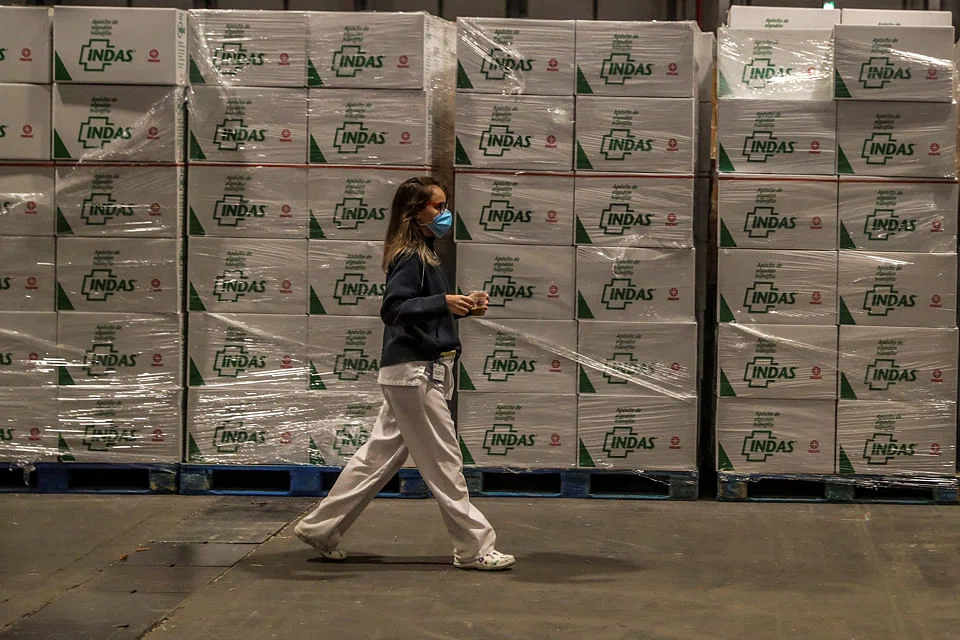
But it does not stop there. Global supply chains have been disrupted as countries go into lockdown. Goods are simply not flowing in the same way they used to; and even if they get to their countries of destination, who is to say whether there will be enough workers to unload the cargo? Supply chains are just that: a chain, linked by suppliers and buyers from a raw material to a finished product. You break one or two links in the chain and the whole thing falls apart. In a functioning economy, if the chain gets broken, a new party steps in to fix it, but the current situation is far from functional.
So governments are stepping in to help fill the gaps. Whether central bank policies of low interest rates and quantitative easing are the solution now is debatable. Since the 2008 financial crisis, economists still argue about whether such measures did more for the banks and the "haves" than they did for the micro economy and the "have-nots".
Some of the fiscal and legislative measures that the world governments are taking now seem more appropriate. From "helicopter money" to tax breaks via employee-wage subsidies and debt moratoriums, all governments are wary that their response matters. In the back of their minds, all leaders know that an event this big not only has the power to topple economies - it can also topple governments.
One of the biggest problems governments face is how to get money to the firms who need it most until the pandemic subsides. The traditional route would be to increase liquidity in the banks, in the hope that lending increases and money filters down to small and medium-sized enterprises (SMEs).
But we all know that is not the case, especially following the financial crisis 12 years ago. Banks tend to shy away from lending when times are tough, or increase the price at which they do so. The irony of some of the post-financial crisis legislation is that banks withdraw liquidity as volatility increases, thus reducing lending and deflating asset prices as they reduce exposure.
As banks have become more conservative, a new class of provider has entered the economy in the form of financial technology firms, or fintechs. Many of these firms specialise in lending, filling the gaps left by banks. Products range from working capital loans to financing transactions linked to trade.
Fintechs are neither constrained by procedure-heavy policies or some of the silos that exist in larger organisations. They also have the ability to onboard new clients quickly. Furthermore, they operate in the real economy to benefit the flow of goods and services. This is exactly the area that governments should be most concerned about. Monetary solutions are just not appropriate for the current crisis.
IDEAL SOLUTION
Fintechs offer the ideal top-down solution ruling parties require. Governments have neither the time nor the resources to analyse corporations on an individual basis, yet a single fintech could offer them access to hundreds of individual companies. Not only that, but the tech part of fintech provides transparency on exactly who and where the money flows and to monitor its effects via constant data.
This data science has many uses in the current crisis. For example, if there were worries about food security and the flow of basic staples, a fintech could easily identify customers on their books who trade in rice, as well as other important information such as where the crops were coming from. Using this data, the government could piece together the parts of the equation and help finance firms involved in this sector. There are many ways this could be done, either by direct lending, the provision of government guarantees or via joint participation with the private sector.
This is something that development banks have started to realise over the past few years, and many now have specific projects to increase collaboration with the financial technology sector. Maybe it is also time that the decision makers of our countries started to follow suit.
TRENDING NOW

He built the Vingroup empire. Now South-east Asia’s richest man is handing some key roles to his sons
Floods compound Philippine growth woes from public-works scandal

Tokyo reverses baby bust with AI matchmaking and generous subsidies
More interest in ETFs, low-cost funds but Singapore still lacks pressure to further lower fund fees

