

Could scenario planning have saved Robinsons?
The current pandemic is a classic example of a wicked problem that has no immediate solution, is unique, and one which conventional processes fail to tackle.
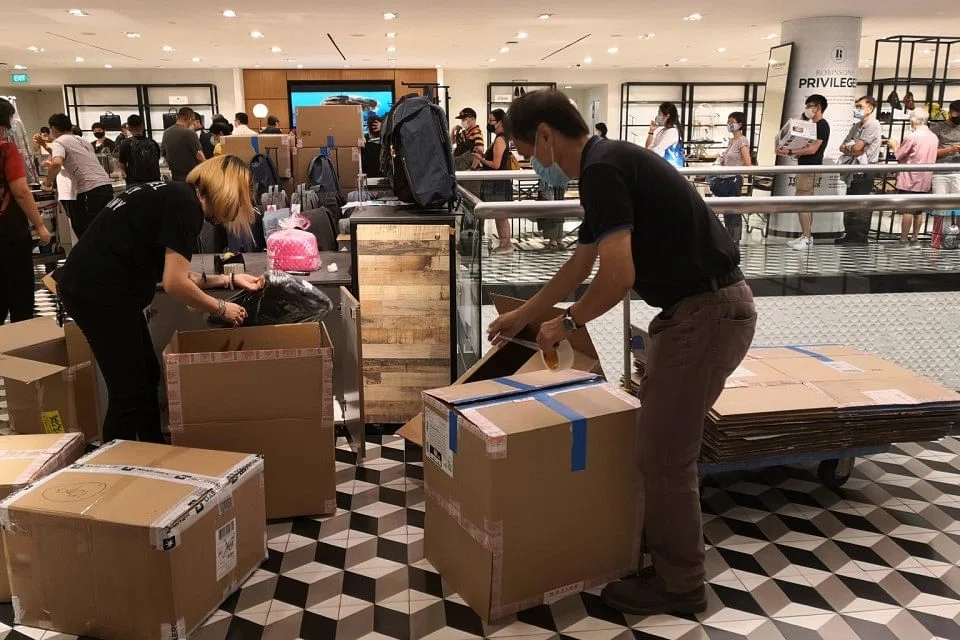
CONSIDERING Singapore's proud history as a trading nation it is perhaps sad, and a little ominous, that Robinsons is shuttering its stores forever. Set up in 1858, Robinsons is an iconic department store intimately tied to Singapore's history. But the business world does not dwell on sentimentality and Robinsons joins a long list of well-known retailers that have succumbed to the pressures of Covid-19 worldwide - Debenhams in the UK being another one of them.
The causes of this unprecedented collapse of the retail sector are well documented: the changing buying patterns of consumers; weak demand during Covid-19; inability to pay rentals; supply chain and global trade disruptions; among other reasons. So, what lessons can future retail leaders learn from this turn of events? Perhaps the foremost lesson from the perspective of strategic decision-making is to revisit existing approaches on risk assessment and consider alternative approaches to develop resiliency from future shocks.
An approach worth considering is that of scenario planning - a process successfully used by Singapore's policymakers as well as numerous other governments, energy companies and the military to tame or soften the blow of "wicked problems".
In 1973, Horst Rittel and Melvin Webber defined a wicked problem as "one which has no immediate solution, is unique, one which conventional processes fail to tackle, one which involves many stakeholders all of whom have different ideas about the problem".
The current pandemic is a classic example of a "wicked problem" and future retail leaders must begin by acknowledging it as such. Having participated in retail scenario planning workshops in the UK, Singapore, Hong Kong and Australia, I have observed three ways in which the scenario planning process enables retail leaders to be better prepared to cope with wicked problems.
First, scenario planning accommodates diverse perspectives on wicked problems by inviting participation from external stakeholders representing two levels of influence on a company's operations - the industry sector with which a company interacts directly and the broader environment involving geopolitical, economic, social, environmental and technological trends that indirectly shape the business environment.
The conversations facilitated by specialists in scenario planning focus on assessing the combined and disruptive influence of previously ignored yet plausible future uncertainties that could emerge as wicked problems. The outcome is the creation of multiple alternative future scenario stories, each with its unique representation of challenging and relevant wicked problems.
For example, in one of our scenario planning workshops, a lobbying body for neighbourhood convenience stores had to consider a scenario where digitisation would extend their market base from local to national consumers. In another workshop, a property developer of high-end malls had to consider the uncomfortable possibility of malls transforming into high-tech showrooms and warehouses for online retailers.
Second, well-designed scenario planning workshops effectively shift the conversation to "what if" questions. What-if questions trigger counterintuitive thinking and enable participants to conceptualise alternative ways in which an industry could evolve and transform if the wicked problems were to occur.
For instance, in our convenience stores project we observed that technology could enable these stores to effectively function like large supermarkets - upending the traditional notion of size associated with convenience retailing. Another transformative possibility which emerged from a different workshop was a future where rampant cyber-attacks turned consumers away from technology and created a less digitised and more self-reliant, community-based retail sector.
Rules of the game have changed
Finally, understanding how the rules of the game have changed in the industry enables managers to rethink the role of their organisation. In the process of rethinking the role, managers are forced to revisit, question, and challenge their existing business assumptions.
In our examples, the scenario planning process enabled senior managers of a retail real estate company to rethink their organisation's role as a "creator of experiences" from one which acquired land and sold or rented square footage space to retailers. In another instance, the lobbying association for small stores extended its membership to large retailers who were previously considered to be existential threats. Eventually, it created a win-win situation for all.
Robinsons' experience over the last decade of opening and then closing expensive outlets at Marina Bay Sands and at Jurong East Mall indicated a failure of strategy. In my experience, the biggest challenge has always been to convince successful retail and business leaders that they are not immune to wicked problems. This pandemic, which has been the greatest equaliser of our lifetime, has taught us all otherwise.
Scenario planning can provide a step-by-step, systematic framework to engage with wicked problems, raise plausible counterintuitive questions about the future from the vantage point of the present, and challenge a retail executive's fundamental assumption about the business. Whether business leaders have the confidence to embark on such an intellectually challenging journey remains to be seen.
TRENDING NOW
Two Singapore-listed palm oil firms named in Greenpeace report on Indonesian plantation fires

Singapore Airlines flight returns to San Francisco after ‘unruly’ passenger incident
Singapore looking into which companies responsible for haze-causing fires: PM Wong
Deluge IPO 3.86 times subscribed ahead of SGX debut

