Covid’s 'great reset': Taking a leaf from Bhutan
What the kingdom offers is not a top-of-the-world ranking, but a very useful holistic way of analysing every state initiative for society.
KOH BUCK SONG
AT A recent poetry event at the National Gallery Singapore, I noticed I was the only speaker - out of six poets including Edwin Thumboo, Lee Tzu Pheng, Isa Kamari, Madeleine Lee and moderator Yong Shu Hoong - and, indeed, the only person including a 100-strong audience, to refer to the impact of Covid-19. Everyone else spoke as if the pandemic never happened.
Perhaps this observation reflects the strength of human resilience. These days, every worker can go back to the office. Masks are off outdoors. “Revenge travel” is returning in force. The fist bump has all but gone out of fashion.
There is a danger that the “great reset” from Covid-19 might pass most of the world by.
For the last two years, much has been said of the need for a “great reset” to reconfigure human society - to take in, and apply, lessons from tackling the worst global pandemic in living memory. For example, the World Economic Forum launched in 2020 its “Great Reset Initiative” to “improve the state of the world”.
In a speech last Sunday (Apr 24), Prime Minister Lee Hsien Loong said that the pandemic has taught Singapore valuable lessons “for which we have paid dearly”, and these learnings must not go to waste.

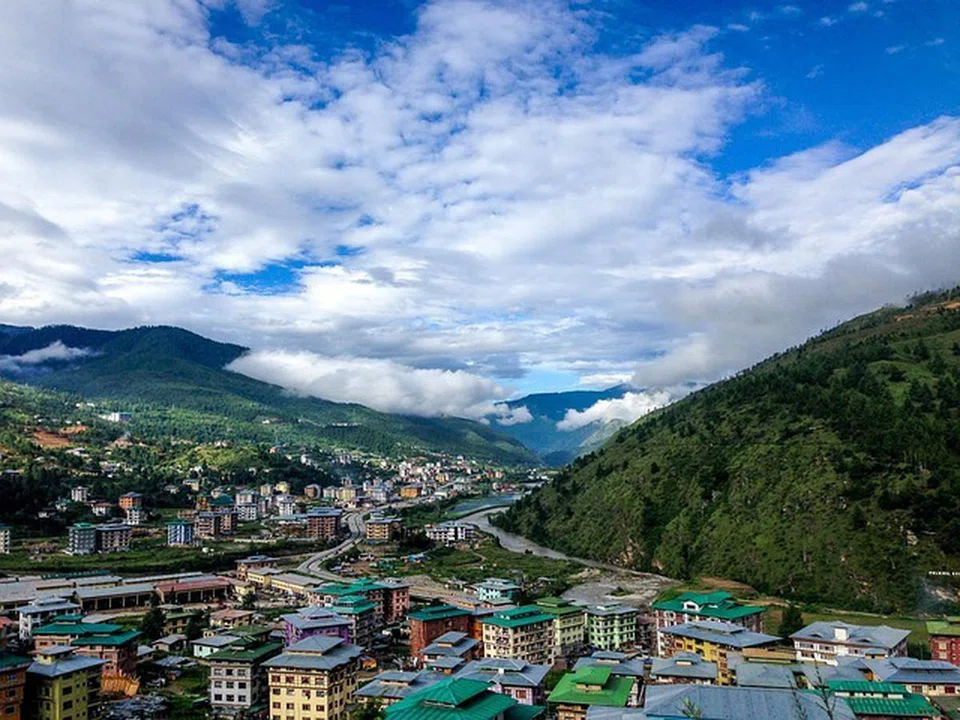
For what governments can do, I can think of no better model to dust off, and reconsider, than Bhutan’s gross national happiness (GNH) index. Let me explain.
A common misconception among many is that Bhutan lays claim to being “the world’s happiest country”. In fact, the World Happiness Report, the most authoritative empirical measure, ranks Bhutan 95th out of 156 countries in 2019, the most recent year, as the Gallup survey did not include Bhutan in the last two years.
What Bhutan offers the world is not a top-of-the-world ranking, but a very useful holistic way of analysing every state initiative for society. Thinking holistically goes against human nature, hence the importance of reiterating this reminder now.
SEE ALSO

The key idea of GNH - first communicated by the fourth King of Bhutan, Jigme Singye Wangchuck, in 1972 - is that gross domestic product (GDP) cannot be the be-all and end-all of development. Soft factors, such as fostering mental health, must also be catered to.
Every public policy in Bhutan is put through a “GNH Policy Lens” requiring all policy consequences to be considered prior to implementation, with 72 indicators under nine domains: Psychological wellbeing, health, education, time use, cultural diversity and resilience, good governance, community vitality, ecological diversity and resilience, and living standards.
Bhutanese civil servants and stakeholders who work on government projects must all work with the GNH Commission, whose officers I met in 2019, when I was invited to speak on nation branding and building at Bhutan’s Royal Institute for Governance and Strategic Studies. The GNH Commission helps overcome the innate silo mentality, that hinders collaboration in any human grouping anywhere.
What I am suggesting is not to adopt the GNH model wholesale, but for other governments to take a closer look, to see which facets could be applied in each society according to its circumstances.
The World Happiness Report, run by the United Nations, was inspired by Bhutan’s GNH. In 2011, the UN General Assembly recognised happiness as a fundamental human goal, calling for a more inclusive, equitable and balanced approach to economic growth to promote happiness and wellbeing. In 2012, the first UN conference on happiness was held, and the UN made March 20 the International Day of Happiness, observed since 2013.
Since then, more countries have adopted this approach to policymaking.
New Zealand’s “wellbeing Budget” was launched in early 2019 by Prime Minister Jacinda Ardern, who recently just visited Singapore. As she said: “We're embedding that notion of making decisions that aren't just about growth for growth's sake, but how are our people faring?”
The United Arab Emirates has a minister of state for happiness and a national programme for happiness and positivity. Government bodies have “CEOs for happiness and wellbeing”. Customer service centres become “customer happiness centres”.
In Singapore, in the past, development usually had higher priority than conservation. “Welfare” used to be a bad word. But that was the pre-pandemic world.
Now, sustainability is in the name of a government ministry. Budget 2022, announced in February by Finance Minister Lawrence Wong, pledges a “new way forward together” for Singapore, with measures such as more progressive taxation to address inequality squarely.
Over the past two years, Singaporeans’ collective conscience has been pricked by issues such as living conditions for migrant workers, and, more broadly, greater compassion for “societal cabin fever”, the pandemic’s toll on psychological and emotional wellbeing.
At that poetry event, I read a poem inspired by social realist artist Chua Mia Tee’s 1974 painting of Jurong Shipyard, Workers In A Canteen, to note that - after 48 years, including two pandemic years - these same workers are still under-appreciated. Healthcare staff and delivery riders have been applauded, but hardly ever those who toil to keep the supply chains flowing.
The vibe from the National Gallery Singapore crowd seemed to affirm how humans have such a great capacity to bounce back. People tend to revert to default behaviours very quickly.
So, it would be a pity not to make better use of opportunities surfaced by Covid-19 to reconfigure how society’s wellbeing can be cared for. There should be time - if there is the will - to see what can be learned from Bhutan’s happiness concept, before the next global pandemic swings round.
The writer, the author and editor of almost 40 books including 'Brand Singapore', is the National Gallery Singapore’s poet-in-residence 2021-22.
Decoding Asia newsletter: your guide to navigating Asia in a new global order. Sign up here to get Decoding Asia newsletter. Delivered to your inbox. Free.
Share with us your feedback on BT's products and services