CPF’s unconditional withdrawal limit should not be raised

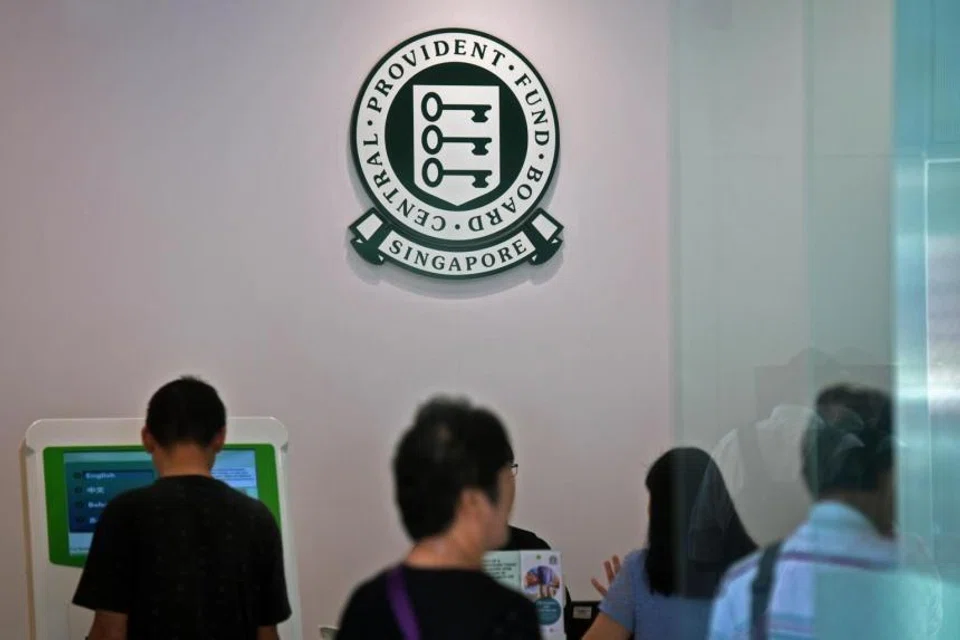
AGAINST the rising cost of living, a proposal was recently made to raise the unconditional withdrawal limit of S$5,000 that eligible Central Provident Fund (CPF) members can withdraw upon turning 55.
Currently, CPF members who have set aside the Full Retirement Sum can withdraw any savings in their Ordinary Account and Special Account beyond the Full Retirement Sum from age 55. Those who own a property with a lease lasting at least until they turn 95 can withdraw savings above their Basic Retirement Sum upon turning 55.
Those born in 1958 or after who cannot meet either of the retirement sums can, however, withdraw up to S$5,000 without conditions from age 55.
Non-Constituency MP Leong Mun Wai asked Manpower Minister Tan See Leng in Parliament a fortnight ago whether the S$5,000 limit can be increased in line with inflation. This is to help lower-income Singaporeans with less CPF savings who want to use the money to fulfil their aspirations.
Leong noted that the upcoming Majulah Package will beef up the Retirement Account balances of lower-income Singaporeans (by up to S$1,500 if the member has not reached the Basic Retirement Sum), providing leeway for a higher unconditional withdrawal limit.
The government is not ruling out relooking the limit, the minister said, but noted that higher withdrawals will lower future CPF payouts for the individuals.
CPF members aged 55 and above withdrew S$6 billion in total or an average of S$9,250 per transaction in 2022, whereas the amount withdrawn in the first half of 2023 was S$4.3 billion in total or S$10,515 per transaction on average.
Compared against these average withdrawal amounts, the unconditional withdrawal limit is indeed on the low side.
However, raising this limit by 3.5 per cent yearly – the rate at which the retirement sums are stepped up each year for inflation purposes – will further reduce already inadequate retirement savings.
Last year, 58 per cent of CPF members who turned 55 met the Basic Retirement Sum, CPF statistics showed. However, just 40 per cent of this cohort had adequate savings in their Ordinary Account and Special Account for the Full Retirement Sum.
The Full Retirement Sum for those who turned 55 in 2022 is S$192,000 and the Basic Retirement Sum is S$96,000.
For this cohort of male members under the annuity programme CPF Life Standard Plan, for example, those who met the Basic Retirement Sum would get a monthly payout of about S$850 and those with the Full Retirement Sum would receive S$1,570 from the age of 65.
S$850 is clearly inadequate for basic living expenses in retirement, even at today’s cost of living. Notably, almost half of the cohort was unable to meet the Basic Retirement Sum.
Lifting this limit in a one-off exercise by, say the rate of inflation of 5 per cent, does not move the needle much as the limit would only be S$250 higher or S$5,250.
Concerns that the unconditional withdrawal amount may be needed to meet short-term requirements may be mitigated by tapping government support programmes instead of drawing from retirement savings.
Further, a study published in 2018 by CPF showed that six in 10 respondents aged 55 to 70 made withdrawals from their CPF accounts after turning 55, and about 50 per cent of this group parked their funds with financial institutions without earmarking them for any specific use.
CPF is a retirement scheme to build up a nest egg for the long term. Hence, it is not meant for immediate or short-term use, and we should not allow retirement savings to be depleted too easily without good reason.