Perspective

Crypto is not too big to fail, even with help from FTX

The billionaire-run platform’s support for distressed peers looks more like a sticking plaster than a credible backstop.
Published Fri, Jun 24, 2022 · 04:24 PM
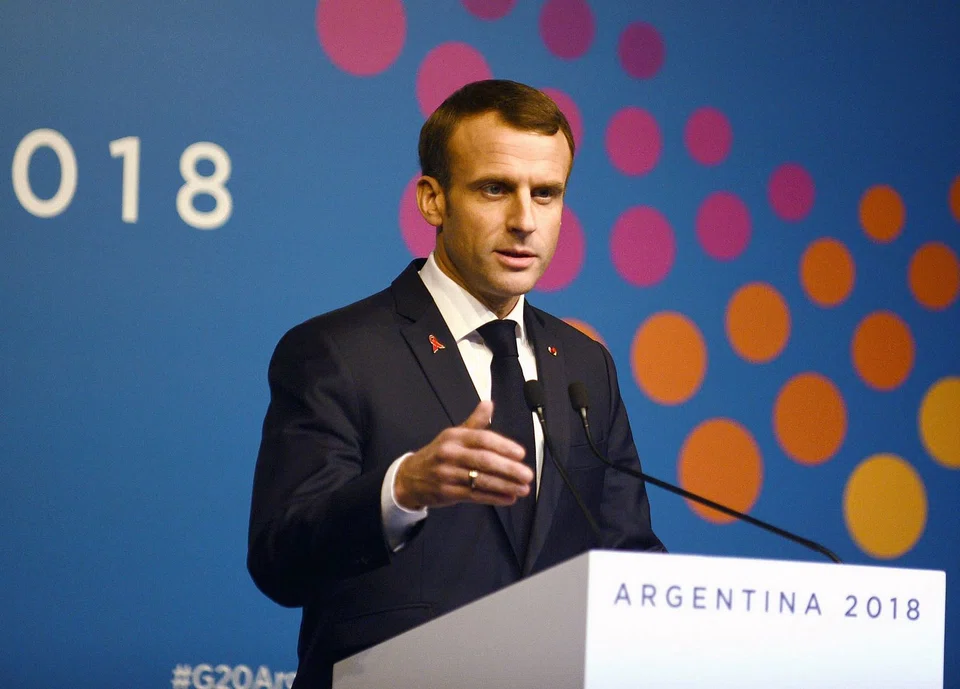
    • Crypto trading platform FTX has extended a US$250 million credit line to BlockFi Inc, just days after helping crypto broker Voyager Digital pull back from the brink.
    • Crypto trading platform FTX has extended a US$250 million credit line to BlockFi Inc, just days after helping crypto broker Voyager Digital pull back from the brink. AFP

    Lionel Laurent

    “TURTLES all the way down” is a handy phrase for describing how the human mind creatively fills in holes of logic. It allegedly springs from one person’s attempt to justify to the philosopher Bertrand Russell her belief that the world was floating on a giant turtle by imagining another turtle underneath it, and then another, to infinity.

    The image fits the world of cryptocurrencies, where a recent tumble in the price of Bitcoin, Ether and other tokens has unravelled a complex chain of stablecoins, lending platforms and trading firms that are blowing up simultaneously. What was once a virtuous circle of locked-up tokens yielding interest that would be reinvested ad infinitum is now a vicious one, as margin calls and liquidations take place at algorithmic speed. Every turtle seems to hide another.


    The next phase features bailouts, as the big players atop the ecosystem of crypto-speculation — billionaire-run exchanges — step in to try to stem panic and restore trust. Sam Bankman-Fried, co-founder of FTX Trading Ltd, has extended a US$250 million credit line to lending platform BlockFi Inc. He’s made an additional US$200 million of credit and a separate 15,000-Bitcoin revolving facility available to Voyager Digital Ltd, a Toronto-based crypto broker that’s owed US$660 million by troubled digital-asset hedge fund Three Arrows Capital Ltd. And Changpeng Zhao, the head of rival digital exchange Binance, spoke of a "responsibility" to help struggling crypto firms after effectively compensating victims of crypto game Axie Infinity's hack earlier this year.

    Fans say this adds a credible backstop to a US$1 trillion market. “Bankman-Fried is the new John Pierpoint Morgan,” says Anthony Scaramucci, citing the 1907 banking crisis that saw Morgan and his peers pledge their own money to stop a loss of faith in the financial system. Others have compared it to Warren Buffett’s support for Goldman Sachs Group Inc in 2008.

    But strip away the hype, and it still looks like turtles all the way down. Crypto is not too big to fail.

    Asean Intelligence

    Get insights into businesses across South-east Asia

    Get the free report

    Bankman-Fried clearly has deep pockets, but his wealth is tied up almost entirely in crypto: Bloomberg data estimates US$6.6 billion comes from his stake in Bahamas-based FTX, US$2.1 billion from FTX’s separate US-based subsidiary, US$1 billion from the trading firm Alameda and US$420 million from his recently-acquired stake in trading app Robinhood Markets Inc.

    It makes sense that he would want to either pick bargains among the rubble, or make a public show of faith in the future; somewhere along the line, his own fortune is at stake. If FTX has also spent hundreds of millions of dollars on sports sponsorships, such as the FTX Arena in Miami, it’s a sign it relies on basic speculative demand to keep the crypto party going — just as its distressed peers do.

    Yet this doesn’t represent an outside seal of approval or introduce the kind of systemic firebreak that an actual intervention from JPMorgan Chase & Co or Berkshire Hathaway Inc might.

    At the end of last year, BlockFi had about US$10 billion in assets that pay interest; the US$250 million advanced by Bankman-Fried represents a little over 2 per cent of that number. Despite BlockFi’s comments to Bloomberg News that this is a “big number” that “bolsters” its balance sheet, it sounds more like a firm adding debt because it needs cash. BlockFi says that after a “cash-flow positive” month in May, it suffered an “uptick” of pressure.

    And while FTX’s US$1 billion-a-year in revenue carries huge weight in crypto-land, in terms of credit and counterparty risk this exchange is nothing like a regulated Wall Street firm.

    FTX is headquartered in the Bahamas because, as the New York Times newspaper puts it, 80 per cent of its revenue stems from a trading instrument that remains illegal stateside. Despite its turnover, it’s only ranked number 22 on data firm Kaiko’s grading of exchanges based on metrics including risk controls, security and data quality. And Bankman-Fried’s memorable explanation of yield farming in April sounded to Matt Levine like a “Ponzi business”. Is this really the new face of Wall Street?

    This isn’t to suggest that Bankman-Fried isn’t a canny investor; he’s clearly managed to design successful trading strategies and spot bets that pay off, such as his expletive-laden taunt on Twitter that he would buy Solana at US$3 per token (it’s gone up more than tenfold since).

    But comparing FTX to JPMorgan, or Warren Buffett, or even the Federal Reserve — whose creation was spurred by the 1907 market panic — is wrong, and borderline irresponsible. There’s nothing on display here that would stop Bitcoin falling further, and nothing that suggests FTX and others would be immune from the fallout. Martin Finnegan, a partner at law firm Punter Southall who has warned of the risks to institutional investors from offshore crypto trading platforms, says FTX’s actions look like a “sticking plaster”.

    Or, another addition to a long line of turtles. BLOOMBERG

    Decoding Asia newsletter: your guide to navigating Asia in a new global order. Sign up here to get Decoding Asia newsletter. Delivered to your inbox. Free.

    Share with us your feedback on BT's products and services