

Cryptocurrencies are for gamblers, not investors
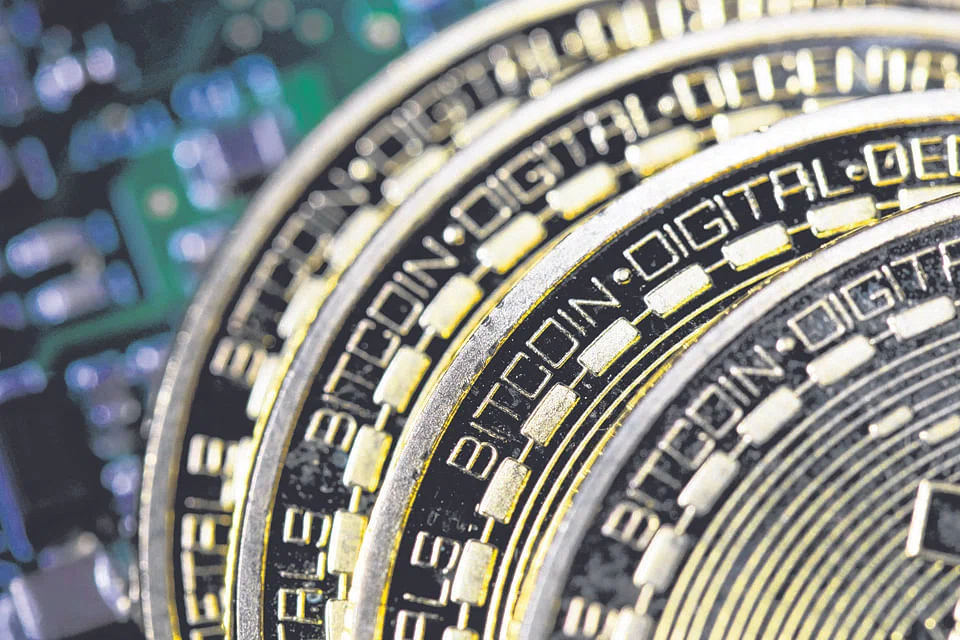
ON Dec 19, 2017, the Monetary Authority of Singapore (MAS) advised caution over cryptocurrencies. For me, as a professional economist, cryptocurrencies are mostly about entertainment, the excitement I get from seeing their price go up and down. They are certainly not money. I see no reason to invest in them, I am not a gambler. Let me explain.
Cryptocurrencies do not satisfy the basic requirements of money. They are not currencies. Their prices in real money are too volatile to make them useful for measuring value or storing wealth. They are useless in risk management. I encourage anyone interested in cryptocurrencies to read at least the seven- and-a-half-line long abstract of an academic article on the subject by David Yermack (NBER WP19747). It is available online, no Bitcoin, or any coin needed to access it.
If cryptocurrencies are not currencies, I would advise all governments to insist that sellers call their cryptos something else than currencies to stop misleading the public. I will call them here crypto cyber units (CCUs) to preserve the excitement and minimise the confusion.
Today's paper money, unlike gold or silver coins, can be supplied only by a public issuer, such as a government-owned central bank - think the MAS, the US Federal Reserve, or the European Central Bank. Governments and their central banks have the monopoly on money production for a good reason.
A profit-maximising private producer of paper money would keep printing notes as long as the revenue from selling an additional note remained above its production cost. The problem is that the production cost of paper money notes, unlike gold or silver coins, is very low.
For example, if I were a US entrepreneur with access to the right equipment, I could have supplied a lot of S$1,000 notes, but eventually, I would need to stop, considering that each note may cost me say US$10 to manufacture. Eventually, people would not give me much in exchange for my latest S$1,000 note.
I would not print more because I would lose money selling something that cost me US$10 to produce for less than US$10. Only the MAS can ensure a S$1,000 note is worth say US$758 (at today's exchange rate) by limiting the volume of notes it prints and puts into circulation by selling them for, say US dollars. Reputable central banks are in the business of protecting the value of the money they issue, not maximising profits from money-printing. Smart governments help them in this task.
I suspect most private producers of CCUs are likely to behave like private paper currency makers. They will produce CCUs as long their market price exceeds their private production cost. I am not sure what the production cost is today. I worry it could be low, possibly declining over time.
To make it more entertaining, and more worrisome for me, the entrepreneurs call their production process "mining", possibly to impress on the buyers the idea that they mine them, maybe at a tremendous cost, possibly from some deep, inaccessible areas of the world. This must make buyers feel their electronic 'coins' are like gold, if not better.
I hear that some entrepreneurs issue their own exclusive CCUs through Initial Coin Offerings (ICOs). I love this concept of selling electronic units for real, cold cash! But I am not a buyer. Investors in ICOs put real dollars to buy CCUs in the hope they can sell their 'investments' for even more real dollars at some time in the future. This is, by the way, what all Ponzi scheme investors believe when they are allowed to join a scheme by its sponsors.
Renaming cryptocurrencies to something else than coins or currencies, and renaming the production process to something less honorable than mining or ICO would make them less attractive. In finance, good product names matter. They bring the right feel of affection, comfort, or even courage when the courage is needed most. Good names of financial products help investors part with their money faster and easier.
Of course, one or two CCUs, maybe even the Bitcoin, which seems to be increasingly expensive to mine, and thus could be rare enough to preserve its value - but no guarantees - could be an exception if (1) it can provide a valuable service and (2) people using the service are willing to pay for it in real money.
The love affair with CCUs will eventually be replaced by another attention-grabbing 'disruptive innovation'. This new innovation, yet again, could be less about disruption and more about wealth redistribution, from hard working but naive savers-investors to the entrepreneurial innovators.
Thank you for your attention and good luck with mining and crypto cyber investing.
TRENDING NOW

He built the Vingroup empire. Now South-east Asia’s richest man is handing some key roles to his sons
Despite the de-dollarisation debate, demand for dollar liquidity in Asia is growing

Can a first-time homebuyer couple earning S$18,000 a month afford a new EC unit?

Asia needs new energy security architecture

