

Current US policy on Russia and China spurs them to band together
The efforts in the 1970s by then US president Richard Nixon and his adviser, Henry Kissinger, to bring about a rapprochement with China and at the same time to ease tensions with the Soviet Union, has been hailed as a diplomatic masterstroke.
Exploiting the tensions between the two communist powers to its advantage, Washington was able to strengthen ties with both Beijing and Moscow, leading to the opening to China and détente with the Soviet Union. At the same time, the realpolitik road taken by President Nixon and Dr Kissinger helped produce tensions between Beijing and Russia and made it less likely that the two would gang together against Washington. Ironically, the policies being pursued today by members of the foreign policy establishment in Washington, at a time when Russia has ceased to be Communist superpower and China has been embracing capitalism, seem to encourage Moscow and Beijing to band together in opposing American global interests.
Most intriguing is the obsessive Russia fixation in Washington these days which creates the impression that Russia is America's number one geopolitical foe and that the two countries are in the midst of a new Cold War. It is understandable that many Americans are concerned about what they believe was an effort by Russia to interfere in the 2016 US presidential election on the side of Candidate Donald Trump and through the use of Internet hackers and so-called trolls operating in the social media. Hence, a series of investigations launched by the government and the media are now trying to figure out what exactly was the role of the Kremlin in that election and propose ways to respond to this challenge.
But today's Russia is not a global military superpower but a mid-size nuclear power with an economy smaller than California. And it is certainly not leading an international ideological movement aimed at destroying Western democracy and capitalism. Yet the current America focus on the so-called Russian threat has the power of a self-fulfilling prophecy that could turn Moscow into an enemy, making it difficult for the Americans and the Russians to cooperate on resolving common problems in the Middle East and elsewhere.
Moreover, such a US policy creates incentives for the Russians to weaken the current international status quo maintained by the US and to join other global powers who may also have an interest to changing the economic and military order. China, for example.
While the current animosity towards China in Washington is not as virulent as prevailing anti-Russia sentiments, China bashing remains popular on Capitol Hill and was exploited by Candidate Trump who blamed the Chinese for most of America's economic woes. While President Trump has expressed interest in averting a clash with China, his administration seems to lack any coherent strategy vis-à-vis Beijing and continues to be under enormous pressure from Congress and the media to toughen US policy toward Russia.
In a way, one could argue that the current US policy towards Moscow and Beijing is a mirror image of the Nixon-Kissinger diplomacy, and has the potential to result in exactly the opposite of what the then president and his national security aide sought to achieve, by forcing Russia into the arms of China and by making it more likely than not that the two would emerge together as America's foes.
TRENDING NOW

Simba admits exceeding spectrum limits amid failed M1 deal; parent company Tuas’ full-year profit surges 277%

He built the Vingroup empire. Now South-east Asia’s richest man is handing some key roles to his sons
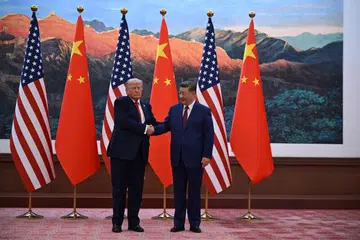
What’s on the agenda when Xi and Trump meet in Washington

Ex-execs of CW Group, Allied Tech charged with offences linked to lawyer’s S$76 million misappropriation

