

Customer satisfaction: Business dealmaker or deal breaker?
As Apple Inc's success story has proved, putting customers first and giving them a great experience is the secret to becoming a trillion-dollar company.
IN AUGUST, the crème de la crème of America Inc known as the Business Roundtable, comprising 181 chief executives of major US companies, issued a new statement on the "Purpose of a Corporation". In the joint statement, they committed to improving the delivery of value to customers by way of "meeting or exceeding" their expectations. Business leaders also identified employees as important stakeholders and promised to compensate them fairly and foster inclusion, dignity and respect.
The commitment to customers and employees was followed by fair dealings with suppliers and social responsibility to the communities around them. Conspicuously, shareholder commitment was placed last on this list. This is striking.
Prioritising customers may seem like common sense, but the practice of maximising profit for shareholders' gains dates back to the 1980s. One by one, America Inc companies started meeting Wall Street expectations on a quarterly basis in terms of cost containment and revenue goals. They grew in share price and value, often at the expense of other stakeholders.
Should companies in Singapore and the Asia Pacific follow suit and abide by the principles of the Business Roundtable? Current research certainly confirms this. With technology startups chipping away at the dominance of incumbent brands, there is no better time for companies to reexamine how they conduct business.
Take retail banking for example. The JD Power 2019 Singapore Retail Banking Satisfaction (RBS) Study polled 2,515 customers and found 65 per cent of customers are interested in opening digital bank accounts, up from 52 per cent last year. The study discerned that customers do not feel that they have a relationship with their bank - only 29 per cent saw their bank as a financial partner.
TRANSFORMATION THAT EFFECTS REAL CHANGE
These statistics should alarm financial institutions, given that startups have seen successes. Incumbent brands should use this as an impetus to embark on a cultural transformation of the company and start by re-evaluating their purpose, similar to the Business Roundtable.
It's worth addressing sceptics' feedback on whether this will work. For financial institutions at least, there is clearly the ability to do so. When faced with regulatory headwinds and record fines, financial institutions convened their brightest legal minds and senior executives with decision-making power to revamp their processes so that compliance is improved.
The advent of fintech also spurred banks to not just set aside funds to invest and acquire new technology, but also acquire significant headcount to oversee incorporation and development of new-fangled platforms.
Similarly, to create a culture where customers come first, a transformation team that has real decision-making power to effect real change could lead the charge.
But what should the paradigm shift entail? The simplest answer - the best answers often are - is to be sure the customer is satisfied with the service provided.
To ensure that customer satisfaction is at the centre of the purpose of the corporation, one way is to peg executive compensation to the measurement of customer satisfaction as a success metric.
Prioritising customer satisfaction isn't new or radical. Salespeople know it. Frontliners know it. Higher up the corporate ladder, CEOs know it.
Oscar Munoz of United Airlines knows better than anyone. Since the unfortunate manhandling of a passenger due to overbooking, part of his compensation as the leader of United Airlines is contingent on how sweet the responses are on customer questionnaires. The number of surveys conducted is a feat - daily feedback from as many as 8,000 customers are garnered to track customer sentiment.
Other major airlines also link customer satisfaction and loyalty to CEO compensation, notably Southwest Airlines and Delta Air Lines.
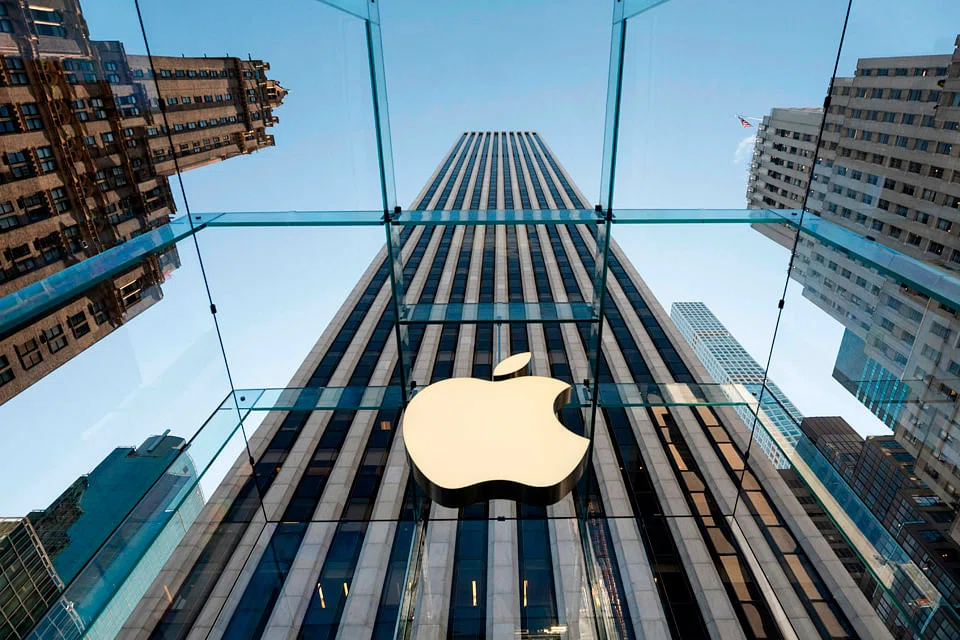
But perhaps there is no bigger champion of customer satisfaction than the ubiquitous Apple Inc. It is worth pointing out that the then CEO Steve Jobs and current CEO Tim Cook have both said that customer satisfaction and experience are paramount to Apple's success.
The result? The world's first trillion-dollar public company based on gorgeous products that seamlessly integrate with one another.
While Apple occasionally rewards shareholders, its leadership is also blunt to them. In 2014, Mr Cook said Apple would continue to invest in sustainable energy to slash greenhouse emissions and told shareholders who objected to sell their shares.
In the year before that, Mr Cook also said that while the management and the board didn't like disappointing shareholders, the company was focused on the long term. "This has always been a secret of Apple," he said. That is a marked difference from the quarter-on-quarter determination to please Wall Street.
And while Mr Cook is compensated in the millions, pay doesn't appear to hinge on customer satisfaction; it seems that's just innate to the company goals he and his predecessor instituted.
LEGACY AND LOYALTY
The emphasis on customer satisfaction bears repeating and with more choices emerging, customers are willing to make a change. The JD Power 2019 RBS Study found that the majority (70 per cent) of younger customers (born after 1980) indicated interest to try digital banks, compared with 59 per cent for other customers. This signals that legacy is not something companies can depend upon for customer loyalty.
A related story emerged when JD Power conducted its RBS study in Hong Kong in February this year. Of those surveyed, 54 per cent didn't completely trust their primary bank, 83 per cent said that bank representatives didn't spend enough time identifying customer needs before offering products, and a significant proportion of respondents felt that communications weren't personalised. It would seem trust hasn't been a tenet banks in the city state fostered with customers.
Trust is crucial to doing business. No one would work with a known scammer, simply because there is a deficit of trust. If brands consistently fail on their promises, they are not just perceived as untrustworthy, but also potentially inauthentic.
What does this mean for customer satisfaction and ultimately loyalty? Not much, if there aren't customers to speak of.
On the flipside, if customers trust brands and perceive them as real, they'll emerge as a brand's biggest advocates. This principle applies to employees and partners.
And if trends are to be believed, in the near- to medium-term, switching banks could be as easy as switching telecom providers. This is especially likely with the advent of virtual newcomers threatening to steal the market share of the incumbents.
Mr Cook has already revealed that the secret to company valuations at a trillion dollars is to deliver customer satisfaction and a great experience. It is a wonder why more companies aren't following suit.
TRENDING NOW

Once staunchly pro-China, Malaysian Chinese businesses are now distancing themselves from Beijing

Britain’s mansion tax shows the difficulty of targeting wealth

Three hats, one goal: How Ng Kian Swan runs sustainability at NUHS

COE review: The gap between luxury and mass-market cars isn’t the only one worth bridging

