

Data from platform operators key to unravelling gig worker issues
Newly-formed advisory committee could look into aggregating information from platform operators

Singapore
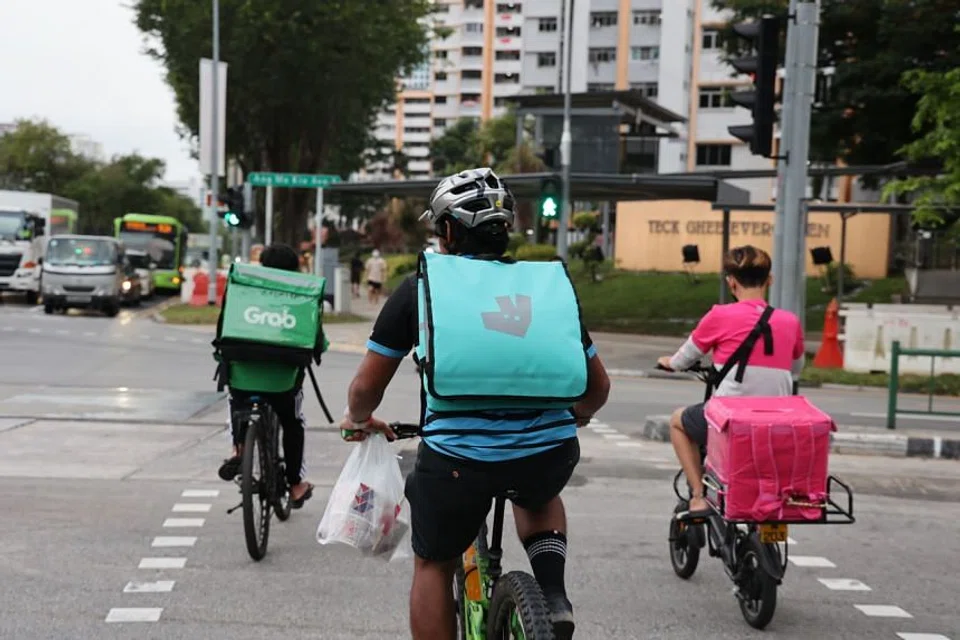
THE gig economy is not new. But our understanding of the challenges that gig workers face has lagged the explosive rise of platforms like Grab and Deliveroo.
Data is lacking on the demographics, work patterns and accident rates of these workers. More insights need to be made available, as Singapore deliberates protections for this vulnerable group.
On Wednesday, the newly-formed advisory committee on platform workers had its first meeting. It is tasked to review protections for gig workers who serve platforms, namely delivery riders, ride-hailing drivers and cabbies.
Three areas of focus have been singled out: housing and retirement adequacy, financial protection for work injuries and bargaining power.
The committee, which has about a year to complete its work, is now well-placed to plug some of these gaps, partly by drawing information out from the platform operators and aggregating them.
Who are these workers?
There is the young food delivery rider who hits the road on his bicycle for eight-hour shifts, six days a week. Then, there is the retiree who does ride-hailing jobs once a week for spare cash.
What proportion of Singapore's gig workers fit the former profile, effectively working full-time for a platform? And how do their numbers compare against those like the retiree, who does this as just a side gig?
In Tuesday's Parliament session, Senior Minister of State for Manpower Koh Poh Koon gave some insight. About 79,000 persons, who are self-employed as their main source of income, work for matching platforms.
About half are private-hire car drivers and one-third are taxi drivers. The remainder are mainly car and light goods vehicle drivers performing delivery work.
This is a sizeable pool, but it is underplayed by platform operators.
When asked for its response to the concerns raised about gig workers, foodpanda told The Business Times: "The reality is the bulk of our riders are on the platform for a brief period of time as a supplemental gig".
Just going by the broad numbers and the platforms' statements, it is hard to tell where things really lie.
This is why the advisory committee is now in a prime position to get more data from the platforms on this matter.
Another big aspect to look at would be the age profile of these workers. For those below 30 years of age, are most of them doing this on a part-time basis, or are they effectively working the hours of a full-time job?
Such information can shine a light on whether there is a risk of underemployment or skills stagnation among young people taking on gig work.
How many actually work for multiple platforms?
When asked for their take on Singapore's review of gig worker protections, all the platform companies that spoke to BT cited a common term: flexibility.
Indeed, a gig worker could serve multiple platforms according to their schedule, truly embodying the "gig" lifestyle.
But it will be worth studying how this actually plays out in reality. Do most gig workers work across multiple platforms? Or are many of them actually serving one platform, further entrenching their employee-like status?
If they do serve one platform, what are the reasons? If incentive structures are designed to entrench the worker within the platform, how fair are they?
Conversely, if it is proven that most gig workers indeed enjoy flexibility to work across platforms, how can Singapore ensure this flexibility is retained even if worker protection measures are introduced?
Injury rates
In Tuesday's parliament session, Dr Koh noted that the number of fatalities for delivery riders is low. However, data is not available on traffic-related injuries suffered by riders.
Such data would be valuable in assessing whether workers are being protected adequately for the level of risk that they are taking on.
As BT reported last month, even though platform companies provide insurance coverage, this is inconsistent and patchy across platforms. Some are even tied to performance tiers. Moreover, it is hard to judge whether the payouts are adequate.
Having data available on accident rates could also pave the way for more detailed analysis. For instance, Member of Parliament Melvin Yong questioned whether the Ministry of Manpower has studied a possible correlation between higher frequency of such accidents and timing, as riders rush to meet daily incentive targets.
More clarity on this issue would further strengthen the safety net for these essential workers.
Given the complex nature of gig work, the advisory committee certainly has its work cut out. At this point, it is still hard to tell what type of measures may come out from this review, whether they are soft-touch guidelines, hard legislative changes or a combination.
What the formation of the committee undeniably signals is a growing sense of urgency among policymakers -- not just in Singapore, but globally.
If platforms want to have a say in how this pans out, then they must also be forthcoming with data.
TRENDING NOW

Demand, tech capabilities position Apac and AI as Skyscanner’s next growth frontiers: CEO Bryan Batista

Motoring tycoon Peter Kwee is back in court: Here are his previous legal battles

South-east Asia has lost Nvidia’s best salesman

Could Jensen Huang work for Elon Musk? It would be ‘a titanic ego death match’, says biographer

