Digital Masterplan: Getting the next five years right for Asean
The ADM 2025 reiterates calls for acceleration of digitalisation efforts which could auger a combined GDP boost of US$1 trillion in the region over the next 10 years.
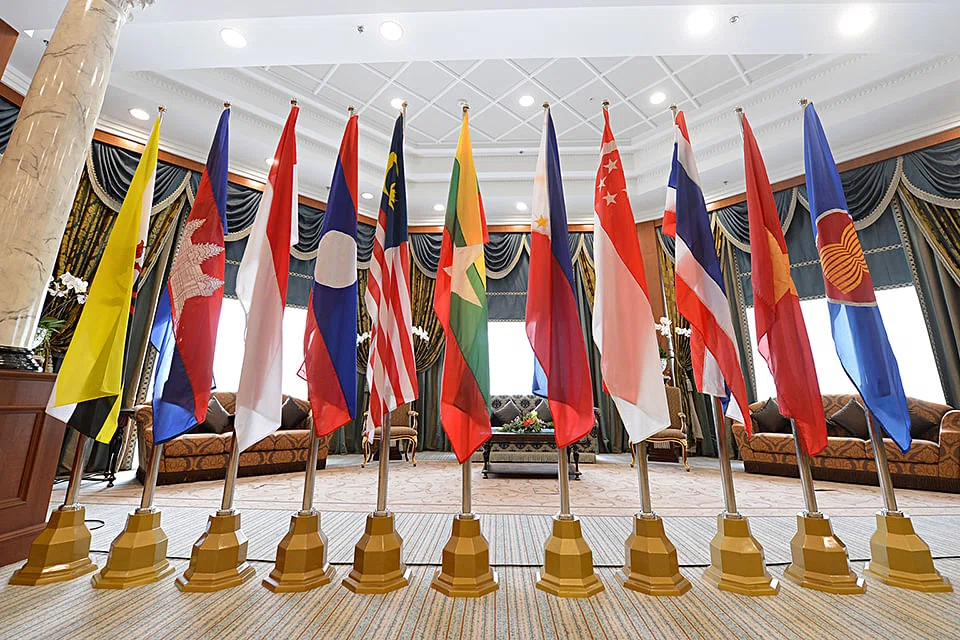
ASEAN'S importance is often overlooked due to misconceptions about its capabilities. To paraphrase Singapore's former ambassador-at-large Bilahari Kausikan, there is a tendency for observers to accuse this cow of being an imperfect horse.
From its emphasis on consensus-building to its glacial pace of progress, assessing Asean's initiatives demands a keen eye for nuance.
Take for example the Asean Digital Masterplan 2025 (ADM 2025). Released in January 2021 after the inaugural Digital Ministers' Meeting, it reiterates calls for the acceleration of digitalisation efforts from past plans. This time, however, ADM 2025 offers a much more comprehensive focus on adopting digital services and supporting infrastructure.
If Asean pulls this off well, it could auger a combined gross domestic product boost of US$1 trillion in the region over the next 10 years. But first, progressive policy shifts alongside necessary infrastructure, support and integration must be taken seriously to prevent ADM 2025 from sinking into Asean's alphabet soup of policy documents.
Asean documents like ADM 2025 must be read in context; subtle shifts in policy direction underscore their importance.
The noteworthy but underappreciated change here was the replacement of "telecommunications" with "digital" in the policy nomenclature. Prior to 2021, the Asean information and communications technology (ICT) ministers met at the annual Telecommunications and Information Technology Ministers Meeting and their guiding document was the Asean ICT Masterplan 2020 (AIM 2020). The meeting and its associated policy document were re-labelled "digital" only in 2021.
Just a semantic change? Not likely, especially in a region where migration trends are expected to increase urban populations by 25 per cent by 2025.
A BROADER, MORE PROGRESSIVE STANCE
Even prior to the impact of Covid-19, such mass urbanisation demands a broader embrace of digitalisation to accommodate more crowded cities. Not only must infrastructure be built, but popular education and institutional reforms must also be conducted to harness digital services.
Asean's recognition of "digital" suggests a recognition of this need for a broader and more progressive stance.
However, in reality, many Asean states are not ideally positioned for digitalisation because of a lack of skilled labour.
The AIM 2020 emphasis on encouraging "cross-border flows of ICT professionals" was meant to tackle this shortcoming. As noted by the Asia Development Bank, skilled workers across Asia tend to return and enhance their countries' workforces after gaining experience in Organisation for Economic Co-operation and Development (OECD) member nations' economies. Therefore, it might appear puzzling why ADM 2025 downplays labour mobility in favour of reskilling the domestic workforce.
But this shift has been years in the making. The Asean Digital Integration Framework Action Plan moved its focus from labour mobility to local upskilling by 2019 - a trend noticeably heightened by the pandemic as traditional labour and migration patterns were disrupted. Foreign labour flows dried up, while governments had to re-integrate the newly unemployed.
Singapore's Ministry of Manpower, for example, reported the sharpest annual decline in employment numbers in over two decades in March 2021, but also noted that Workforce Singapore, a statutory board under the Ministry, helped to place 55,000 locals into jobs and traineeships. The brunt of unemployment numbers was borne by non-residents, with a decrease in 138,000 work permit, 26,000 S Pass and 16,7000 Employment Pass holders respectively.
Overall, details surrounding ADM 2025's desired outcomes show Asean's need to focus on not just economic recovery in the long run, but to manage politically sensitive shifts.
It is also important to avoid reading ADM 2025 as a standalone document, particularly when it comes to issues such as small and medium enterprises (SMEs).
SMEs constitute 97 per cent of all Asean businesses according to the OECD. Many of them came under pressure during the Covid-19 pandemic; according to Singapore's United Overseas Bank, the proportion of SMEs aiming to digitalise increased from 49 to 60 per cent between 2019 and 2020.
SLOW AND STEADY
While emphasising SMEs' role and importance, ADM 2025 does not offer clear guidelines on how to support SME digitalisation, whether it be through funding, training or regulatory space. These guidelines are to be found in other Asean documents.
The Asean Strategic Action Plan for SME Development 2025 provides recommendations on improving SME access to financial credit, both through promoting financial literacy and encouraging non-traditional financing. Other platforms such as the Asean SME Academy provide training on administrative topics as well as issues concerning digitalisation such as cloud computing.
Looking back, AIM 2020's final review suggests a less-than-flattering scorecard. On a scale of 0 to 10, many initiatives barely averaged a score of 5; some in the realm of disaster management only managed a score of 0.7. For a plan five years in the making, this appears wholly underwhelming.
Yet, observers should be mindful that though Asean cannot demand compliance from members, it is not incapable of change. Instead, the grouping relies on consensus to move forward, and its rate of progress can be described as slow and steady.
This does not lessen the need for action. A Google-Temasek report, while optimistic about the growth of Asean's digital economy, pointed out key barriers to growth like talent and funding. Expediting digitalisation would also help to reduce carbon emissions by making cities more energy efficient, positioning Asean to address climate change.
As the region continues to battle against Covid, ADM 2025 represents a potential economic lifeline. It is up to the 10 Asean governments now to grasp it. Otherwise, the cliche of calling Asean a work in progress will remain just that: a cliche.
- The writers are researchers from the Asia Competitiveness Institute at the Lee Kuan Yew School of Public Policy, National University of Singapore.