Domestic issues to top Widodo's priorities
Indonesia's recent execution of drug traffickers and slashing of fuel subsidies have borne this out.
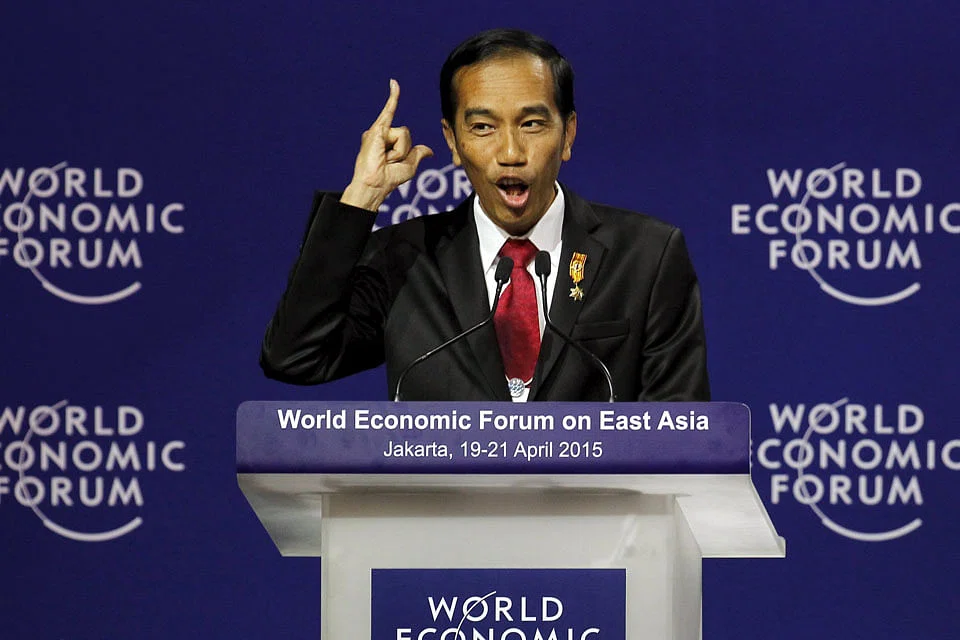
THE recent execution of eight drug-traffickers in Indonesia, including seven foreigners, has cast a negative spotlight on Indonesia's government. Many other Asian countries (including China, Vietnam, Malaysia and Singapore) also impose capital punishment for drug offences and have executed convicted foreigners. The outcry over Indonesia is only the most recent, but seems to have attracted more attention, possibly because of the large number of simultaneous executions involving nationals of multiple countries, and the fact that they occurred relatively early in the term of President Joko Widodo, popularly known as Jokowi, who took office only late last year.
Mr Widodo is a relative newcomer, not only to the international scene, but also to the stage of national politics. Elected Mayor of Solo in 2005, he went on to be elected Governor of Jakarta in 2012, and in 2014, he won the presidential race against Prabowo Subianto, a formidable opponent from the Jakarta political elite. To rise from a commoner to the highest office in Indonesia in merely nine years is exceptional by any standard.
Mr Widodo's rise was facilitated by political and fiscal decentralisation legislated and implemented since 1999. This democratised politics, but arguably also increased corruption at local levels, and deprived the central government of the resources and authority that would facilitate a more efficient national integration of governance, public finances, services, regulations and infrastructure.
Given that his political journey started with regional politics, it is natural that Mr Widodo would give priority to domestic issues early in his term, as he showed by quickly slashing fuel subsidies that severely constrained the national government budget. While international diplomacy is a concern, the more pressing problem today is Indonesia's drug crisis, with around four million drug abusers and more than 30 people dying of drugs every day, according to its National Agency for Narcotics.
The local media reports these figures regularly, so Mr Widodo would appear indecisive if he delayed the punishment of convicted drug traffickers. With a public satisfaction rating of only 44 per cent (28.7 per cent on the economy), he cannot risk losing more domestic support if he is to govern effectively, especially with his minority coalition holding only 44 per cent of the seats in Parliament.
But this focus on domestic issues does not mean that global players can ignore Indonesia, a country of 253 million with a burgeoning middle class. While Indonesia is not as heavily engaged in the world economy and international affairs as China, India and some smaller Asian countries, its exports constitute nearly a quarter of GDP, and Indonesia has received more than US$20 billion in foreign direct investment annually since 2011, as well as rising amounts of net foreign portfolio investment which reached US$25 million in 2014. Even at their "lower-middle-income" level, Indonesians are famously well-connected: there are 125 mobile cellular subscriptions for every 100 people, helping to make them the world's third largest users of Twitter and fourth largest of Facebook, just as they were Blackberry's second largest market during that company's heyday.
Economists are often puzzled at how Indonesia has managed such a long (nearly 50 years) consistent record of steady GDP growth of over 5 per cent annually, given its poor international rankings in "ease of doing business" and "corruption", and severe infrastructure and skills bottlenecks.
One reason is good central bank management of interest rates and inflation, and a floating currency. Another is the high ratio (by East Asian standards) of domestic consumption in GDP, which has a stabilising effect, making the economy somewhat less vulnerable to external demand fluctuations that have recently dampened growth in more export-oriented Asian economies. Other reasons might include the entrepreneurial character of Indonesian business, from poor peasants and vendors to large conglomerate enterprises, and the relatively strong (or at least visible) role of women in the labour force and family businesses.
DEMOGRAPHIC DIVIDEND
Looking ahead, Indonesia's economy stands to gain from the demographic dividend of a youthful population that has already raised savings, investment and GDP growth in other now-ageing and slowing Asian countries. It has a lot of room to grow in labour-intensive export manufacturing, which is relocating away from China and other more expensive Asian production locations, though labour productivity and skills need to be ramped up. The Widodo government is doing the right thing in focusing on liberalising (some) investment rules and procedures, and promising to invest heavily in infrastructure and logistics improvements.
Chief among these is the archipelagic nation's shift to a maritime-based economy. A new portfolio, the Coordinating Minister for Maritime Affairs, held by Dr Indroyono Soesilo, has been created to spearhead this initiative. Upgrading Indonesia's logistical infrastructure will definitely boost its economic integration with the rest of Asean and its capacity to take advantage of China's maritime Silk Road initiative. But financing these vast infrastructure projects, costing tens of billions of US dollars, will be a major challenge - in which China and Japan, both seeking to gain influential footholds here, will play significant roles.
Indeed, Mr Widodo's domestic focus cannot be divorced from international engagement, especially in the economic arena where attracting foreign investment is a top priority. To this end, his administration has launched a one-stop integrated service for investment permits at the Investment Coordinating Board, to cut red tape for foreign investors. But other policies, such as requiring foreign workers to meet a certain standard of Indonesian language proficiency, present obstacles for foreign companies.
The recent executions show that domestic concerns will top Mr Widodo's agenda for some time to come. He will not act as the consummate statesman that his predecessor, Susilo Bambang Yudhoyono, was. But he will be Indonesia's top salesman to raise investments and achieve greater production-based growth for the country. While this spells opportunities for investors, unhelpful nationalistic restrictions and the lack of policy coordination at certain levels of government mean that investors need to understand and navigate the local business terrain carefully, which will not be easy in South-east Asia's largest and most diverse country.