

The Donald across the pond
Washington
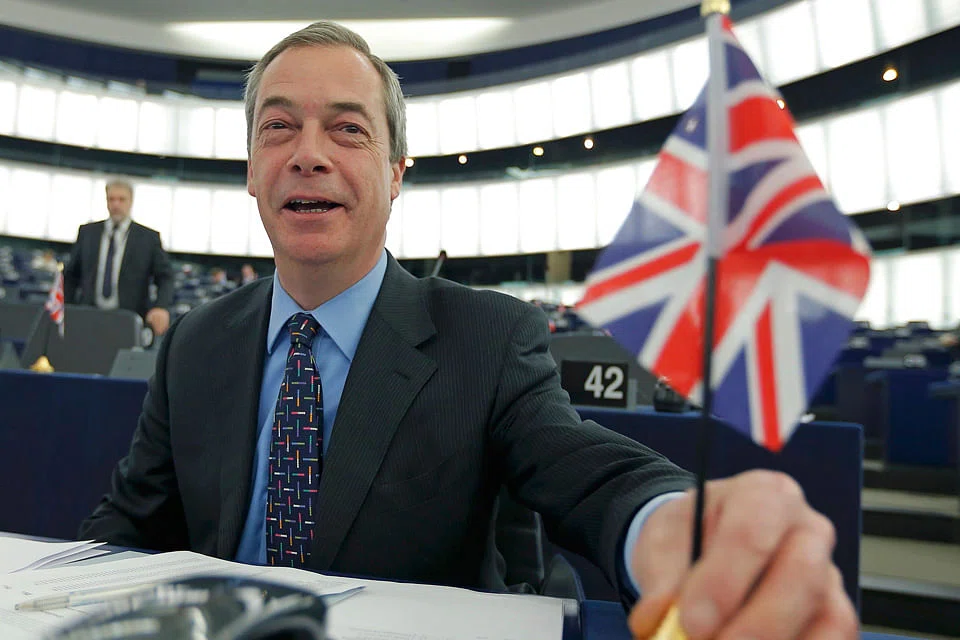
AMERICANS don't know what to think about Brexit, if they even know what it means. Right now, the "real America" of Budweiser, burgers and Nascar stock cars is too preoccupied by the primary election victories racked up by Donald Trump to see the populist xenophobic parallels with Nigel Farage's Strasbourg rants and the rise of the UK Independence Party.
But Mr Trump's Mexican wall matches Mr Farage's border barricades against Poles and Romanians; Mr Trump's attack on Washington as the root of all evil is reflected in Mr Farage's hatred of Brussels. There are similarities in the populist surges on both sides of the Atlantic.
Both The Donald and Mr Farage channel the anger of lower middle class white workers upset by years of stagnant wages, worried by globalisation, and alarmed by migrants and refugees whom they fear will seize jobs. These US and British voters are anti-establishment and anti-politics. Both groups are defending "us" against "the other".
But there is an important difference. The animus driving Brexit supporters has a longer history than the Trumpian iteration of American populism.
American policymakers need to take a crash course in British history to understand the depth of Britain's nativist nationalist roots. Britain and England's love-hate relationship with Europe and "the Continent" goes back a long way indeed.
Not to the 1980s and Prime Minister Margaret Thatcher's handbag-wielding at European summits. Not to the "Non" from French President Charles de Gaulle when Britain first tried to join the European Economic Community.
To trace Brexiters and the anti-European undercurrent, Americans should go back further still - to William the Conqueror and his victory over King Harold in 1066. To the Middle Ages, when England's kings held sway over much of France and parts of Spain. To scores of humiliating defeats of the French.
The struggle, for those in favour of Brexit, reflects centuries of clashing with Europe. Of being part of but being separate from the Continent. Brexit signals a desire to go back to a time when Britannia ruled the waves. Or at least something.
Mr Trump wants to "make America great again". Eurosceptics want something similar. The Brexit leadership and their stalwarts cannot explicitly admit as much; that might make them look foolish. But the desire to go it alone, to show those bloody Europeans a thing or two, is an emotional wish hidden behind an economic charade.
Because the anti-Europe campaign is really an emotive one, it does not fit easily within the US policymaking calculus. It leaves the American establishment surprised, their talking point memos fluttering in the wind.
A word of caution from President Barack Obama's Washington would be unlikely to help. The British dislike being lectured to by foreigners. External warnings, when the debate is about "us" versus "them", is hardly a smart idea. At its most basic, Brexiters are engaged in an existential argument about Britain and Europe. This is not a rational debate over economic options, pros and cons.
But irrational fears can be countered by other, worse nightmares. I expect many more attacks on Mr Farage, London mayor Boris Johnson and their fellow anti-Europeans. Such a negative campaign - "Project fear" as it has been dubbed - might just sway enough undecided voters to assure that Britain remains reluctantly attached to Europe.
I hope the "Britain in Europe" camp wins on June 23. Yet, whatever the outcome, one consequence is clear. The grievances of the millions of Brexiters are too deeply rooted in Britain's history and psyche for them to stop complaining. OMFIF
TRENDING NOW

He built the Vingroup empire. Now South-east Asia’s richest man is handing some key roles to his sons

China’s Pinglu Canal likely to benefit Singapore, other South-east Asia ports in the long term

Suntec Reit to increase Singapore focus, sell three Australia properties
Despite the de-dollarisation debate, demand for dollar liquidity in Asia is growing

