Down but not out; Changi Airport will soar again
Changi Airport Group must persevere and work patiently for the resumption of regular airport operations.
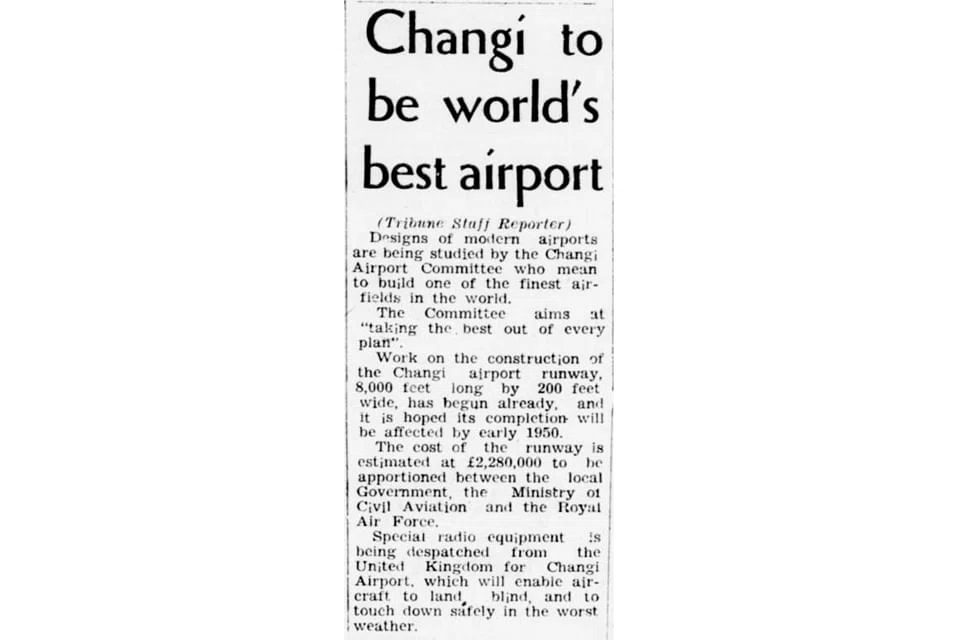
A COPY of a 1948 Malaya Tribune article titled "Changi to be world's best airport" was sent to me recently. The Colonial Government had announced the "new Changi Airport" in April 1946. Wow, the British got it right even back in 1946! (which happens to be the year I was born). They harboured the ambition to make Changi the best airport in the world 74 years ago, even though that first runway was initially for military use by the Royal Air Force.
Even further back in 1931, when Sir Cecil Clementi, the British Governor of the Straits Settlements (ie Singapore, Malacca, Penang and Labuan) launched the building of a civilian airport at Kallang, he postulated, "Looking into the future, I expect to see Singapore become one of the largest and most important airports of the world".
Kallang Airport operated from 1937 to 1955, before the civilian airport was shifted to Paya Lebar. As aviation grew rapidly in the early 1970s, the plan was to expand Paya Lebar with a second runway and a new international passenger building. I was posted from the Ministry of Defence to the Public Works Department (PWD) Airport Branch in Paya Lebar in 1974 and worked on the second runway project. Construction had already started in 1972 and was progressing until Mr Lee Kuan Yew (then Prime Minister) flew over Boston Airport which was built by the sea. He realised the constraints of expanding the airport at an inland location like Paya Lebar and made the bold decision in 1975 to resite a new airport at Changi. That dramatically changed Singapore's aviation history.
Interestingly, that first runway at Changi mentioned in the 1948 Malaya Tribune article reincarnated back to its destiny as a landmark feature of the new Changi Airport airfield masterplan. It was to be transformed into the new Runway 1, with its length extended from 2,000m to 4,000m and width widened from 45m to 60m with a 15m hard shoulder on both sides. The former Telok Paku road in the north was expunged to accommodate the runway extension. The runway pavement substructure had to be heavily strengthened to withstand landing and take-off of the much larger jumbo jet aircraft. I had the rare privilege then to be appointed as the senior engineer to supervise that first runway project. That project 45 years ago jump-started my professional career as an airport engineer.
A VISION FOR THE FUTURE
More than seven decades ago, the British ambitiously foretold that Changi would be the best airport in the world. Mr Lee Kuan Yew made "the boldest decision in the government" in 1975 to "abandon the existing Paya Lebar Airport and develop Changi". He had to persuade the government ministers and civil servants to make that drastic change. There was scepticism whether PWD engineers and architects could build the airport and do so in good time. Fortunately, a top civil servant Howe Yoon Chong (subsequently Head of the Civil Service and later a minister) persuaded everybody against all odds to proceed with the Changi site. Sim Kee Boon, another entrepreneurial mandarin (also later Head of the Civil Service), devoted his personal time to drive that mammoth national project to its successful completion within six years. The Civil Aviation Authority of Singapore (CAAS), a government statutory board regulating Changi Airport and Singapore's aviation industry, was subsequently established in 1984 and Changi grew rapidly as an efficient international air hub.
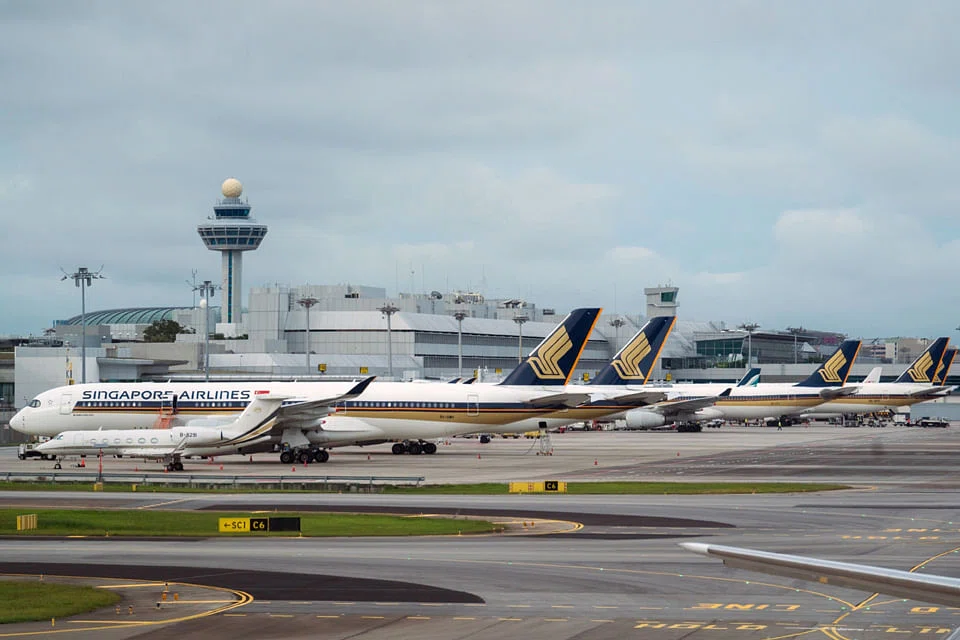
Ten years ago, we took the commercial risk to corporatise Changi Airport and have it run by a corporation, Changi Airport Group (CAG). We had a good run as an air hub and was financially strong for the last ten years. We have been recognised as the world's best airport more than 620 times by international organisations and publications. Changi Airport has been symbolic of Singapore's phenomenal success, the pride of every Singaporean. Airports from several countries knocked on the doors of Changi Airports International (CAI) for collaboration and assistance, and CAAS has prominently participated at the International Civil Aviation Organization (ICAO) Council for many years.
Indeed, Changi's business was booming. We opened a new Terminal 3 in 2008, took down the Budget Terminal and in place created Terminal 4 with the latest in airport and aviation technologies. We innovated passenger experience with the highly acclaimed Jewel Changi Airport, which passengers and Singaporeans alike are very attracted to. If I may say so, Changi has been successfully managed both as an airport infrastructure and a corporation. On a personal basis, besides the real estate business, my involvement in the airport has been the larger and more significant part of my whole career. I am very grateful and proud to be able to play a part in building Changi Airport.
REMAINING STEADFAST
The current pandemic has affected almost every business in the world. But no business seems to be more adversely affected than aviation, with global passenger volumes plummeting, and in Changi's case by more than 99 per cent. Changi Airport used to have about 200,000 passengers going through its terminals daily. Presently, we don't even see more than a dismal 1,000 passengers a day. Whenever I need to go to my office in Changi nowadays, it is sad and indeed surreal to watch our terminals, which used to be buzzing with crowds of cheerful travellers, looking cold, desolate and devoid of any life.
But we must remain steadfast and not give up on Changi. The airport is one of Singapore's important economic strategies, acting as our main portal to the rest of the world. Changi has been functioning successfully as an international air hub with growing traffic since its opening in 1981. Changi may have been a dream of the British in the colonial days but it is now a major and important infrastructure for Singapore.
I don't believe in just dreaming for things to end up in a certain way. Instead, I believe in pursuing ambition and aspiration for Changi to succeed. We should now, philosophically, take it that a pause button has been imposed on us. The virus may hurt us badly, but I don't accept that it will kill us. We must not surrender or succumb. It may take some time to recover but we must prepare all viable processes and procedures to be ready to restart airport operations once the pandemic subsides. There is a supposed wise saying by the Icelandic elves which says, "Life is not about waiting for the storm to pass, it is about learning to dance in the rain". I am not sure about "dancing in the rain" but we can learn to march on even in the rain. Perseverance and resilience are key.
Organisationally, CAG will stay strong together, but with tightened belts. We have succeeded because of the committed talent pool which we have built up. As with my previous experiences managing businesses in global crises, I don't believe that staff retrenchment is the solution. However, if someone remains a D or E grader for several years, that is a different story. We must exert ourselves, be more creative now to find pragmatic solutions, and remain committed to cutting costs collectively to save jobs.
WE WILL FLY AGAIN
Humanity has been through other pandemics. There will be abundant uncertainties but there is also one certainty - the pandemic will end one way or another. With hundreds of research efforts ongoing to develop a viable vaccine, and the current advances in biomedical sciences assisted by the power of digital technologies and AI (artificial intelligence), I am confident scientific solutions will eventually be found to combat this virulent pandemic. But we must work hard to be ready to relaunch Changi's operations and business once those solutions come along.
"The Question of Changi" asked in the 1940s and again in 1975 remains remarkably valid today. Changi Airport has served Singapore well. We are a small island state and we need massive air connectivity for economic well-being. The airport is one of the key economic linchpins for Singapore's continued prosperity. The powerful Covid-19 virus has unexpectedly pushed a pause button for us. But as with other pandemics like the Spanish Flu, we will eventually overcome it.
Changi Airport has established wide connectivity around the world, first-class airport infrastructure, terminal facilities, recognised track records as an efficient air hub which has been managed and led by a proven team for 40 years. Nobody knows how long it will take, but I am confident that Covid-19 will be dealt with successfully with our current advances in science and technology and the continuous support from our government. We need all our colleagues in CAG to persevere and to work hard patiently for the resumption of regular airport operations. I know there will be no perfect solution across every aspect in our efforts. We will be pragmatic and I know the day will come when our passengers fly to and from Changi Airport again!