HOCK LOCK SIEW

E-Log’s tepid debut may leave unitholders wondering if being bigger is better

Ben Paul
Published Wed, May 11, 2022 · 05:50 AM
    • The newly-styled ESR-Logos Reit began trading on May 5
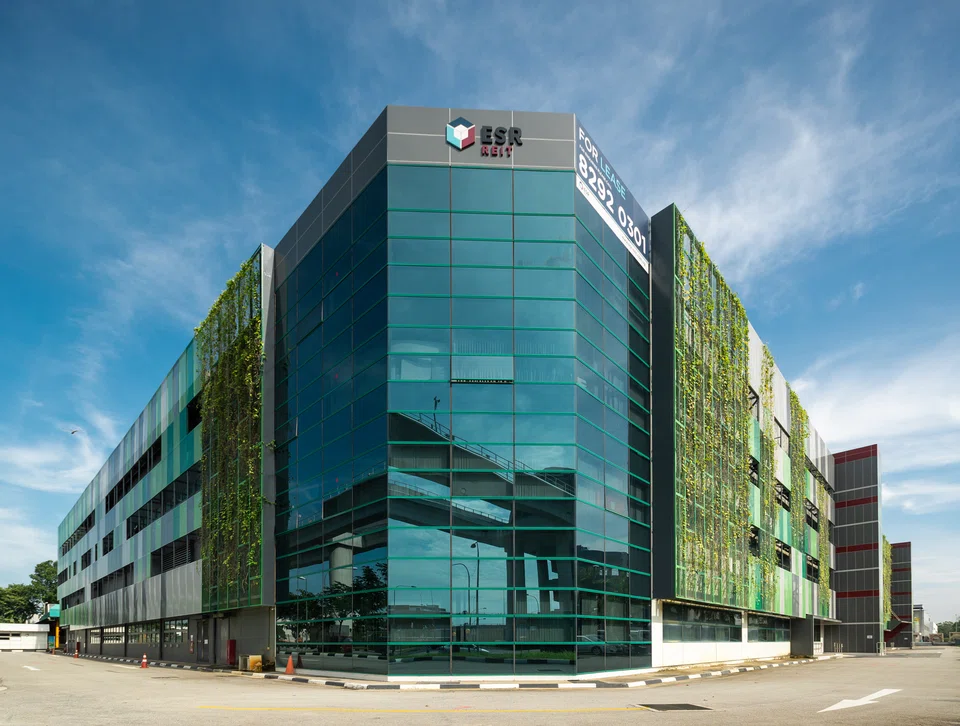
    • The newly-styled ESR-Logos Reit began trading on May 5 (Photo: RENDY ARYANTO/VVS.sg)

    ESR-REIT began trading in the local market as ESR-Logos Reit (E-Log) on May 5, beginning a potentially interesting phase of growth after significantly enlarging itself by subsuming Ara Logos Logistics Trust (A-Log).

    With some S$5.5 billion in assets, E-Log is now the flagship Singapore-listed asset securitisation platform of ESR Cayman, which recently completed the acquisition of Ara Asset Management.

    E-Log’s manager has said its enlarged sponsor has a US$59 billion portfolio of “new economy” assets, and a S$2 billion initial pipeline of “visible and executable” assets that will accelerate E-Log’s growth.


    Yet, unitholders of ESR-Reit and A-Log who are now holding units of E-Log may well be wondering when exactly the benefits of increased size and trading liquidity will kick in.

    When the merger was first mooted in October last year, ESR-Reit and A-Log were, respectively, trading at S$0.465 and S$0.935.

    Under the final terms of the merger, holders of each unit of A-Log received S$0.097 of cash plus 1.7729 units of ESR-Reit.

    On May 5, the newly-styled E-Log ended its first trading day at S$0.395.

    While the merger created a significantly larger Reit, units of the enlarged Reit haven’t garnered a higher market value.

    An investor who bought ESR-Reit just before the merger announcement last year would have suffered a negative total return of nearly 15 per cent.

    Of course, the market values of A-Log and ESR-Reit would probably have fallen even if the 2 Reits had not merged.

    Both of them had enjoyed a strong run just before the merger was announced last year, and rising interest rates since then have been a challenge for all Reits, large and small.

    But for sceptics of Reit mergers, that’s precisely the point.

    Reit mergers are only “win-win” transactions in the sense that the combined Reit would be larger and more diversified – and, hence, better positioned to grow by making acquisitions, assuming the market value of its units holds up.

    The combined Reit would arguably be no less susceptible to shifting cyclical and secular economic trends.

    Moreover, the terms of these sorts of mergers usually leave unitholders of one Reit or the other feeling shortchanged.

    Sponsors drive mergers

    The fact is that Reit mergers are often proposed not because they make sense for unitholders, but because of shifting circumstances and priorities at the sponsor groups.

    For instance, ESR-Reit and A-Log were left with overlapping mandates when their respective parent groups decided to combine themselves.

    Organising a merger that made sense for unitholders of ESR-Reit and A-Log was actually a challenge, the win-win narrative notwithstanding. In fact, the terms of the deal had to be adjusted at the 11th hour to placate proxy advisers on the A-Log side.

    It’s worth pointing out that ESR-Reit and Sabana Industrial Reit, which also suffer from overlapping mandates, failed to make their proposed merger work 2 years ago.

    Unitholders of Sabana Reit baulked at the terms of the merger, which priced their units significantly below book value. In the end, it made more sense for unitholders of Sabana Reit to live with the overlapping mandate than to give in.

    Since unitholders of Sabana Reit voted against the merger on Dec 4, 2020, their units have delivered a total return of 42.4 per cent (dividends reinvested). ESR-Reit, now E-Log, has returned 7.9 per cent over the same period.

    Positive developments

    Singapore Exchange Regulation said in a column on May 5 – coincidentally, the same day E-Log began trading in the market – that directors have a duty to act in good faith, avoid conflicts of interest and exercise due care, skill and diligence.

    For boards of Reit managers, surely that means not railroading unitholders into mergers with narratives that largely serve the interests of the sponsor groups.

    When a sponsor decides to merge Reits within its stable, the managers of those Reits ought to ensure unitholders are treated fairly.

    Unitholders of the target Reit ought to be offered a means of realising the full value of their holdings, but unitholders of the acquiring Reit ought not to be unduly burdened by this.

    This calls for negotiations not just between the managers of the merging Reits, but also between the Reit managers and decision makers within their common sponsor group.

    Some leading property groups are beginning to get it.

    On May 23, unitholders of Mapletree Commercial Trust (MCT) and Mapletree North Asia Commercial Trust (MNACT) will vote on their proposed merger.

    Unitholders of MNACT are to receive a consideration of S$1.1949 per unit, which is equivalent to the Reit’s adjusted net asset value as at Sep 30, 2021.

    Unlike preceding merger deals, this consideration will be paid in cash by default. Alternatively, unitholders of MNACT can elect to receive 0.5963 of a new MCT unit priced at S$2.0039; or 0.5009 of a new MCT unit priced at S$2.0039 plus S$0.1912 in cash.

    How will MCT come up with the funds for the all-cash consideration for MNACT? MCT will raise some S$2.2 billion through a preferential offering of up to 1,094 million new units priced at S$2.0039 each.

    Mapletree Investments – the sponsor of MCT and MNACT – has provided an undertaking to subscribe for the entire preferential offering. The sponsor will also opt for scrip-only consideration with respect to its stake in MNACT.

    Consequently, Mapletree Investments’ stake in MCT – which will be renamed Mapletree Pan Asia Commercial Trust (MPACT) – could rise from 32.61 per cent to as much as 57.09 per cent after MNACT is subsumed.

    Much like E-Log, MPACT could well end up trading underwater initially. MCT closed Tuesday (May 10) at S$1.83, which is 8.5 per cent below where it traded just before the merger was first announced.

    But this will not matter to unitholders of MNACT who accept the default all-cash consideration. MNACT closed Tuesday at S$1.20, up some 8.1 per cent from where it traded before the merger was unveiled.

    With continued pressure from investors and some prodding from regulators, E-Log could be the last merged Reit created without leaving at least some unitholders immediately better off.