Economic policy is at heart of UK leadership campaign
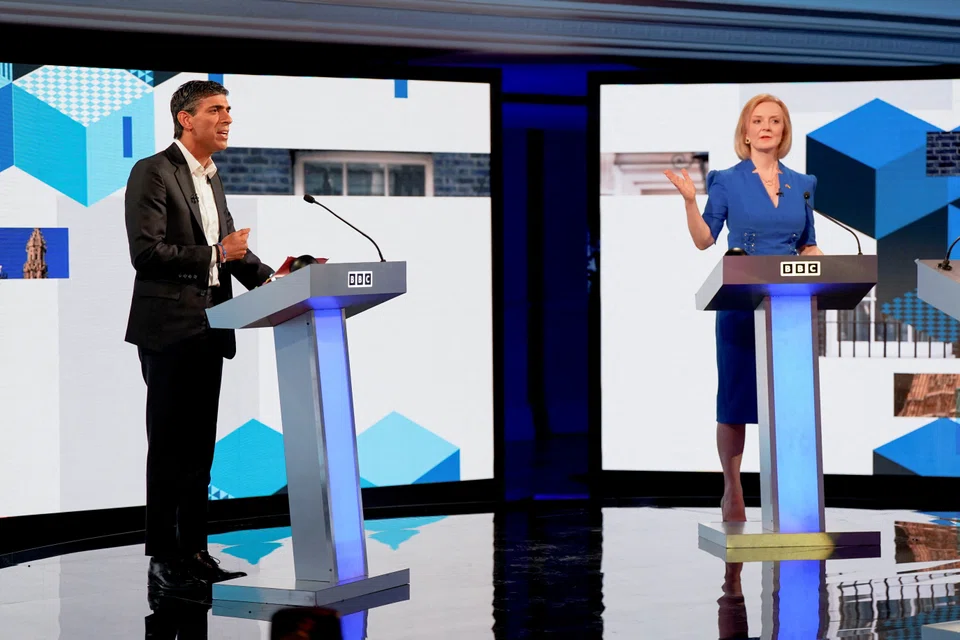
UK FOREIGN Secretary Liz Truss last month (July) made the remarkable claim that an end is needed to what she calls a failed UK consensus that has “peddled a particular type of economic policy for 20 years that hasn’t delivered”.
Of course, such criticism would not be unusual for opposition politicians long out of power. However, what is especially surprising about her statement is that it is the Conservatives that have been in office for the last dozen of the years in question, with Truss herself serving as a minister for much of that period, including in economic portfolios.
Her assertions highlight how one of the defining features of the Conservative leadership election, which will come to a head on September 5 with the announcement of the new UK prime minister, has been ferocious critiques of the UK economy’s recent performance. Within this cauldron of discontent, the legacy of Margaret Thatcher has been centrestage as both Truss and ex-Finance Minister Rishi Sunak, in different ways, try to position themselves as her heir.
It is Truss, who has sought to channel Thatcher’s record of challenging establishment thinking, who has developed the most forceful criticism of UK policy. Yet she is far from alone in doing so amongst the former field of around a dozen candidates, especially in knocking the record of Sunak who served in the Treasury’s top job from 2020 to 2022.
Truss argues that, just as Thatcher tested widely held policy beliefs in the 1980s, it is time for her to do the same in the 2020s with tax cuts. She says “we have had a consensus of the Treasury, of economists, with the Financial Times, with other outlets, peddling a particular economic policy for 20 years”.
Truss is therefore heavily critical of Sunak’s period of office, even though she served in the Cabinet at the time, particularly his tax increases. She has pledged to “start cutting taxes from day one” with a new, emergency budget and spending review that would reverse April’s rise in national insurance, saving average households around £180 a year, and abolish next year’s corporation tax hike from 19 per cent to 25 per cent. She has also vowed to “simplify” taxes and ensure people are not penalised for caring for children or relatives.
She has not explained how she would pay for the £30 billion in tax cuts she has promised, but insists they can be paid for within the “existing fiscal envelope”. Truss insists that cutting taxes will help curb inflation, and that “what is not affordable is putting up taxes, choking off growth, and ending up in a much worse position“.
However, Sunak argues that the true Thatcherite legacy is completely the opposite, as do many ministers from Thatcher’s 1980s governments. He assets that, if she were alive in 2022, the former prime minister would favour fiscal prudence over tax cuts given high inflation and large public indebtedness from the pandemic.
To be sure, the former chancellor has promised in later years to “deliver tax cuts that drive growth”, but to do so in a “way that’s responsible” and only “after we’ve got a grip of inflation”. He claims that the plans of Truss to raise borrowing now to pay for tax cuts are “comforting fairytales” and economically illiterate.
Going further, he has asserted that “we have to tell the truth about the cost of living and that there is no answer to this problem other than to grip inflation and bring it down. Rising inflation is the enemy that makes everyone poorer and puts at risk your homes and your savings. And we have to tell the truth about tax. I will deliver more tax cuts. I’ve already made progress as chancellor, but I will not put money back in your pocket knowing that rising inflation will whip it straight back out”.
To be clear, this is not a trivial economic and indeed philosophical disagreement. While Truss says imposing higher taxes during a cost-of-living crisis is “morally wrong”, Sunak asserts “it’s immoral” to pass bills to future generations.
Important as this debate is about taxation is, however, it has obscured even more important issues like boosting economic productivity which is a massive UK long-term challenge. The Confederation of Business Industry trade body has warned that neither Truss nor Sunak has focused enough on the importance of higher productivity as the most sustainable way to deliver higher standards of living, tackle the fiscal challenges of an aging population, decarbonise, lower the tax burden, and drive growth.
As the widely respected Institute for Fiscal Studies think tank has also highlighted, another consequence of the focus on taxation in the Conservative leadership discussion, is that the candidates have been less than forthcoming about their intentions for public spending. This is particularly odd as the ‘levelling up’ agenda, which centres around investment into areas of central and northern England that lag economically behind the wealthier south, has been key to the ambition of Boris Johnson’s government which they both served in.
To be sure, Sunak has been more forthcoming than Truss on these issues, and indeed his campaign has attacked her emergency tax-cutting budget proposals which it is argued will neglect the poorest and most vulnerable. It has highlighted that Truss’s proposals would give a £1,800 tax cut to the prime minister, but only £59 to someone working full time on the national living wage, and “nothing at all” for pensioners. Truss’s plan to reverse the national insurance increase, which Sunak brought in as finance minister to boost NHS and social care funding, has also come under fire for not offering enough to help the most vulnerable.
Moreover, the Institute for Fiscal Studies has said Truss’s plans are likely to bring a return of austerity, like the years from 2010 to 2015 under David Cameron’s prime ministership. This is because “in the end lower taxes do mean lower spending”.
So if she emerges as prime minister in September, this is why Truss will be under massive policy pressure as soon as she takes office. Her tax cut policy would represent a significant gamble as the nation faces the most difficult economic landscape in years with energy bills soon jumping by 80 per cent under the UK price cap, more public sector unions likely to be balloting members over industrial action that could result in more key workers going on strike, while delays at ports could leave shops short of goods before Christmas.
Andrew Hammond is an associate at LSE IDEAS at the London School of Economics
Decoding Asia newsletter: your guide to navigating Asia in a new global order. Sign up here to get Decoding Asia newsletter. Delivered to your inbox. Free.
Share with us your feedback on BT's products and services